


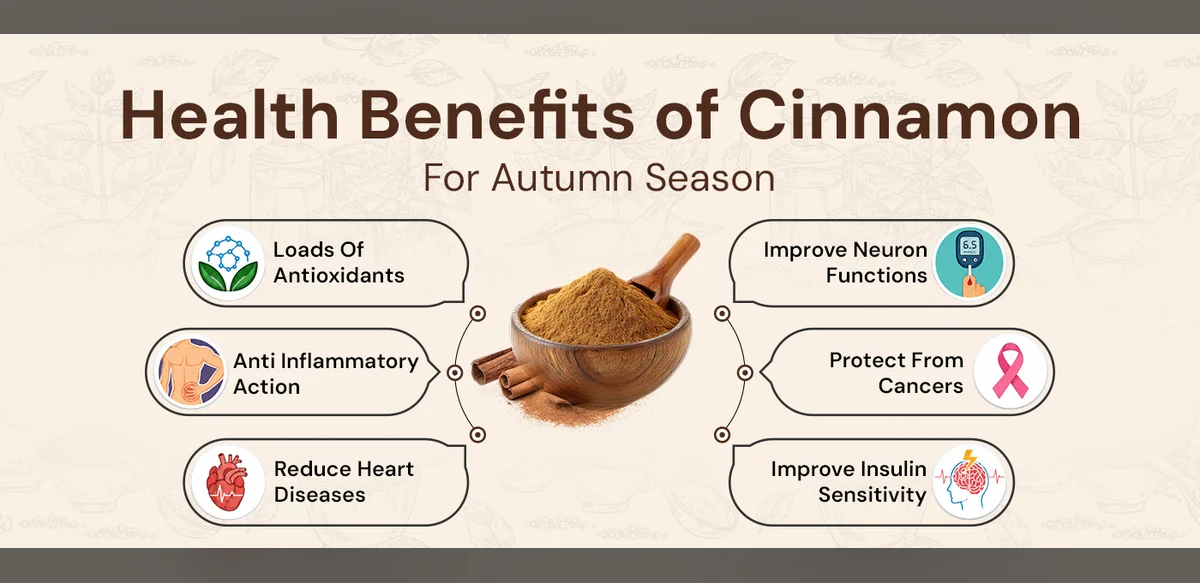
Dalchini refers to cinnamon, the dried inner bark from Cinnamomum trees. It appears as sticks, fine powder, or part of spice mixes used in teas and cooking. The plant provides an aromatic bark valued in meals and traditional practices.
Cinnamon serves as a warming spice in Ayurvedic traditions to aid digestion, stimulate appetite, and balance Kapha. Ceylon variety stands out for its thinner bark, sweeter flavor, and milder profile suited to everyday use. Small doses may ease bloating, nausea, or post-meal discomfort.
Evidence suggests modest help with blood sugar for some individuals, yet it cannot substitute prescribed treatments or monitoring. Dalchini drinks may replace sugary beverages and mildly support metabolism but do not produce significant weight reduction alone.
Its heating quality makes it common in winter infusions and blends. Powder offers convenience yet requires careful dosing in dishes like oats or curries to avoid excess. Overuse risks include irritation, acidity, allergic reactions, or interactions with medications.
Three main types exist: thicker Cassia with sharper taste, thinner sweeter Ceylon preferred for regular intake, and Indian cinnamon that is less intense. In Ayurvedic terms it is pungent and heating, promoting digestive strength and reducing Kapha while balancing Vata.
Classical texts link weak digestion to many disorders, underscoring why warming spices are chosen based on personal constitution. Simple applications include a small stick piece for mild nausea or a sprinkle on fruit to reduce bloating. Professional advice remains essential for persistent issues.

