


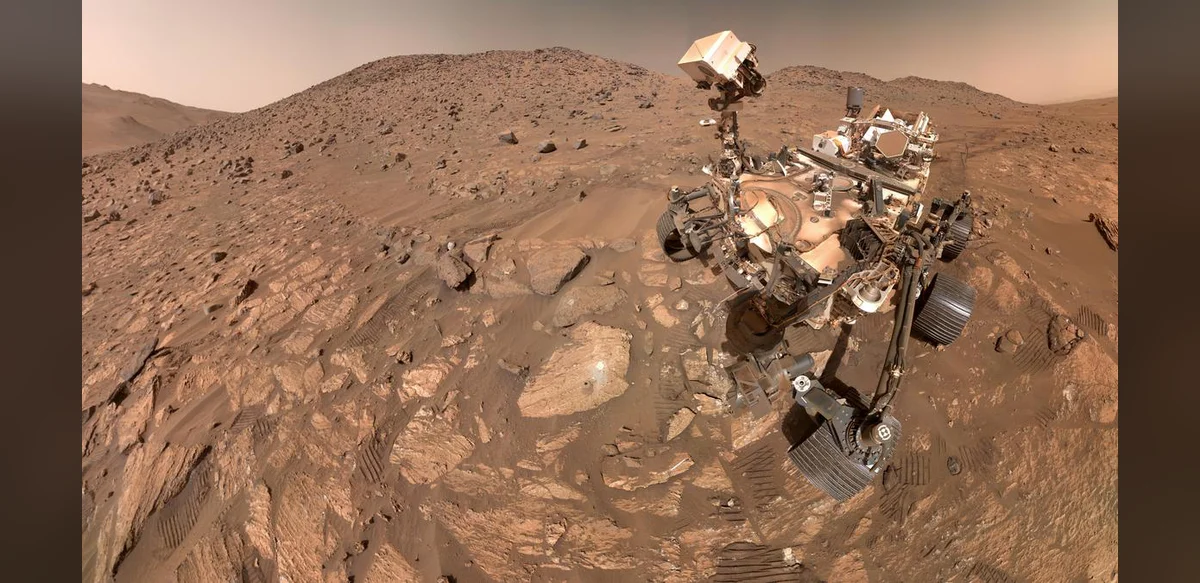
A recent report in Science Advances describes an international research group detecting organic compounds on Mars. The NASA Perseverance rover identified complex organic carbon spread across an old riverbed inside Jezero Crater.
The rover’s SHERLOC tool located a durable type of organic material known as macromolecular carbon inside fine mudstone layers. The findings mark the strongest indication of such material in the crater so far and the first direct observation on an untouched rock surface.
Earlier work by the Curiosity rover had located organic molecules in Gale Crater, showing that life’s chemical building blocks can remain in Martian lake deposits. Perseverance had previously recorded only scattered weak signals on the crater floor.
Fresh data from the Neretva Vallis area indicate organic substances may exist more broadly across Mars. Their presence near carbonate and sulfate minerals points to possible trapping by ancient water activity billions of years ago.
The study states the compounds could result from non-biological geological processes, yet the results remain noteworthy because they show complex carbon enduring the planet’s intense radiation over long periods.

