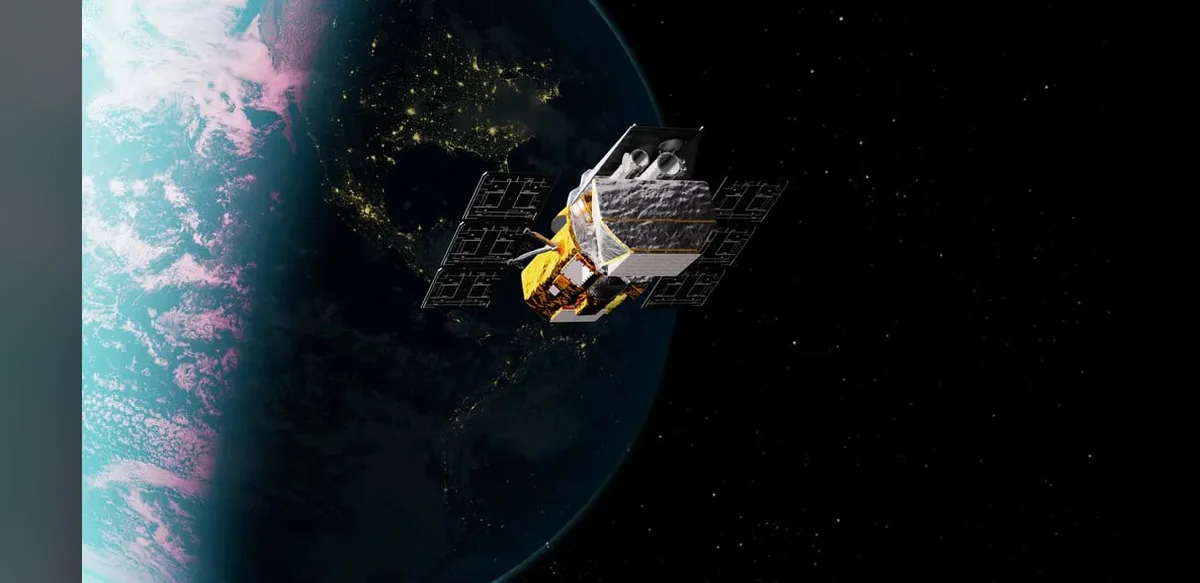
NASA will soon attempt a first-of-its-kind operation to rescue a space telescope from orbital decay using a servicing robot. The agency plans to extend the life of the Neil Gehrels Swift Observatory, which has been losing altitude faster than expected. The mission could launch as early as Tuesday at 6:17 a.m. EDT. Success could pave the way for similar efforts on the Hubble Space Telescope. Katalyst Space CEO Ghonhee Lee described it as the first American space robot mission of its kind. NASA Astrophysics division director Shawn Domagal-Goldman called the effort high-risk and high-reward, noting Swift’s value and the lower cost compared with replacement. The Swift telescope, launched in 2004, observes in visible, ultraviolet, X-ray and gamma-ray wavelengths and produced a high-resolution ultraviolet mosaic of the Andromeda galaxy. Recent intense solar activity has increased atmospheric drag, accelerating its descent. Katalyst’s LINK robotic spacecraft, contracted for about 30 million dollars, is scheduled to launch on a Pegasus XL rocket and will gradually raise the observatory’s orbit over several months. Operational adjustments at Goddard Space Flight Center aim to maintain a minimum altitude of 300 kilometers during the process. NASA views the mission as a test for future satellite servicing capabilities.