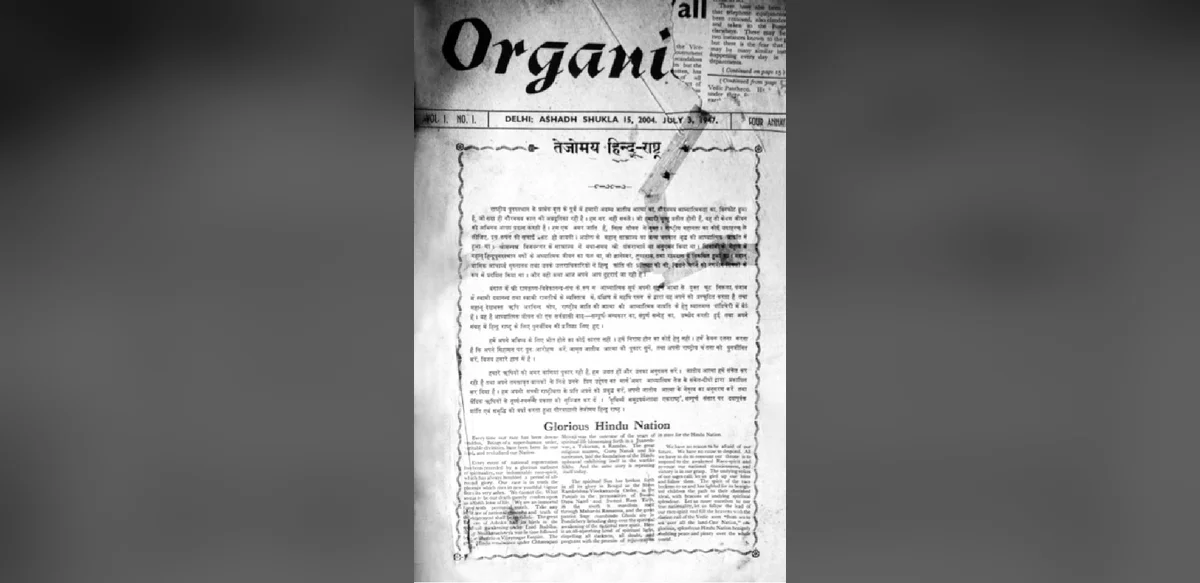
RSS founder Dr KB Hedgewar avoided publicity for his organisation, preferring youth to learn through RSS shakhas. This approach shifted as the group expanded among Hindus amid rising militancy by the Muslim League under Mohammad Ali Jinnah. Leaders saw a need for a publication to share views on political and social issues. Bharat Prakashan Trust was set up in late 1946 with Rs 4 lakh collected from supporters. The Organiser launched on July 3, 1947, weeks before independence. In 1948, after partition and riots, the trust acquired much of Latifi Press, which had printed Dawn newspaper and other Muslim League materials since the 1940s. The era saw major political shifts as Britain, strained by World War II, moved to end colonial rule. The Muslim League secured partition with British support, while the Indian National Congress accepted it. Mahatma Gandhi’s assassination in January 1948 led to a ban on the RSS. The Organiser office faced threats from crowds, but staff prevented damage. The first editor was KR Nair. After the ban lifted in 1949, the magazine resumed. In 1951, the government introduced the First Amendment limiting free speech. The publication criticised policies toward Pakistan following violence against Hindus in Dhaka and opposed confidence-building steps with Pakistan’s leader. It ran reports and cartoons highlighting these issues.