


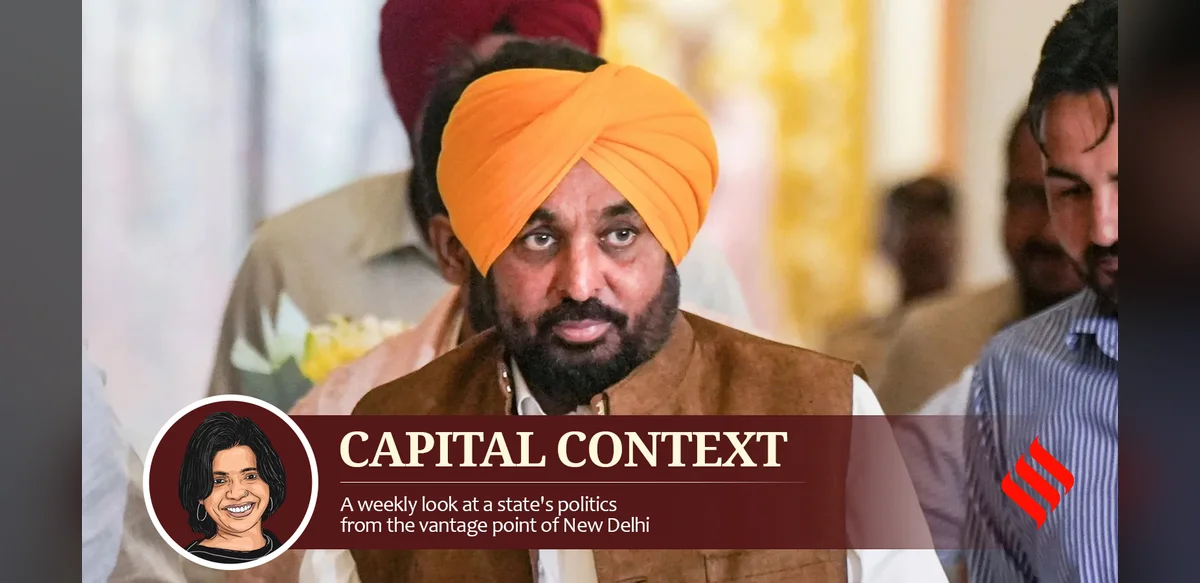
With Assembly elections due in roughly seven months, Punjab has become one of the most uncertain political arenas in India, where each major party sees an opening in what may turn into a tight, multi-sided contest.
The governing AAP aims to stay in office by capitalising on a divided opposition. The Congress, despite deepening internal divisions, expects to use anti-incumbency sentiment to remove Chief Minister Bhagwant Mann and his administration.
The Sukhbir Badal-led Shiromani Akali Dal, once dominant in the state, faces an existential challenge yet continues efforts to regain influence. The BJP, with a limited base in Punjab, still hopes to gain power, encouraged by its recent win in West Bengal.
The main opposition Congress, holding only 16 seats in the 117-member Assembly, seeks to exploit a sacrilege video controversy linked to Mann that has created difficulties for the AAP. In mid-June the Akal Takht labelled Mann “Guru dokhi” and “Khalsa panth virodhi,” though the chief minister denies appearing in the video and calls it fabricated.
The AAP has also suffered high-profile defections, including seven Rajya Sabha members who joined the BJP in April. Nevertheless, it secured strong results in May local body polls, winning majorities in five of eight municipal corporations.
While the Congress hoped to gain from the AAP’s difficulties, it has been occupied with its own internal conflicts. Recent organisational changes kept Amarinder Singh Raja Warring as state president and Partap Singh Bajwa as Leader of Opposition, while naming Charanjit Singh Channi to head the campaign committee. The moves appear to have increased factional tensions.
Speculation about possible defections to the BJP has further unsettled Congress workers who had positioned the party as a strong alternative.
BJP leaders say they intend to exploit divisions among rivals and highlight issues such as flood management, stalled projects and rising state debt. The party has held informal talks with the SAD about renewing their alliance and expects central government steps on Sikh prisoners and Agniveer retention to improve its standing. It has also appointed Kewal Singh Dhillon as its first Jat Sikh state president to broaden outreach.

