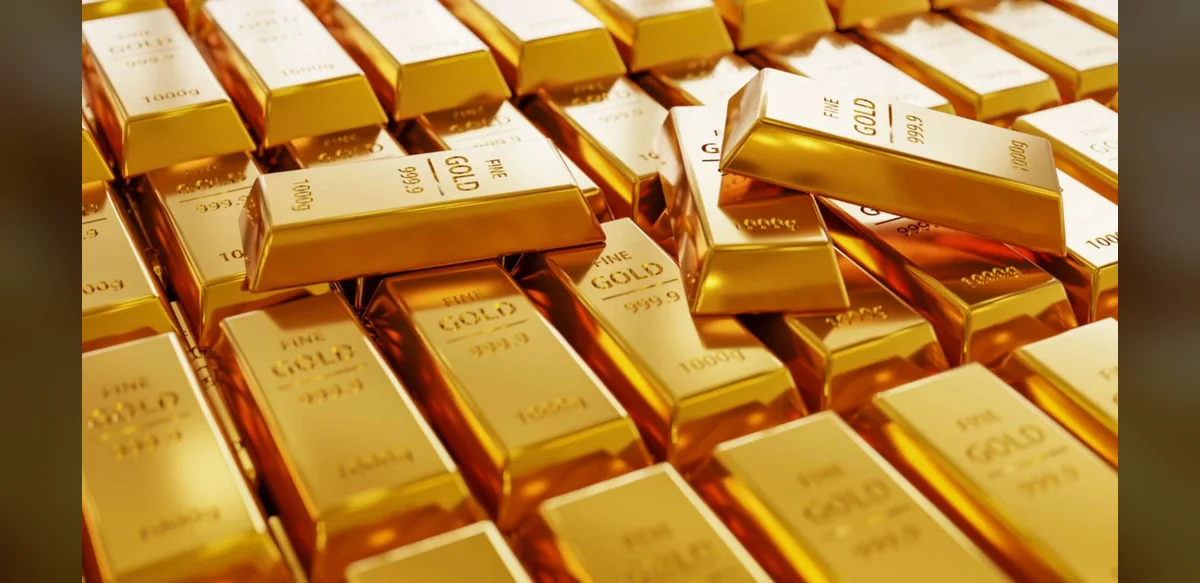
For centuries people have prized pure gold for its lasting shine and resistance to dullness. Scientists have now identified a microscopic self-protection mechanism on gold that prevents oxygen from causing damage. Researchers at Tulane University discovered that surface atoms spontaneously reorganize into stable arrangements that block chemical reactions. This natural barrier reduces oxidation rates by up to a trillion times and accounts for the metal’s long-term durability. Their results appear in Physical Review Letters. The study shows that gold’s strength stems from both its atomic layout and its chemical properties rather than chemistry alone. The finding may influence how gold catalysts are engineered for manufacturing and clean-energy uses. Gold has traditionally been viewed as unreactive because it sits low on the reactivity scale and possesses a stable electron configuration. The Tulane team used computer modeling to examine two common surface structures. Their simulations revealed that atoms shift positions when oxygen approaches, forming geometric barriers that stop molecules from splitting and bonding. Without this rearrangement, oxidation would occur far more rapidly. The same protective process that preserves jewelry also limits gold’s performance in industrial catalysis. Gold-palladium mixtures are already employed to produce vinyl acetate and are being tested for carbon-monoxide removal and propylene-oxide synthesis. The researchers suggest that controlling surface shape could prevent the protective rearrangement and increase reactivity when desired. Pure 24-karat gold resists chlorine, pollution and sweat yet remains too soft for most jewelry. Manufacturers therefore combine it with copper, silver, zinc or nickel to improve hardness. These additions can cause discoloration over time, explaining why some lower-karat pieces still tarnish despite the underlying metal’s stability.