


Ongoing tensions in West Asia keep global energy markets unsettled. India relies on imports for nearly 85 percent of its crude oil, much sourced from the region, with supplies disrupted by the Israel-U.S.-Iran conflict. Although the government has broadened its crude suppliers, about 90 percent of LPG imports still pass through the Strait of Hormuz, leaving energy security vulnerable to regional instability.
India has promoted alternative fuels such as compressed biogas over the years to cut import dependence, manage farm waste and boost rural earnings. Despite policy backing and ambitious goals, advancement stays slow.
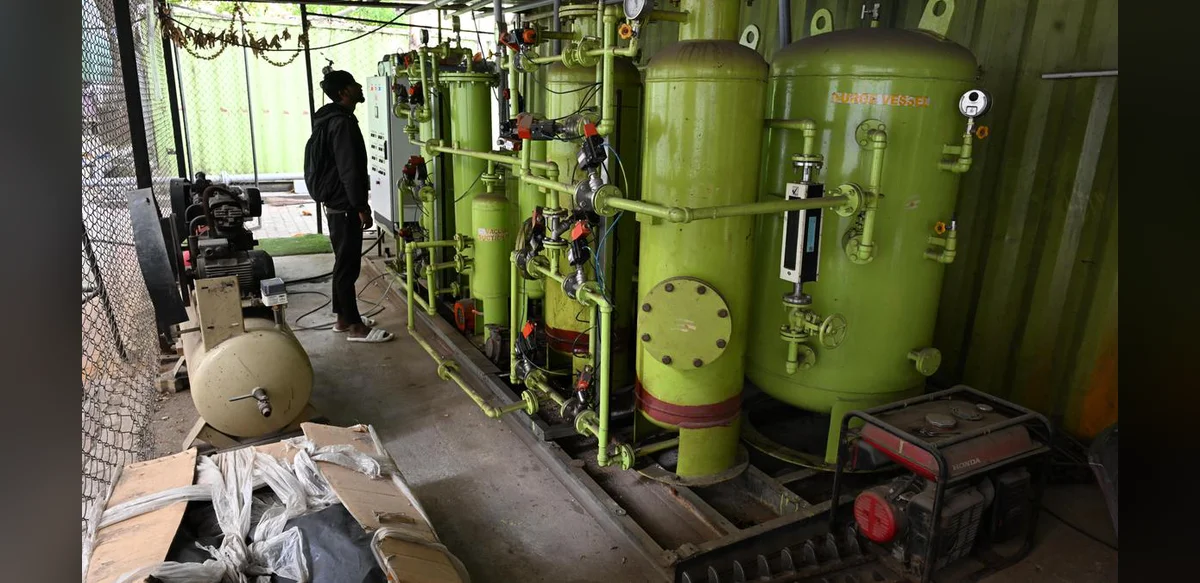
Biogas forms from methane, carbon dioxide and trace gases through anaerobic digestion of organic material. After processing and compression it becomes Compressed Biogas, chemically the same as CNG. Renewable and carbon-neutral, it can be made from waste and used for electricity, heating or cooking.
For at least ten years India has sought to blend biogas into its gas network. Momentum increased in 2018 with the SATAT programme, which aimed for 5,000 plants by 2023; only 132 were finished by June 2026.
The GOBARdhan scheme was introduced to raise CBG output. Through this waste-to-wealth effort the government provided grants up to 50 lakh rupees per district for community plants, earmarked 564 crore rupees for biomass machinery and allocated 994 crore rupees for pipelines linking plants to the gas grid.
Ground-level progress remains limited due to weak infrastructure, low private investment, credit access issues and high technology costs. Government financial aid can improve viability, while measures such as accelerated depreciation and tax holidays could draw more private participation.
Biogas growth worldwide has been uneven, with Europe, China and the United States producing 90 percent of the total. Germany leads in Europe alongside France, Denmark and the United Kingdom. Support began in 2000 via the Renewable Energy Sources Act, followed by income guarantees, operator bonuses and small-plant incentives. The drive led to a sharp rise in maize cultivation because it proved profitable, displacing other food crops. After more than a decade the government imposed a maize-use cap.
The Economic Survey 2026 recorded a sharp increase in Indian maize cultivation that may affect crop diversity and food security. National maize yields rose from about 2.56 tonnes per hectare in FY16 to roughly 3.78 tonnes per hectare by FY25, while yields for soybeans, sunflower, rapeseed, peanuts and millets stagnated or fell.
Administered ethanol prices set by the government favour maize feedstock over rice or molasses. Between FY22 and FY25 the maize-based price grew at an 11.7 percent CAGR, making maize more attractive. Maize area and output rose while pulses declined and oilseeds plus other cereals showed modest gains. In states such as Maharashtra and Karnataka, maize now competes with pulses, oilseeds, soyabean, millets and cotton for land, water and labour.
India imports large volumes of pulses and edible oils. Policy that inadvertently discourages their cultivation could raise future import dependence and price volatility. Denmark, aiming for full biomethane use by 2030, discourages crop feedstock and relies mainly on livestock waste.

