


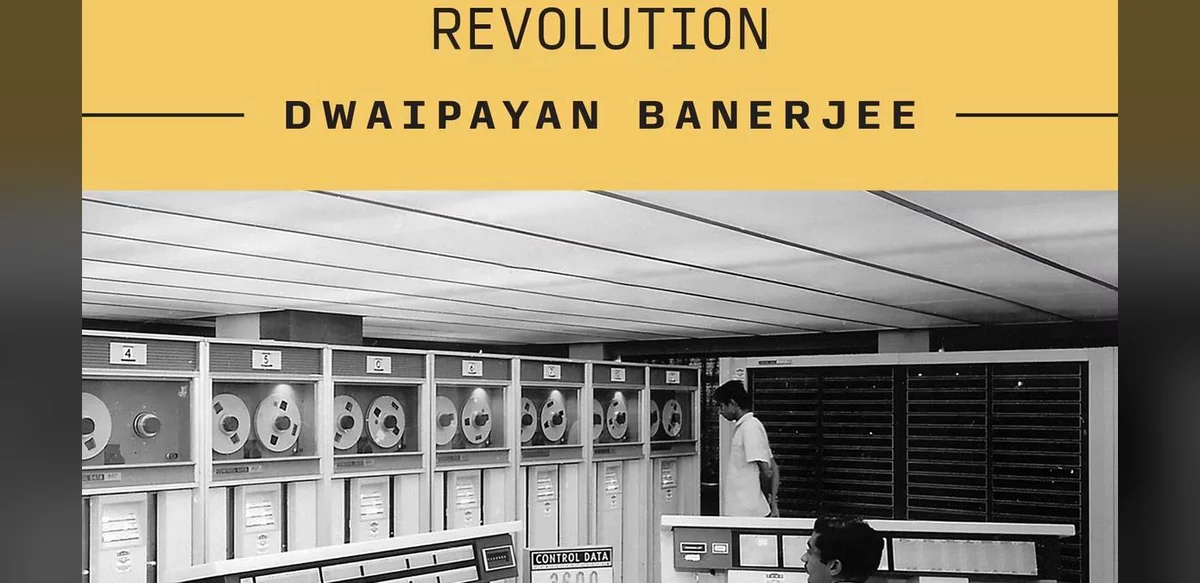
A new book by MIT historian Dwaipayan Banerjee examines India’s computing industry from the 1950s to the 1980s and explains why attempts at self-reliance did not succeed. The account centers on the Tata Institute of Fundamental Research, where scientists developed TIFRAC, an indigenous computer finished around 1960. Although the government backed the project, it failed to build a broader industry, resulting in limited domestic electronics capacity and expertise confined to a few centers.
IBM supplied refurbished machines to a protected market and accounted for about three-quarters of India’s computers by the early 1970s. The company was required to leave in 1977 under foreign equity rules but later returned through a partnership with the Tata Group.
The book also details efforts at the Electronics Corporation of India to create local computers, including the 1968 Trombay Digital Computer based on semiconductors. Despite progress in hardware and software, reliance on imported parts persisted. Government initiatives to manufacture components domestically were hampered by bureaucratic conflicts, Cold War restrictions, and trade imbalances.
Banerjee argues that true independence requires addressing political and social structures beyond technical skill. He identifies the separation of software from hardware and the focus on export services rather than manufacturing as key missteps. The analysis links these choices to ongoing global concentrations of semiconductor production.
The book is critiqued for its deterministic approach and limited exploration of policy alternatives. It also understates gains from the software export sector, such as employment and foreign exchange earnings.

