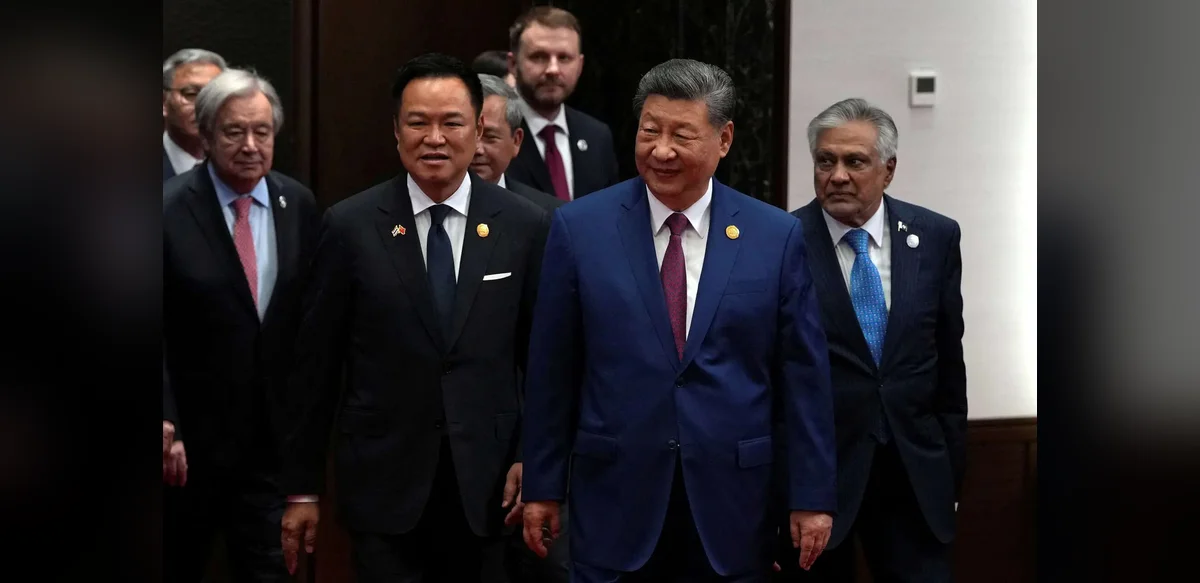
Chinese President Xi Jinping on Friday presented Beijing as a supporter of a new worldwide AI framework, using the country’s main technology event to advocate open-source approaches and question U.S. sway over rules for the rapidly evolving field. In remarks at the opening of the World Artificial Intelligence Conference in Shanghai, Xi called on nations to grasp the significant chance offered by open-source AI and promised support for developing countries to strengthen their AI abilities, cautioning against fresh imbalances arising from uneven access to the tools. The comments represented Xi’s most direct statement so far on China’s goal to influence global AI oversight, presenting its open-source systems as a shared resource and offering Beijing as an option to Washington during a key phase in the contest for technological preeminence. Equating AI’s importance to the steam engine and electricity, Xi described a plan where China distributes AI knowledge and skills with nations in the developing world while guiding international work to set standards for the new technology. The address presented China’s AI group as a counter to the U.S.-backed Pax Silica effort on AI and mineral supply lines, though Xi did not mention Washington directly. His words arrived as Chinese open-weight models advance quickly versus closed systems from American firms like OpenAI and Anthropic. A Beijing startup introduced a large open AI model on Friday, described as the biggest by parameter count, shortly after the U.S. government withdrew certain frontier models over security issues. Xi also stressed keeping AI under human direction and urged nations to create alert and response systems for managing AI dangers, marking his clearest comments yet on safety. He further called for steps to prevent loss of control, highlighting risks from autonomous systems that might escape oversight. Xi noted the China-formed World AI Cooperation Organisation, which gained 29 members on Thursday, as a key step in global AI progress that meets calls from developing nations for more involvement in governance. China will offer AI training and set up cooperation centers with BRICS, ASEAN, Latin American and African Union countries, Xi added, linking China’s AI efforts to major developing blocs where it already holds strong sway. Analysts said the message shows China intends to lead on both AI technology and standards rather than follow others, and serves as a signal that Beijing will resist external direction on AI matters. The July 17-20 event occurs as Washington and Beijing ready their first official AI discussions under the current U.S. administration, turning the conference into an early indicator of China’s approach to competing for influence over worldwide AI rules. The two sides presented differing views at a recent U.N. AI session, with U.S. representatives warning that heavy regulation might slow progress while China highlighted its affordable open-source models as a way to narrow access gaps. Besides major Chinese tech firms, attendees include the U.N. Secretary-General and leaders from Kazakhstan and Thailand.