


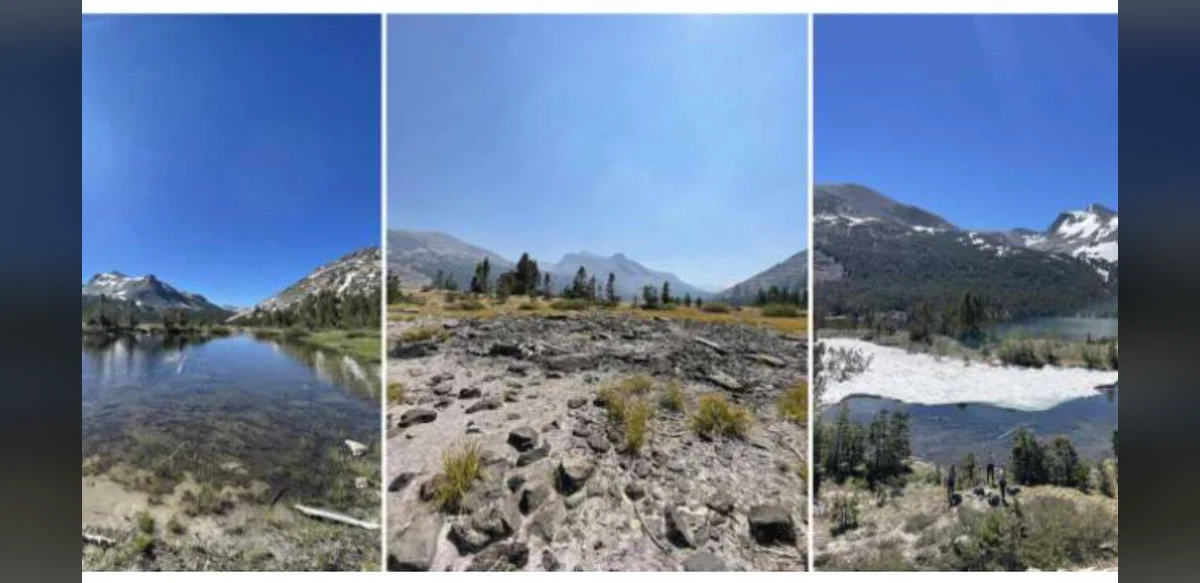
High in California’s Sierra Nevada, small ponds appear calm in summer yet undergo rapid shifts below the surface. A recent study found these shallow waters rank among the most thermally variable freshwater systems, with temperatures varying more than 20 degrees Celsius in one day. The main influence is winter snowpack rather than current weather.
Published in Ecosphere, the work shows that snow levels determine pond size, temperature, nutrient content and the microscopic life within them during summer. With climate change expected to cut snowfall, the ponds are projected to grow warmer, shrink and hold higher nutrient levels.
Two graduate students combined their projects on these high-elevation sites. They examined 30 ponds across four summers that included both drought periods and record snowfall. Sites ranged from 2,300 to over 3,400 metres in elevation.
Heavy winter snow kept ponds larger, colder and lower in nutrients through summer melt. Low-snow years produced smaller, warmer ponds where nutrients concentrated. These conditions supported greater numbers of zooplankton.
The ponds also mix nearly every night. Cooling surface water sinks after sunset, circulating the full water column and driving the large daily temperature changes, unlike stratified lower-elevation ponds.
Climate models cited in the study forecast up to 70 percent snowpack loss in the region by 2100. Remaining ponds would likely face wider temperature swings and elevated nutrients, altering plant and animal communities.
Though small and seldom studied, the ponds process nutrients, cycle carbon and support biodiversity across mountain landscapes. Further work is required to track their responses to ongoing climate shifts.

