


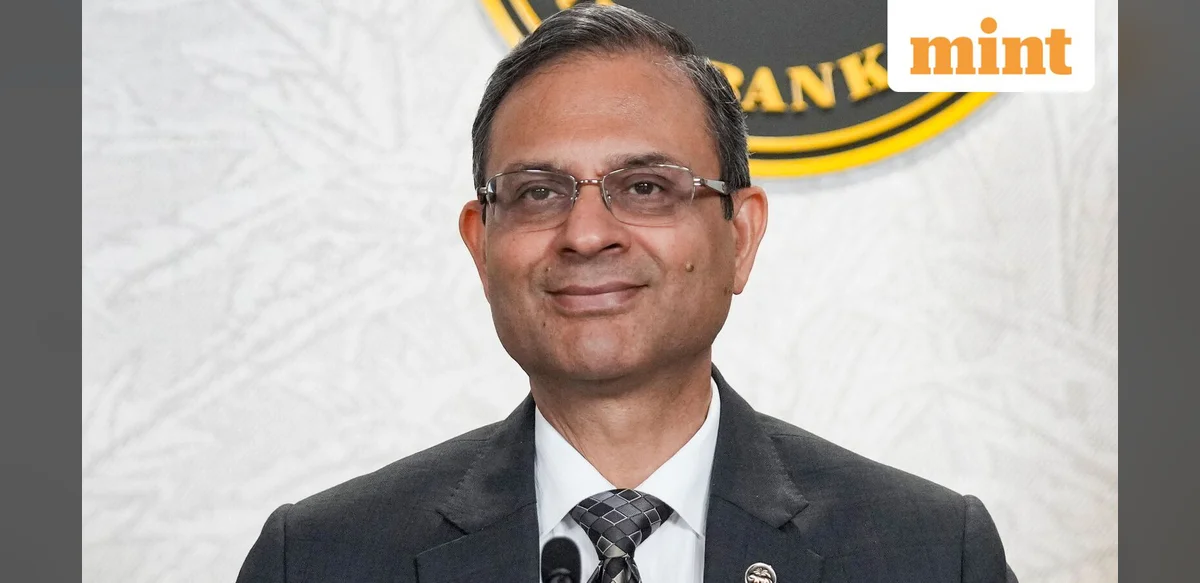
Geopolitical strains in West Asia along with irregular southwest monsoon rains represent the primary threats to India’s economic outlook, Reserve Bank of India governor Sanjay Malhotra stated on Friday.
The caution follows retail inflation rising to 4.38 percent in June from 3.9 percent in May, exceeding the central bank’s 4 percent target for the first time since the updated consumer price index series began in January 2026. Food price increases climbed to 5.32 percent from 4.78 percent the prior month.
Economic expansion is projected to moderate. The RBI anticipates growth easing to roughly 6.6 percent in the April-June period after an upwardly adjusted 7.8 percent in the preceding quarter. Annual growth is forecast near 6.6 percent versus 7.7 percent in the previous fiscal year.
In this context, Malhotra supported the rupee’s showing amid a firmer dollar and greater global volatility.
“Following the West Asia conflict, the dollar strengthened while many nations’ currencies weakened. Viewed globally, India’s rupee position appears typical,” he noted during a Friday interview with DD News.
Malhotra indicated India’s external accounts should stay steady due to robust services exports, remittance flows, record foreign direct investment, and advances in trade pacts.
He referenced recent steps easing foreign investment in government securities, higher services exports and remittances, plus agreements with the UK and talks with the European Union and United States as supports for the balance of payments.
On June 5 the RBI held rates steady and, with the government, broadened overseas investor access to government securities, relaxed foreign portfolio investor limits, and endorsed tax relief on sovereign bonds. Analysts project these steps could attract 35 to 45 billion dollars in inflows during 2026.
“Gross FDI reached about 95 billion dollars last year, a record,” Malhotra observed, noting net foreign direct investment of around 7 billion dollars in the first two months of the current fiscal year.
“Over the medium and longer term our balance of payments and external sector will stay solid. There is no cause for concern,” he added.
Malhotra still described the West Asia situation as a risk despite markets absorbing its effects so far.
“The danger persists. We hope for swift peace. Damaged infrastructure there will require time to rebuild,” he said.
The monsoon poses another concern given its role in the rural economy.
“Monsoon trends merit attention since much of the population relies on farming and agriculture accounts for about one-sixth of the economy,” he stated.
The weather department has predicted 10 percent below-average rainfall this season amid emerging El Niño conditions. June saw a 40 percent shortfall.
Malhotra nevertheless described India’s growth prospects as solid, supported by strong macroeconomic fundamentals.

