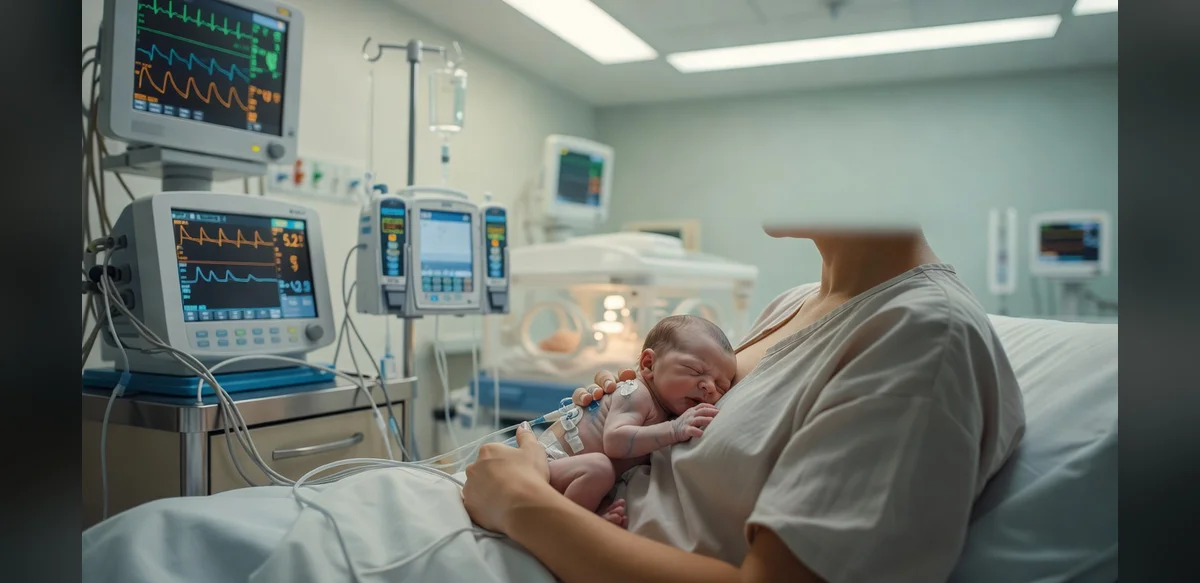
A new prospective cohort study published in the Journal of Perinatology investigates whether early skin-to-skin contact maintains thermal stability as effectively as traditional incubator care for infants born between 22 and 25 weeks of gestation. The research employs a non-inferiority design to compare the two approaches in the initial hours after birth. Extremely premature infants face significant challenges in regulating body temperature due to underdeveloped skin and limited fat reserves. Maintaining stable warmth is essential to prevent complications such as hypothermia, which can affect organ function and overall survival rates. Incubator care has long served as the standard method for providing controlled warmth in neonatal intensive care units. Skin-to-skin contact, also known as kangaroo care, involves placing the infant directly on a parent’s chest to promote bonding and physiological stability. The study focuses on the earliest period following delivery to assess if this method can match incubator performance without increasing risks. Researchers followed a group of infants meeting the specified gestational age criteria across multiple centers. Temperature measurements were recorded at regular intervals to evaluate stability over time. The non-inferiority framework allows determination of whether skin-to-skin care performs within an acceptable margin compared to the established incubator approach. Findings from this type of investigation could influence protocols in neonatal units worldwide. Current guidelines often recommend delaying skin-to-skin contact for the most premature infants until they achieve greater stability. If evidence supports equivalent thermal outcomes, practices might shift toward earlier introduction of parental contact. This change could offer additional benefits including improved heart rate regulation and reduced stress responses in newborns. The cohort design provides real-world data from clinical settings rather than controlled laboratory conditions. Participants were selected based on strict inclusion criteria to ensure comparability between groups. Ethical considerations guided all procedures, with continuous monitoring to allow immediate intervention if temperature deviations occurred. Medical teams involved in the research emphasized the importance of individualized care decisions. Factors such as infant weight, respiratory status, and parental readiness play roles in determining suitable methods. The publication adds to growing literature on supportive interventions for infants at the edge of viability. Earlier studies have examined skin-to-skin care in slightly older preterm populations, typically those born after 26 weeks. Extending analysis to 22 to 25 weeks addresses a gap in evidence for the smallest and most fragile patients. Thermal stability represents one key outcome among several that require evaluation before broad adoption of new practices. Additional research may explore infection risks, breastfeeding success, and long-term developmental effects. Hospitals considering updates to care pathways would benefit from comprehensive data across these domains. The study authors note that results should be interpreted alongside existing safety standards. Continuous education for neonatal staff remains critical to successful implementation of any revised protocols. Parents of extremely premature infants often experience high levels of anxiety during the initial days. Opportunities for safe physical closeness may support emotional well-being while contributing to infant regulation. International neonatal organizations continue to review emerging evidence to refine recommendations. This publication provides timely information for clinicians managing the care of infants born at the lowest gestational ages. Ongoing monitoring and follow-up assessments will help determine the broader applicability of the observed outcomes. The research underscores the value of rigorous comparative studies in advancing neonatal practices. By focusing on a clearly defined non-inferiority question, the work offers a structured basis for evaluating alternatives to conventional methods. Future investigations building on these methods could further clarify optimal timing and duration for skin-to-skin sessions in this population. Overall, the study contributes measured insights into balancing technological support with human contact in the earliest stages of life for extremely premature newborns.