


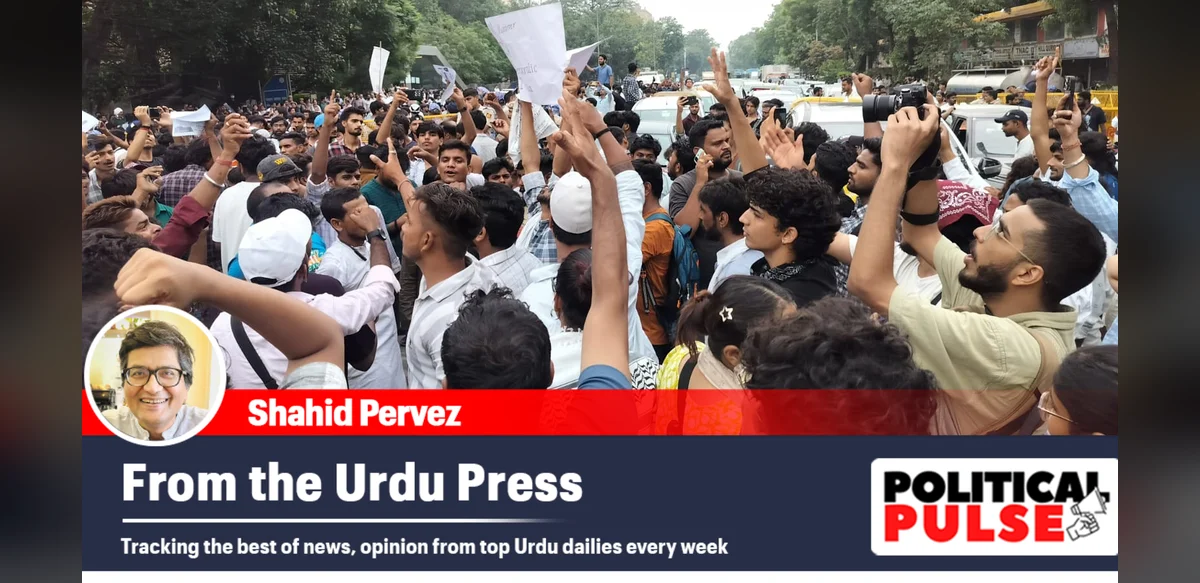
As the Monsoon Session of Parliament began on Monday, tense scenes unfolded both inside and outside the complex. The Cockroach Janta Party had maintained a prolonged sit-in at Jantar Mantar, led by activist Sonam Wangchuk’s fast, which escalated when thousands of young protesters advanced into central Delhi. They encountered police baton charges and tear gas. Urdu newspapers focused on the event, expecting it to influence parliamentary proceedings and national politics in the days ahead.
Siasat, in its July 21 editorial, noted the march by tens of thousands of students and youths under the Cockroach Janta Party banner, which produced clashes with police in central Delhi. The Hyderabad daily observed that the government had underestimated the scale and intensity of the agitation. It stated that the students and youths demonstrated their determination to pursue their rights and would continue street actions. Although pro-government media had largely ignored the weeks-long sit-in, Monday’s march proved unprecedented in size and force despite official restrictions, placing the administration on the defensive.
Hours after the march, which followed three weeks of peaceful protest demanding changes to the examination system and the resignation of Education Minister Dharmendra Pradhan over the NEET paper leak, the government invited Cockroach Janta Party representatives for talks. Union Minister J P Nadda met the leaders and received their demands. The editorial said the shift indicated the administration now had to recognise the group and address the issue, potentially marking an initial success for the protesters.
Siasat urged the government to respond thoughtfully to the demands, implement education reforms, and rebuild student confidence. It also called on the youths to keep protests peaceful and lawful.
Inquilab, in its July 21 editorial, criticised the police response to the largely peaceful march. The New Delhi edition highlighted the challenges facing young people, including a flawed education system and rising unemployment. It said the protesters, led in Delhi by Sonam Wangchuk and Abhijit Dipke, reflected a nationwide concern over systemic failures rather than isolated exam problems.
The daily argued that calls for accountability on paper leaks, the minister’s resignation, and transparent recruitment processes represented legitimate democratic rights. It condemned the use of force that injured many participants and stressed the government’s responsibility to address grievances instead of labelling protesters as troublemakers.
The editorial warned that youth discontent over limited jobs, inequalities, and exam irregularities could produce wider social and political effects if ignored. It recommended dialogue to restore trust and support national development.

