


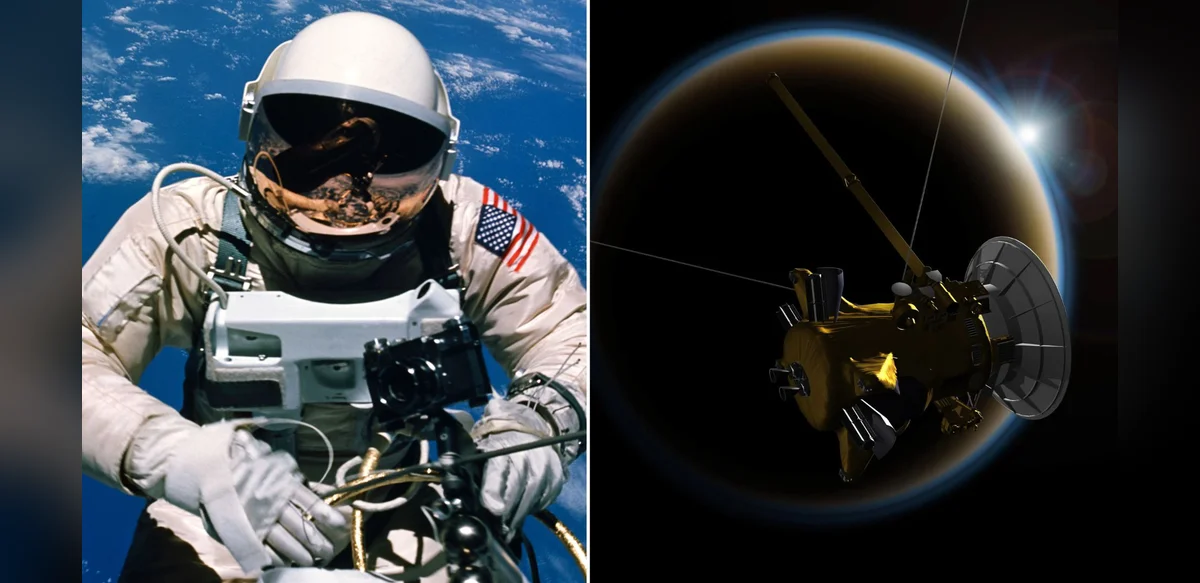
NASA has launched numerous missions that advanced human knowledge of space, Earth, and the universe. This overview highlights fifteen key efforts spanning decades, each contributing unique insights through innovative engineering and scientific discovery.
The Mercury program in the early 1960s marked America’s first steps into human spaceflight. Astronauts tested spacecraft systems and gathered data on living in orbit, laying groundwork for more ambitious projects.
Gemini missions followed, focusing on rendezvous techniques and extended stays in space. These flights refined procedures essential for lunar travel and demonstrated the feasibility of longer-duration crewed operations.
Apollo stands as a landmark achievement. The series culminated in the first crewed lunar landing, returning samples that revealed details about the Moon’s formation and geology while inspiring global interest in exploration.
Skylab served as America’s initial space station. Crews conducted experiments on solar physics, materials processing, and human physiology, proving the value of sustained orbital laboratories.
The Space Shuttle era introduced reusable vehicles. Orbiters deployed satellites, serviced the Hubble Space Telescope, and supported construction of the International Space Station over thirty years of service.
Voyager probes ventured beyond the solar system. Launched in the 1970s, they provided close-up images of outer planets and continue transmitting data from interstellar space, carrying messages for potential extraterrestrial contact.
The Hubble Space Telescope revolutionized astronomy. Orbiting above atmospheric distortion, it captured deep-field images revealing thousands of galaxies and refined measurements of cosmic expansion.
Mars exploration advanced with orbiters and rovers. Vehicles like those studying surface composition mapped water evidence and analyzed rocks, reshaping understanding of the planet’s past climate.
Cassini examined Saturn and its moons for over a decade. Detailed observations of rings, Titan’s atmosphere, and Enceladus’ plumes offered clues about planetary formation and potential habitability.
New Horizons flew past Pluto, revealing a complex world with mountains and plains. The mission extended knowledge of the Kuiper Belt and distant icy bodies.
Juno investigates Jupiter’s interior. By measuring magnetic fields and gravity, it uncovers details about the gas giant’s core and atmospheric dynamics.
The Parker Solar Probe approaches the Sun closer than prior craft. It samples solar wind and studies corona heating, improving forecasts of space weather affecting Earth.
Perseverance rover searches for ancient microbial signs on Mars. It collects samples for future return and tests oxygen production technology for human missions.
The James Webb Space Telescope peers into early universe epochs. Its infrared capabilities examine star formation, exoplanet atmospheres, and galaxy evolution with unprecedented clarity.
Collectively these missions expanded boundaries in propulsion, instrumentation, and data analysis. They fostered international cooperation and public engagement while generating foundational datasets for ongoing research. Future efforts will build upon these accomplishments to address remaining questions about origins and destinations beyond Earth.

