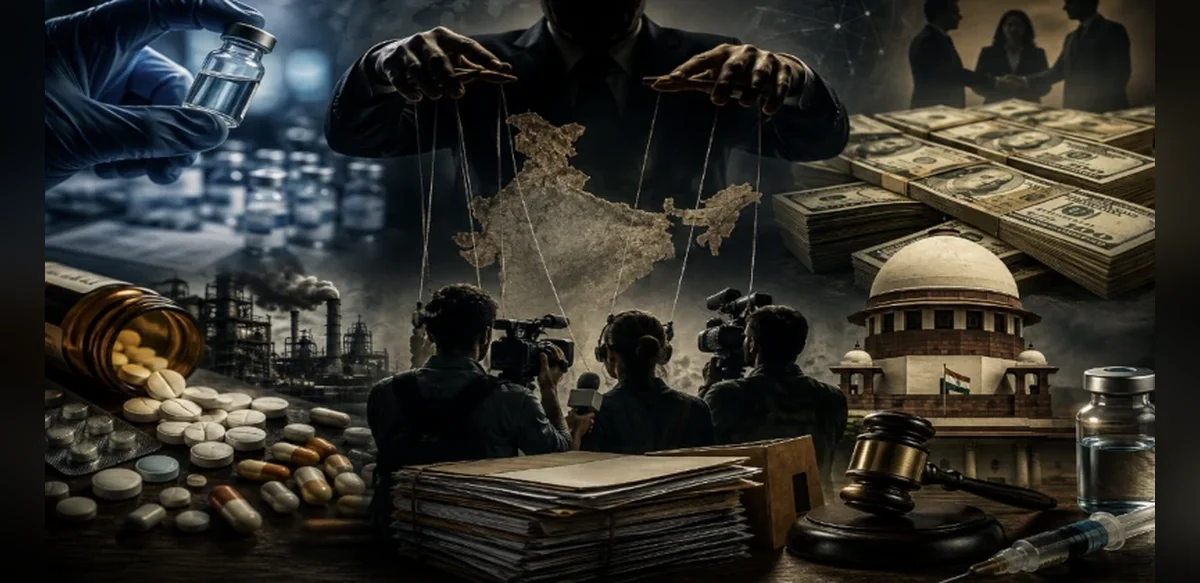
The COVID-19 pandemic left many victims including families who lost relatives, failed businesses, exhausted healthcare staff and a nation that faced major challenges in sustaining its medical services. It also led to the quick growth of an international network of journalists, researchers, activists and rights groups focused on India’s public health and drug industries. One key figure in this network is Dinesh Thakur, a former Ranbaxy executive who became known as a US whistleblower after revealing regulatory and data issues at the Indian firm. He received 48.6 million dollars from the US government following the company’s 2013 agreement to pay 500 million dollars to settle claims of false drug data and production breaches. This case made Thakur a notable voice on drug regulation. Later developments involve how part of that influence turned into charitable work and how an American foundation began supporting journalists, researchers, lawyers and civil groups active in India. Questions arise about the effects of repeated funding for coverage of India’s pharmaceutical sector, often targeting local manufacturers and regulators, and where public health efforts cross into setting specific agendas. The Ranbaxy case is well known. Thakur joined the company in the early 2000s and raised issues about data manipulation and rule violations. The US Department of Justice reached a major settlement in 2013. The firm paid 500 million dollars and Thakur received 48.6 million dollars as a whistleblower. While the allegations against Ranbaxy were serious, the outcome gave a former insider both credibility and large financial resources. Thakur then entered public health advocacy and civil society work. The Thakur Family Foundation served as one channel for this activity. It presents itself as an independent funder focused on public health and civil liberties in India. Its grant records show support for investigative journalism, health reporting, research and civil society projects. These records list funding to many individuals and groups working on Indian public health and rights issues, including media outlets and journalists. Scroll Media Inc. received a public health reporting grant in 2020. The foundation’s site lists resulting stories on COVID testing, hospitals, drug regulators, vaccine trials and contact tracing. The Wire also disclosed that stories by journalist Priyanka Pulla received support from foundation grants, including pieces on India’s drug testing system. Such funding creates connections that warrant examination even if individual reports remain accurate. Pulla produced extensive coverage during the pandemic on health systems, drug rules, deaths, vaccines and medicine quality, with some work backed by the foundation.