


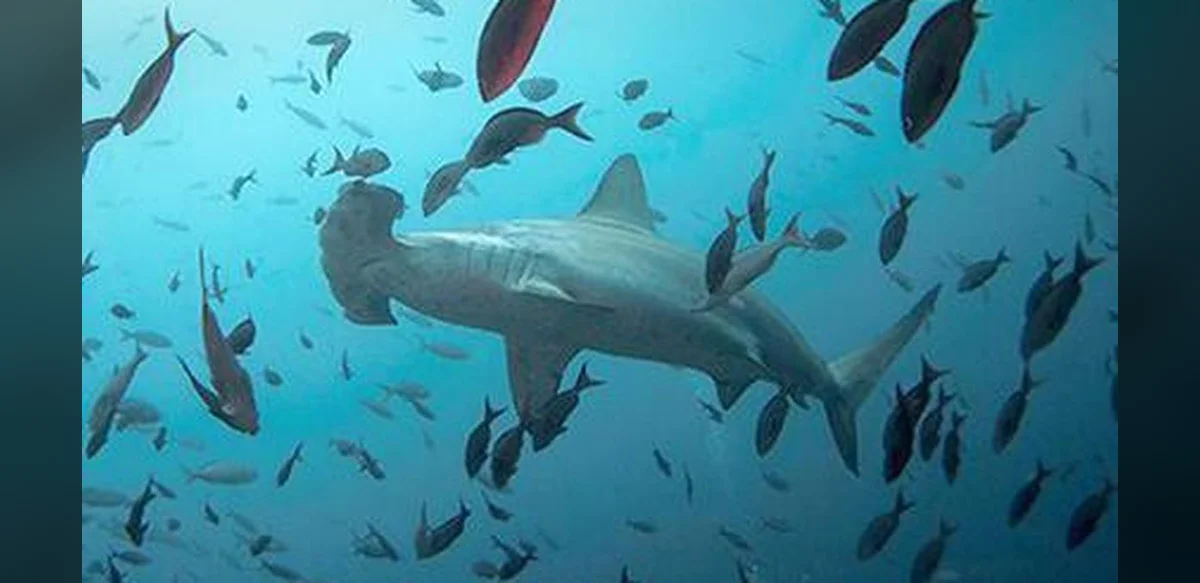
From cinematic depictions of sharks as threats to summer beachgoers, these animals have often been shown as sources of fear. Yet sharks moving through waters along the U.S. East Coast may now contribute more than hunting. They could gather information that aids scientists in assessing a hurricane’s potential strength ahead of landfall.
University of Delaware researchers are exploring whether sharks can act as mobile, near-real-time ocean observers. They carry sensors that record ocean conditions to support oceanographic, atmospheric and climate models.
The CTD tags are compact electronic units that track ocean electrical conductivity, linked closely to salinity, along with temperature and depth while the attached marine animals swim and dive.
Animal-borne sensors have long aided oceanographers, especially on elephant seals in polar areas with limited scientific data, noted Aaron Carlisle, the lead investigator and a professor in the university’s School of Marine Science and Policy.
Sharks present a fresh chance in this work because they are plentiful, broadly spread and simpler to reach than many protected marine mammals, Carlisle explained.
Shark tagging has mainly recorded travel routes and habitats until now.
The Delaware team chooses sharks that can gather measurements most relevant to hurricane studies and prefers species that surface regularly to send data via satellites. Earlier reviews pointed to shortfin mako sharks, blue sharks, smooth hammerheads and young great white sharks as good options for North Atlantic research.
The focus is on heat content in the ocean’s top mixed layer, Carlisle said. This layer influences hurricane strength, with warmer water leading to more intense storms as it supplies the energy that fuels them.
Tagging starts in early May when migratory species approach the coast from winter grounds farther offshore, according to doctoral candidate Caroline Wiernicki.
Teams travel 50 to 65 km out on a research vessel, set baited lines and wait two to three hours for a shark to bite, she said.
Tags attach to the dorsal fin. Each time the shark surfaces, the device sends data to satellite receivers, Carlisle noted.
The process runs like a pit crew during a race and usually finishes in under five minutes.
Tagging follows institutional animal care rules to limit effects on the sharks. Attachments use materials that corrode and detach over time. Each shark receives a health check before release to avoid stress that could alter natural behavior and skew results.

