

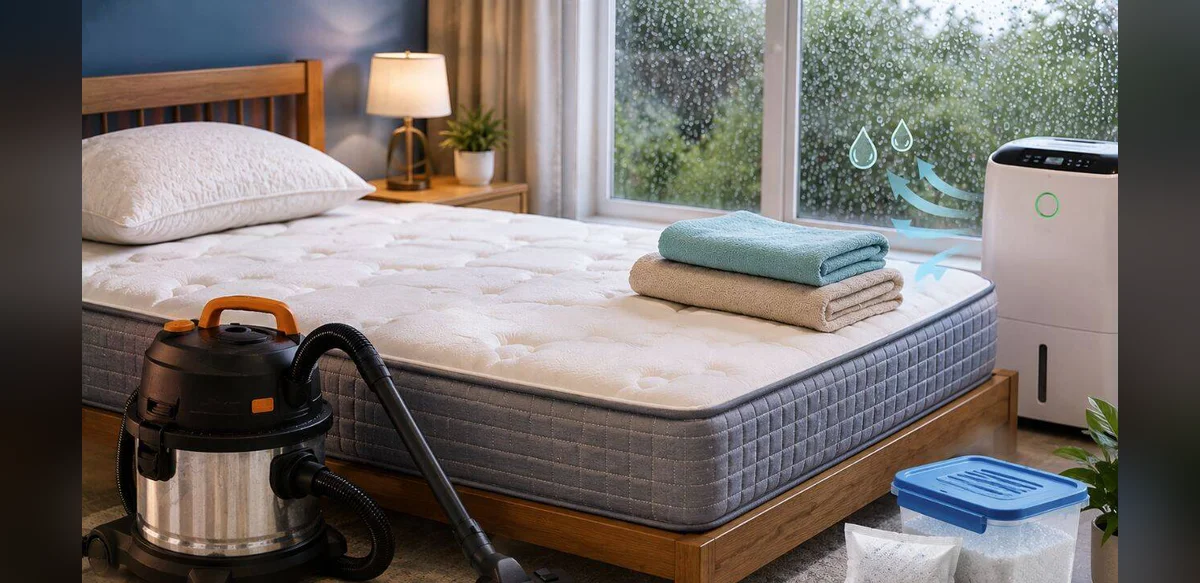
Monsoon humidity often leaves mattresses feeling damp without direct rain exposure. Moisture builds from air, sweat and bedding, sometimes unnoticed until a musty odor or mold risk appears. Opening windows alone may not suffice on very humid days. The best strategy combines removing existing moisture and limiting new buildup with proper tools and protective items.
A dehumidifier proves effective when room humidity stays elevated. Close doors and windows, then operate it per guidelines to extract air moisture and allow the mattress to release trapped dampness.
A powerful fan accelerates drying on slightly moist surfaces. Remove sheets, direct airflow across the top evenly, and ensure space for circulation around the bed until fully dry.
For actual liquid spills, a wet-dry vacuum extracts more fluid than towels. Use suitable attachments only, follow instructions, then apply fan or dehumidifier for remaining moisture.
Calcium chloride absorbers reduce humidity in enclosed spaces. Position them near the bed, away from children and pets, as a supplement rather than primary solution in very damp rooms.
After light cleaning with a damp cloth, extract leftover water using a permitted wet vacuum. Follow with fan or dehumidifier until completely dry.
A breathable waterproof protector blocks sweat and spills while permitting vapor escape. Select one designed for mattresses, wash regularly and ensure full dryness before reuse.
Damp sheets or covers transfer moisture quickly. Dry all bedding thoroughly after washing, using a dryer or ventilated indoor area if outdoor drying is impractical. Avoid placing nearly dry items on the mattress.
Sunlight aids drying only in suitable weather. Humid or rainy periods let more moisture indoors through open windows, making dehumidifiers or air conditioners with drying modes more consistent for control.


