

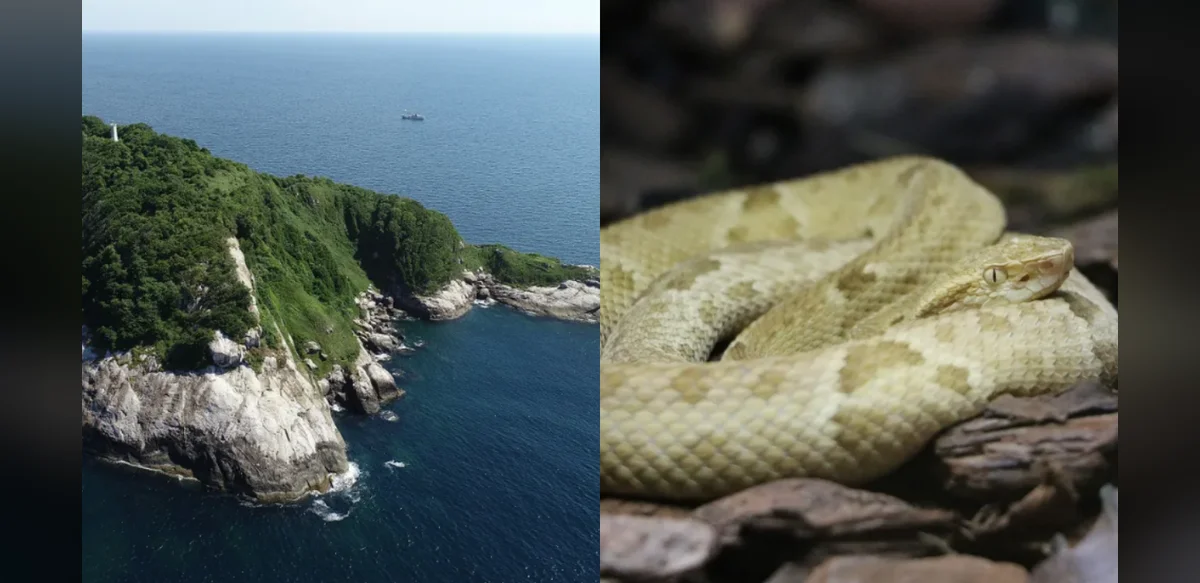
Off the southeastern coast of Brazil lies a small, inaccessible landmass known as Ilha da Queimada Grande. Rising sea levels thousands of years ago severed its connection to the mainland, creating an isolated environment where a distinctive population of golden lancehead vipers has developed. These reptiles have adapted to the limited prey available on the island by producing venom of exceptional strength and speed.
The serpents’ venom acts quickly on the nervous system, allowing efficient capture of birds and small mammals that form their primary diet. Because the island offers few other food sources, this evolutionary change has become essential for survival. Human visitors face significant risk from any encounter, as the venom’s potency can lead to severe medical complications within minutes.
Brazilian officials have responded by imposing rigorous entry restrictions. Only authorized scientific researchers may visit under controlled conditions, and recreational access remains prohibited. These measures aim to reduce disturbance to the fragile ecosystem while protecting both people and the resident wildlife from unintended harm.
The golden lancehead population faces multiple pressures. Habitat degradation from occasional storms and erosion threatens the remaining forest cover. Illegal collection for the exotic pet trade further reduces numbers, despite legal penalties. Conservation assessments currently classify the species as critically endangered, underscoring the urgency of continued protection.
Scientists studying the vipers note that their venom contains unique compounds that could inform future medical research, yet collection remains tightly regulated to avoid additional stress on the population. Monitoring programs track population trends through non-invasive methods such as camera traps and acoustic surveys.
Local authorities coordinate with international herpetological organizations to share data and best practices. Educational outreach in nearby coastal communities emphasizes the ecological value of the island and the dangers of unauthorized landings. These efforts seek to build long-term support for preservation without compromising safety.
Rising global temperatures and changing ocean patterns may influence future sea levels around the island, potentially altering its size or vegetation. Researchers continue to model these scenarios to anticipate impacts on the viper habitat. Any significant reduction in suitable terrain could accelerate the species’ decline.
The combination of natural isolation, specialized venom, and strict human exclusion has preserved a rare example of evolutionary adaptation. At the same time, the same factors that make the island biologically remarkable also render the vipers highly vulnerable to external threats. Sustained vigilance remains essential to maintain the balance between scientific interest and species survival.
Ongoing studies focus on genetic diversity within the population to assess resilience against disease or environmental shifts. Data collected over decades indicate a slow but steady decrease in numbers, reinforcing the need for protective policies. International recognition of the site as a key biodiversity hotspot has helped secure additional funding for monitoring equipment and enforcement patrols.
In summary, Ilha da Queimada Grande stands as both a natural laboratory and a conservation priority. The golden lancehead vipers exemplify how geographic separation can drive rapid biological change, while also highlighting the challenges of safeguarding small, isolated populations from modern pressures. Brazilian regulations continue to prioritize protection, ensuring that this unique ecosystem remains largely undisturbed for future observation and study.


