


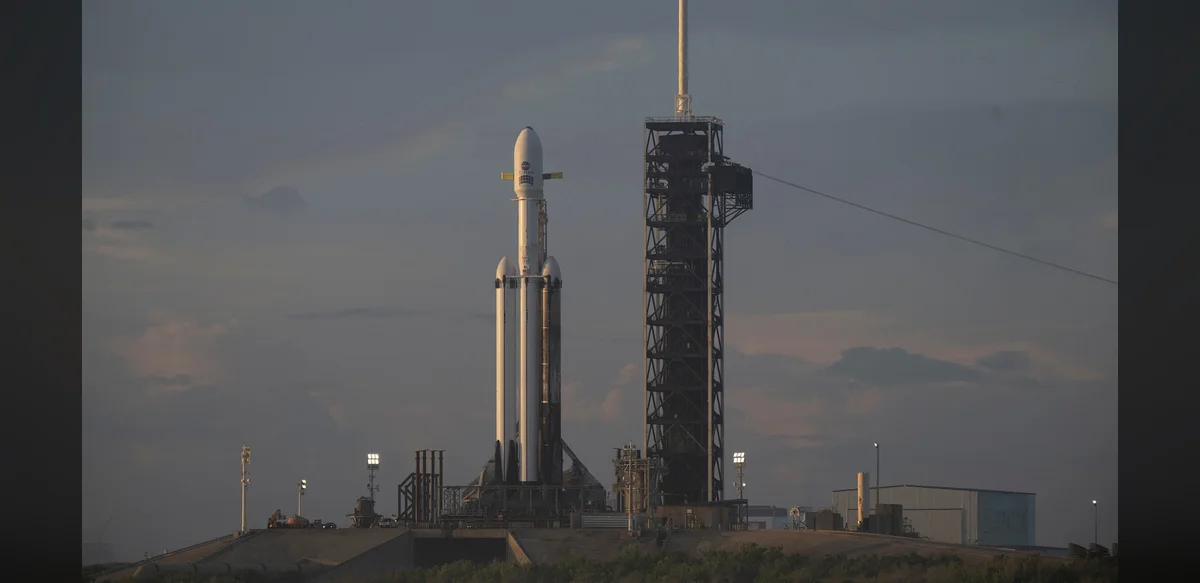
The National Aeronautics and Space Administration has successfully sent its most recent space observatory into orbit. The launch marks the beginning of an ambitious effort to detect worlds orbiting distant stars and to investigate regions of the cosmos that remain largely unseen. Engineers and scientists monitored the ascent from the ground as the vehicle climbed steadily, carrying the telescope payload beyond Earth’s atmosphere.
Once in position, the instrument will begin a series of observations designed to gather data on exoplanets and faint celestial phenomena. Project officials emphasized that the mission focuses on expanding knowledge of planetary systems outside our own solar system while also probing areas where light is obscured by dust or distance. Early operations will include calibration of sensitive detectors and verification of communication links with ground stations.
The telescope represents years of planning and construction by teams across multiple research centers. Its design incorporates advanced optics and cooling systems intended to reduce interference and improve detection of subtle signals from space. Mission planners note that these capabilities should allow the observatory to collect information that ground-based facilities cannot easily obtain.
Over the coming months, controllers will conduct a sequence of tests to ensure all subsystems function as intended. Data from the first targeted observations are expected to arrive after the checkout period concludes. Researchers anticipate that findings could contribute to broader understanding of how planets form and evolve, as well as the distribution of matter throughout the galaxy.
Public interest in the project remains high, with updates shared through official channels. Educational materials prepared by the agency highlight the telescope’s role in ongoing efforts to map the universe. The mission continues a long tradition of robotic exploration that has steadily increased humanity’s view of the cosmos.
International partners have contributed components and expertise, underscoring the collaborative nature of modern space science. Coordination among agencies helps share costs and technical knowledge while accelerating the pace of discovery. The current observatory builds on lessons learned from earlier missions, incorporating refinements that address previous limitations.
Weather conditions at the launch site were favorable, allowing the countdown to proceed without interruption. Spectators watched the vehicle rise on a column of light before it disappeared from view. Telemetry received shortly afterward confirmed that the upper stage had performed its burn and released the telescope on its planned trajectory.
In the days ahead, flight controllers will adjust the spacecraft’s path and begin deploying protective covers and solar arrays. These steps are critical to preparing the telescope for science operations. Once fully configured, the observatory will enter a stable orbit from which it can conduct uninterrupted observations.
Scientists involved in the project have outlined a range of initial targets, including nearby star systems known to host planets. Additional time will be devoted to surveying regions of the sky that appear dark in visible light but may reveal new structures when viewed at other wavelengths. The combination of these programs is expected to produce a rich dataset for analysis over several years.
The successful launch adds another tool to the growing array of instruments studying the universe from above the atmosphere. Each new observatory brings incremental improvements in sensitivity and resolution, allowing researchers to address questions that were previously out of reach. The current mission is positioned to contribute to that progression.
Agency leadership expressed satisfaction with the outcome of the launch and thanked the workforce responsible for preparing and executing the flight. Continued support from government and academic institutions will be essential as the mission moves from commissioning into routine operations. Updates on progress will be released periodically as new information becomes available.

