


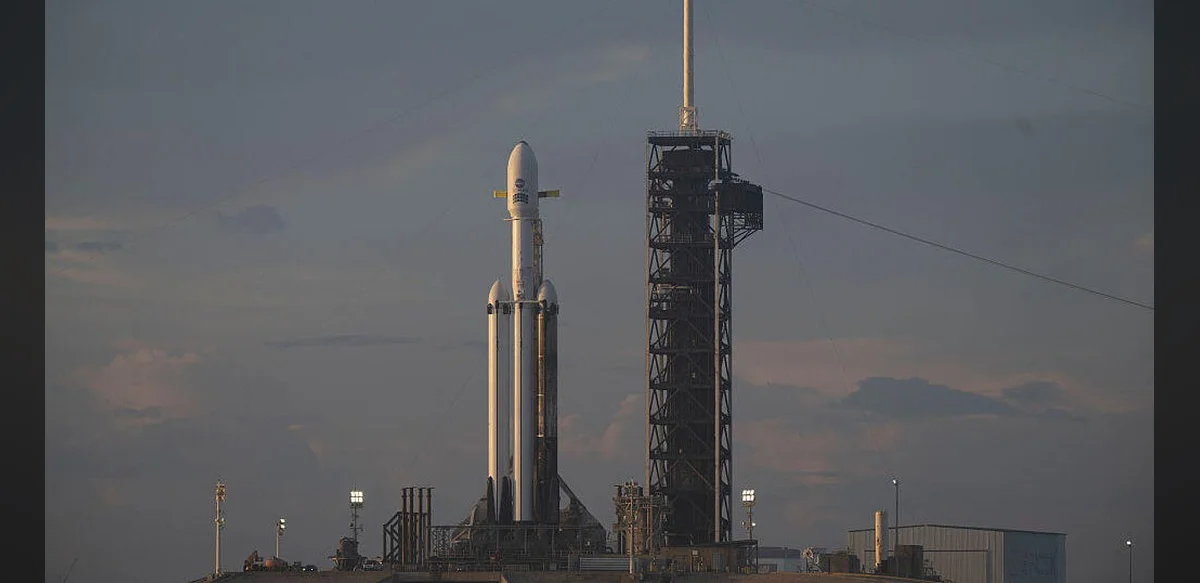
The National Aeronautics and Space Administration has successfully sent its Roman Space Telescope into orbit. The launch occurred shortly after sunrise from the Kennedy Space Center. The spacecraft is now traveling to a stable observation position approximately one million miles from Earth.
This mission represents a significant step in efforts to study distant celestial objects. The telescope will operate from its designated point, allowing for extended observations without interference from Earth’s atmosphere. Engineers monitored the ascent closely, confirming that all systems performed as expected during the initial phase.
The journey to the observation point is expected to take several weeks. Once positioned, the instrument will begin its primary functions of capturing data on galaxies, stars, and other phenomena. Scientists anticipate that the telescope will provide new insights into the structure and evolution of the universe.
Preparation for the launch involved coordination among multiple teams. Weather conditions were favorable on the morning of the event, enabling a smooth departure. Ground control received telemetry data indicating nominal performance throughout the early stages of flight.
The Roman Space Telescope is designed for long-term use in its remote location. Its instruments are calibrated to detect faint signals from faraway sources. This capability will support ongoing research into cosmic expansion and the distribution of matter.
Public interest in the mission has been high, with updates shared through official channels. The successful launch marks the beginning of what is projected to be a productive operational period. Further details on initial data collection will be released as they become available.
In the broader context of space science, this deployment adds to the collection of observatories positioned beyond low Earth orbit. Such placements offer advantages in stability and viewing angles. The current mission builds on prior achievements in telescope technology and deployment methods.
Teams will continue to track the spacecraft’s progress over the coming days. Adjustments to trajectory may be made if needed to reach the precise target location. Communication links remain active, providing regular status reports.
The overall objective centers on advancing understanding of universal phenomena through high-resolution imaging. Data gathered will be analyzed by researchers worldwide. This collaborative approach maximizes the scientific return from the mission.
Additional information regarding the telescope’s capabilities and planned observations will be provided in subsequent announcements. The focus remains on ensuring the instrument reaches its intended position and begins operations without issue.
The event underscores the continued commitment to exploring space through advanced instrumentation. With the launch phase complete, attention now shifts to the transit and activation sequences ahead.

