


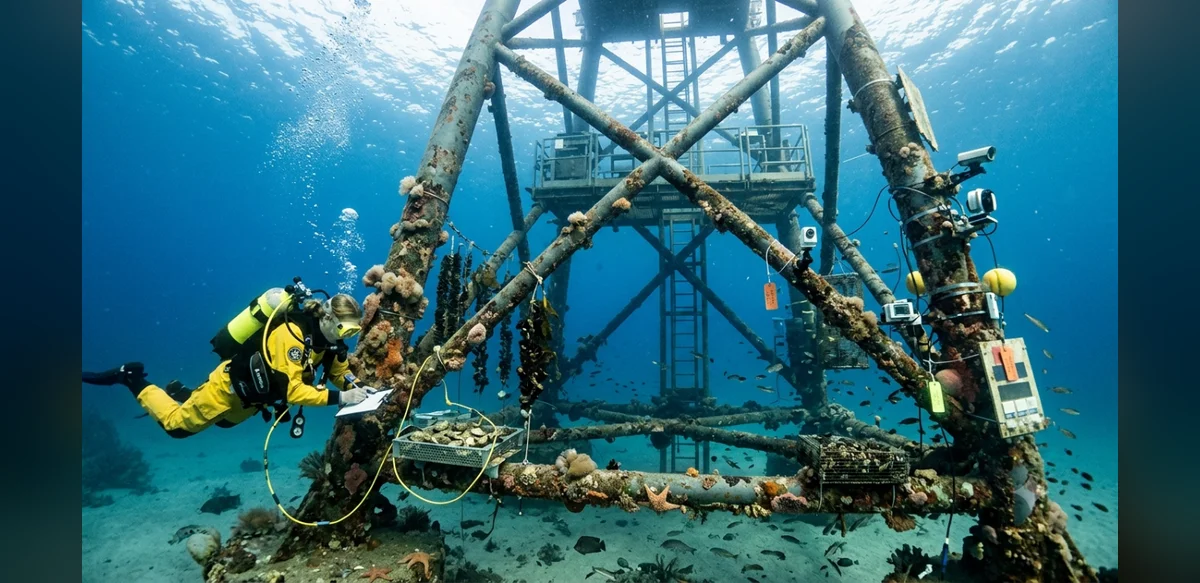
A floating wind turbine installed off the coast of Spain has unexpectedly developed into an underwater habitat supporting four distinct marine species. Researchers monitoring the site observed that the turbine’s submerged components have attracted organisms typically found on natural reefs, turning the structure into an artificial ecosystem.
The project began as part of efforts to expand offshore renewable energy capacity in European waters. Engineers designed the floating platform to withstand open-sea conditions while generating electricity from wind. Over time, marine biologists noted the gradual colonization of the turbine’s lower sections by various sea life.
Observations indicate that mussels, barnacles, algae, and small fish have established populations around the turbine base. These species appear to benefit from the stable surfaces and protection offered by the structure. The presence of multiple organisms suggests the turbine functions similarly to traditional artificial reefs used in marine conservation.
Scientists conducted regular underwater surveys to document changes in biodiversity. Data collected over several months showed steady increases in species density near the turbine compared to surrounding open water areas. The findings highlight potential secondary benefits of offshore wind installations beyond energy production.
Environmental conditions in the region, including water temperature and nutrient availability, likely contributed to the successful settlement of marine life. The turbine’s location away from heavy shipping lanes may have reduced disturbances, allowing ecosystems to develop undisturbed.
Project managers emphasize that the primary goal remains clean energy generation. However, the observed ecological interactions provide additional insights into how infrastructure interacts with ocean environments. Future installations could incorporate design elements to further support marine habitats if studies confirm long-term benefits.
The research team plans continued monitoring to track seasonal variations and species interactions. Additional data will help determine whether similar patterns occur at other floating wind sites. Such information could inform regulatory decisions and engineering standards for offshore developments.
This case illustrates the complex relationship between renewable energy projects and natural systems. While the turbine delivers power to the grid, its submerged parts have become part of the local marine environment. Ongoing studies aim to balance energy needs with ecological considerations in coastal regions.
Broader implications include the possibility of integrating habitat features into future turbine designs. Engineers and biologists are exploring materials and shapes that encourage positive marine growth without compromising structural integrity or energy efficiency. Collaboration between sectors may lead to more sustainable offshore practices.
Public interest in the project has grown as details emerge about the underwater farm. Educational programs could use the example to discuss renewable energy and ocean conservation together. Accurate reporting of scientific observations remains essential to maintain informed discussions on these topics.
The Spanish installation serves as one data point in global efforts to understand offshore infrastructure impacts. Comparable projects in other regions may yield different results based on local conditions. Comprehensive research across multiple sites will provide a clearer picture of patterns and variations.
In summary, the floating wind turbine has demonstrated an unplanned role in supporting marine biodiversity. Four species have found suitable conditions on its underwater surfaces, creating a small-scale ecosystem. Continued observation will clarify the extent and durability of these developments while the turbine continues its main function of producing renewable energy.

