


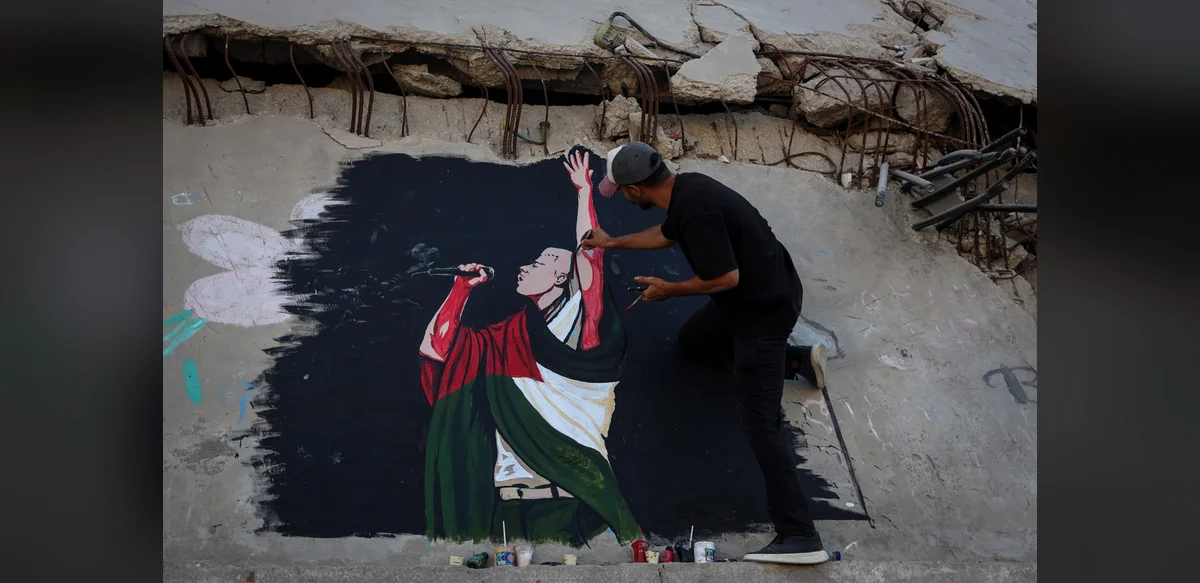
Public discourse around the Israeli-Palestinian conflict has intensified in recent years, with artists and musicians increasingly voicing positions on the issue. One prominent example involves American rapper Macklemore, whose recent work has drawn attention for its focus on Palestinian perspectives. Observers note that such cultural expressions reflect broader shifts in international opinion, particularly among younger audiences and in Western countries.
The conflict itself remains a central topic in global diplomacy, involving multiple stakeholders including regional governments and international organizations. Discussions often center on security concerns, territorial disputes, and humanitarian conditions in affected areas. Analysts point to ongoing negotiations and periodic escalations as key factors shaping the situation.
Macklemore’s contributions have sparked debate within entertainment circles and beyond. Supporters argue that artistic statements can highlight underreported aspects of the conflict, while critics contend that such interventions may oversimplify complex geopolitical realities. This tension illustrates how cultural figures sometimes intersect with political narratives.
Data from various surveys indicate changing attitudes in several nations toward the conflict. In some polls, support for a two-state solution persists, though views on specific policies vary widely. Media coverage plays a significant role in framing these developments, influencing public perception across different regions.
Educational institutions and community groups have also hosted forums examining the historical context of the dispute. These events typically feature presentations on diplomatic efforts dating back decades, including key agreements and unresolved issues. Participants often emphasize the importance of factual accuracy when addressing sensitive topics.
Economic dimensions add another layer, as trade relations and aid programs intersect with political decisions. Countries involved maintain diverse positions, balancing domestic priorities with international commitments. Reports from think tanks frequently analyze these interconnections without endorsing particular outcomes.
Social media platforms have amplified individual voices on the matter, allowing rapid dissemination of opinions and information. This environment can accelerate awareness but also contributes to polarized exchanges. Moderators and users alike grapple with maintaining constructive dialogue amid strong emotions.
Humanitarian organizations continue to document conditions on the ground, providing updates on displacement, infrastructure challenges, and access to services. Their findings inform policy discussions at higher levels, though interpretations of the data differ among observers.
In summary, the intersection of cultural commentary and the Israeli-Palestinian issue highlights evolving dynamics in global conversations. While artistic expressions like those from Macklemore attract notice, the underlying conflict involves longstanding diplomatic, security, and societal elements that require careful consideration from all parties.


