


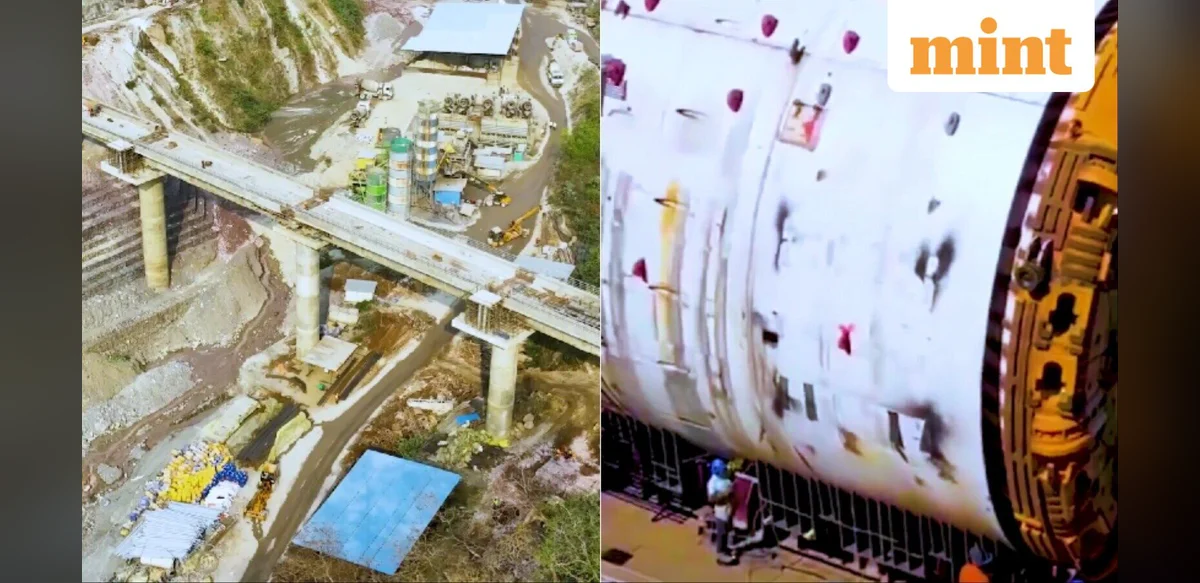
India continues to strengthen its ability to produce tunnel boring machines domestically while work moves forward on a major railway connection spanning 125 kilometers between Rishikesh and Karnaprayag. This effort supports improved links across challenging mountain terrain.
The focus on building these machines within the country reflects a broader push to rely less on imports for large infrastructure projects. As excavation proceeds along the route, engineers apply locally developed equipment to handle the demanding conditions of the region.
Construction teams have been active in preparing sections of the line that require extensive underground passages. The use of homegrown technology helps address the unique geological features encountered in the Himalayas.
Officials note that expanding manufacturing capacity for such machinery contributes to faster project timelines and greater self-reliance in the transport sector. Progress on the railway line demonstrates how these advancements come together in practice.
The 125-kilometer corridor aims to enhance connectivity for communities in the area by providing a reliable rail option. Domestic production of boring equipment plays a key role in overcoming the obstacles posed by steep slopes and hard rock formations.
Throughout the development phase, attention remains on integrating new manufacturing techniques with ongoing site work. This combination allows for steady advancement despite the complex environment.
Stakeholders involved in the project emphasize the importance of building expertise in tunnel construction technology. Such skills support not only the current line but also future infrastructure initiatives across similar landscapes.
As boring operations continue, the railway project serves as a practical example of how increased local production can aid large-scale engineering tasks. The emphasis stays on maintaining momentum while ensuring safety and efficiency standards.
The overall initiative highlights India’s growing capabilities in specialized equipment for difficult terrains. By advancing both manufacturing and construction in tandem, the effort moves closer to completing the vital connection between the two locations.
Further phases of the work will likely build on the experience gained so far, reinforcing the value of domestic innovation in transport development. The railway line stands to benefit numerous users once operational, underscoring the long-term impact of these technological steps.
In summary, the combination of expanded machine production and active construction on the 125-kilometer route illustrates a coordinated approach to improving Himalayan access. Continued focus in these areas promises sustained progress without reliance on external suppliers for critical components.

