


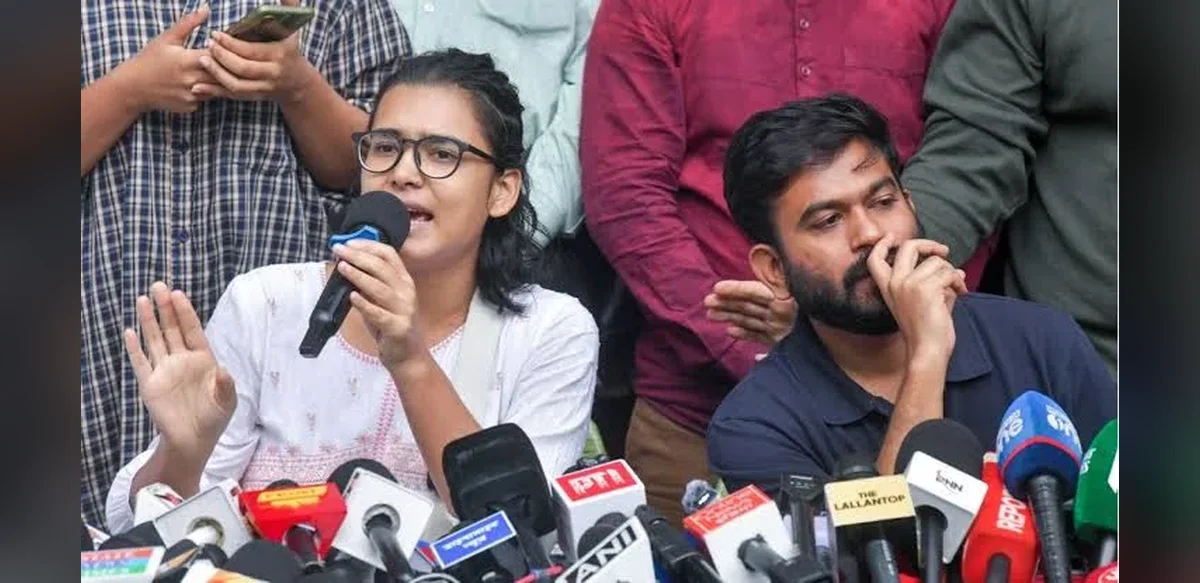
Protests against the Election Commission’s Special Intensive Revision exercise have sparked additional debate regarding the individuals covering the events, the identification they display and the material they share on digital platforms. An inquiry by a major news outlet revealed that multiple online platforms and groups were offering press identification documents, reporter profiles and related credentials in exchange for payment. In a separate development, authorities in Delhi detained a young man over an artificially created video that inaccurately depicted a senior police officer interacting with a female demonstrator.
These events have prompted discussion about the reliability of self-described independent reporters active at the demonstrations and the possible circulation of altered material intended to affect perceptions of security forces. The findings connect the issues to the political environment around the Cockroach Janata Party and opposition-organized demonstrations. Further review of available information is needed to determine the level of coordination among the entities, content creators and political actors involved.
The inquiry detailed how several websites marketed press identification cards and reporter profiles at low prices beginning at a few hundred rupees. Organizations named in the report included the Indian Press Union, NEED24 and FNF. Some of these platforms provided the items without requiring proof of prior experience in journalism. One network promoted identification documents and profiles for a modest fee along with basic recording equipment. Another offered annual subscriptions that included a state-level leadership title. The Indian Press Union provided printed cards and vehicle decals for a set amount.
Several of the sites promoting these credentials appeared online during the early months of 2026. The investigation also examined the use of artificially generated interview footage designed to give the impression of established media presence. Issuing identification without substantial checks does not automatically prove that holders have created false reports or acted for political interests. At the same time, credentials distributed without verification can allow individuals to present themselves as journalists without established professional records or editorial oversight.
This distinction becomes relevant during politically sensitive gatherings where recordings and statements labeled as independent reporting may shape public views of participants, law enforcement and official institutions. The situation escalated when Delhi police took into custody a 24-year-old resident of Haryana in connection with an artificially produced video targeting a senior police officer. The material was distributed via an Instagram account linked to a news-related handle and was presented as surveillance footage showing inappropriate conduct.
The video included the officer’s image, name and rank, incorrectly linking him to the actions shown. Police monitoring units identified the post in early October 2026. An official complaint was filed at the cyber police station under relevant sections of the criminal code. Investigators traced the account to the individual, who was located in a neighboring district shortly afterward. Reports indicated that the video was produced using artificial intelligence tools on the previous day. During questioning, the person reportedly stated the goal was to damage the reputation of Delhi police and encourage disorder. A senior police official described the intended result as creating chaos and inciting unrest.
Creating and circulating synthetic footage as authentic evidence can harm reputations, mislead viewers and heighten tensions at already charged public events. The incident highlights the challenges posed by artificially generated material that mimics genuine news recordings. When such videos spread without clear labeling, audiences may struggle to separate fabricated scenes from real occurrences.
Attention also focused on a woman who presented herself as an independent journalist and made allegations against the police officer during the detention of an activist. The individual, described as an online influencer with a substantial following, was noted as a supporter of the Cockroach Janata Party. Records from the group’s social media team listed her in a coordination role for coverage activities. Party figures publicly criticized the officer following the claims.
Any allegation against a law enforcement official requires proper investigation based on its own merits, regardless of the complainant’s political connections. At the same time, presenting oneself as an unaffiliated reporter while holding a political position can give audiences an incomplete understanding of the source and intent behind the reporting. The core issue concerns whether viewers receive accurate information about affiliations, supporting evidence and the boundary between journalism and political advocacy.
The broader protests organized by opposition groups have raised further points about political messaging. The combination of concerns over press credentials and the use of synthetic content has led to calls for greater scrutiny of how information is produced and shared during such events. Observers note that the presence of unverified credentials and manipulated material can complicate efforts to maintain accurate public records of demonstrations and official responses.
Authorities continue to examine the full scope of the incidents, including the origins of the distributed material and any connections to organized political activities. The developments underscore ongoing challenges in distinguishing professional reporting from other forms of content creation during periods of political activity. Maintaining clear standards for credentials and transparent disclosure of affiliations remains important for preserving trust in information shared about public events.

