


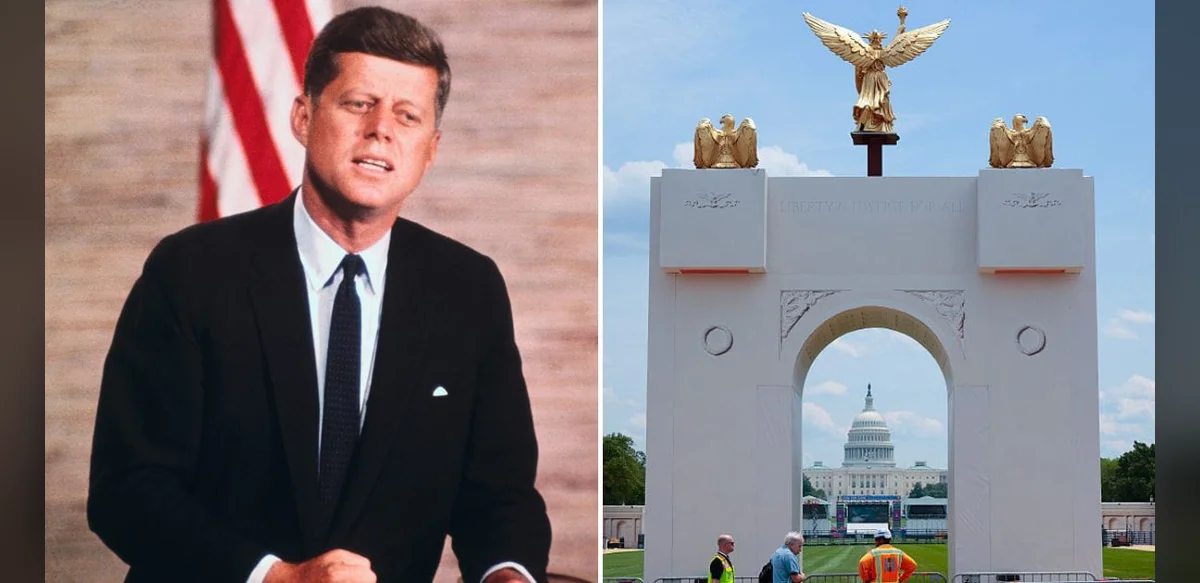
A group of nine individuals connected to a prominent American political family has initiated legal proceedings aimed at stopping the construction of a large monument near a major national burial site. The proposed structure measures approximately 250 feet in height and is associated with a former president. The petitioners contend that the monument would interfere with the sightlines toward the resting place of a past leader and an associated memorial flame.
The burial ground in question holds significant historical importance as the final resting place for numerous military personnel and public figures. Located just outside the capital, it serves as a place of remembrance and reflection for visitors from across the country. The specific area under discussion includes the grave of the 35th president, marked by an eternal flame that has drawn millions of visitors over the decades.
According to court filings, the family members argue that the scale and placement of the arch would alter the visual experience of the site. They maintain that the monument could diminish the solemn atmosphere and obstruct key views that have remained unchanged for many years. The request seeks a judicial order to prevent any further progress on the project.
The former president has not publicly commented on the legal challenge at this stage. The proposal for the arch appears to be part of a broader initiative involving commemorative structures, though details remain limited. Legal experts note that disputes over land use and visual impact near protected historic sites often involve lengthy reviews and multiple parties.
Arlington National Cemetery, established during the Civil War era, spans hundreds of acres and continues to serve as an active burial location. Its proximity to the capital makes it a focal point for national ceremonies and public visits. Any construction nearby must navigate strict regulations designed to preserve the integrity of the grounds.
The family members involved have not released individual statements beyond the court documents. Their collective action highlights ongoing concerns about development in areas with deep historical resonance. Observers suggest that the case could set precedents for how future projects near sensitive locations are evaluated.
Public reaction to the filing has been mixed, with some expressing support for protecting established views and others questioning the timing and motivations behind the opposition. The matter is expected to proceed through the judicial system over the coming months, potentially involving additional hearings and expert testimony on visual and environmental impacts.
This development underscores the complexities of balancing commemorative projects with the preservation of historic landscapes. As the legal process unfolds, stakeholders from various sectors will likely monitor the outcome closely for its implications on similar initiatives elsewhere.

