


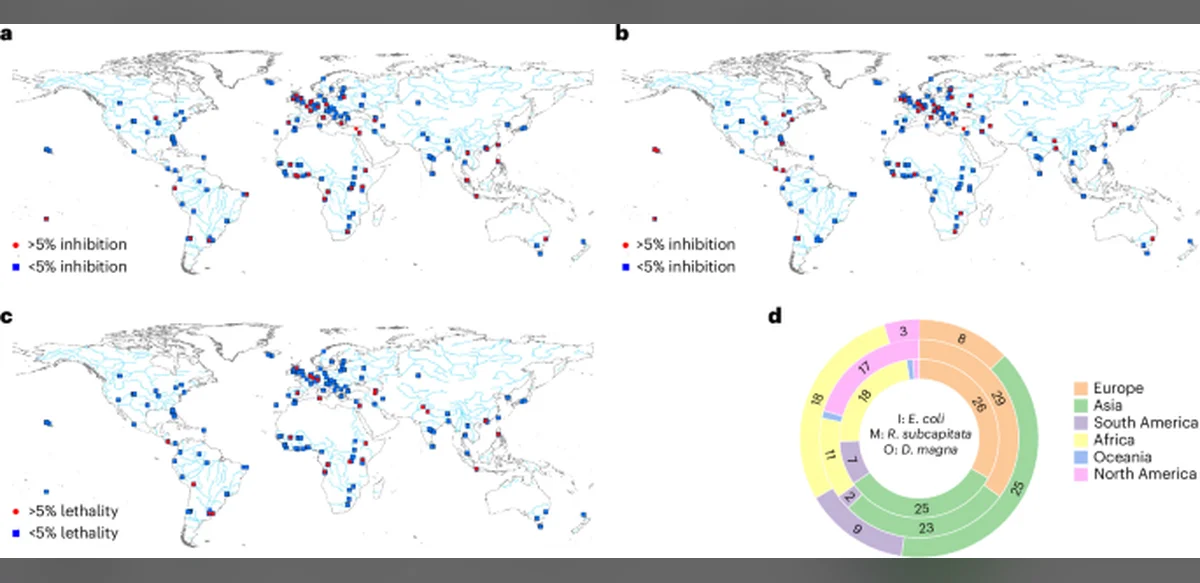
A recent study published in Nature Geoscience highlights that pharmaceutical residues in river systems pose significant ecological challenges across the planet. The research indicates that mixtures of these compounds surpass safe ecological limits in approximately thirteen percent of the world’s rivers. By focusing efforts on a limited number of major emission points, the analysis suggests that such exceedances could be reduced by half.
Pharmaceutical compounds enter waterways through various pathways including wastewater treatment plants, manufacturing facilities, agricultural runoff, and improper disposal of medications. The assessment examined global data sets to identify patterns of contamination and to model potential mitigation strategies. Results show that a small group of sources accounts for a disproportionate share of the overall load.
Experts emphasize that current monitoring programs often evaluate individual substances rather than combined effects. Mixture toxicity arises when multiple compounds interact, amplifying impacts on aquatic organisms even at low concentrations. The study underscores the importance of shifting toward integrated risk evaluations that consider these synergistic outcomes.
Geographic variations appear pronounced, with higher exceedance rates observed in regions experiencing rapid urbanization and limited wastewater infrastructure. In contrast, areas with advanced treatment technologies demonstrate lower overall risks. The findings call for tailored approaches that account for local conditions while addressing the most influential pollution origins.
Policy recommendations emerging from the work include enhanced regulation of production sites, improved collection systems for unused medicines, and upgrades to sewage treatment processes. International cooperation is viewed as essential given the transboundary nature of many river basins. The authors note that coordinated action across sectors could yield substantial improvements in water quality.
Further modeling explored scenarios in which six dominant source categories receive priority attention. Projections indicate that such focused interventions might cut the global extent of threshold exceedances by roughly fifty percent. This outcome would represent a meaningful step toward protecting biodiversity and maintaining ecosystem services provided by freshwater systems.
The research also identifies data gaps that limit current understanding. Comprehensive sampling remains sparse in many parts of the world, particularly in developing nations. Expanded monitoring networks and open data sharing are proposed as necessary next steps to refine future assessments.
Stakeholders from government, industry, and academia are encouraged to collaborate on pilot projects that test the effectiveness of source-specific controls. Early results from limited trials suggest that combining technological upgrades with behavioral interventions can produce measurable reductions in pharmaceutical loads.
Overall, the study provides a framework for prioritizing resources in the fight against pharmaceutical pollution. By concentrating on key contributors rather than attempting to address every possible input simultaneously, authorities may achieve cost-effective progress. Continued scientific inquiry will be required to validate these projections and to adapt strategies as new compounds enter the market.
Public awareness campaigns could complement regulatory measures by encouraging responsible medication use and disposal. Education efforts aimed at healthcare providers and consumers alike may help lower unnecessary releases into the environment. The cumulative effect of such multifaceted actions holds promise for safeguarding river health on a global scale.

