


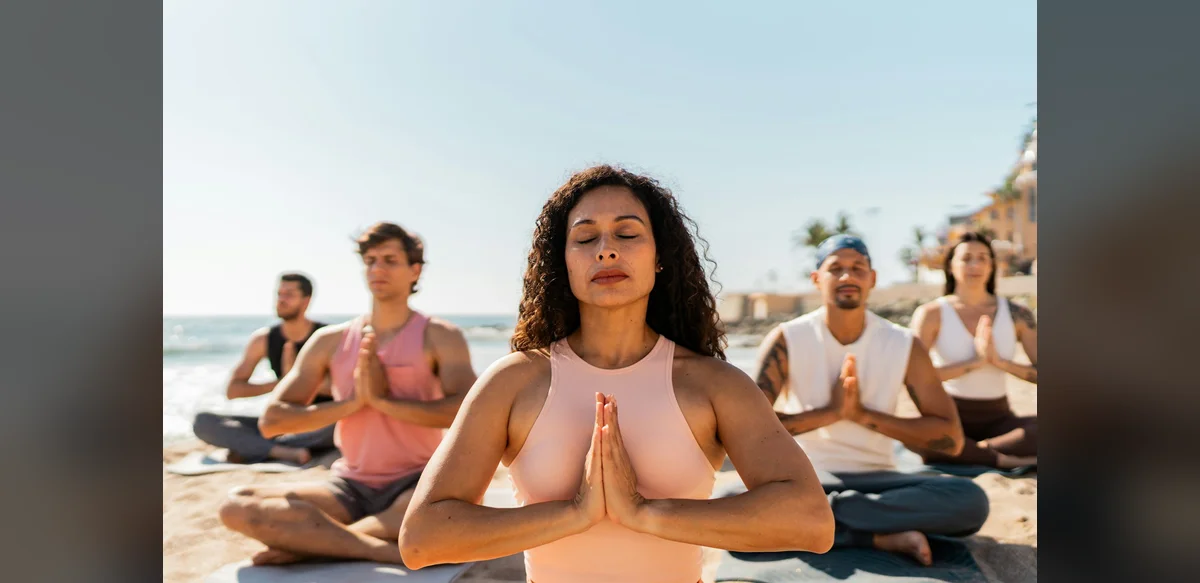
Jeremy David Engels from Penn State notes that namaste, a standard greeting across India and South Asia, has spread widely as a cultural term seen in wellness centers, political gatherings and media. In many yoga sessions across North America and Europe, participants end class by saying namaste, understood locally to mean the divine in one person honors the divine in another. Critics argue this use amounts to cultural appropriation, claiming the word simply means hello or goodbye in India while Western practitioners add exaggerated spiritual weight to market yoga, as journalist Kumari Devarajan observed in an NPR piece. Others reject that stance. Swami Tattwamayananda, leader of the Vedanta Society of Northern California, stated it is suitable for all, including Western students, to use the term at the close of yoga sessions. As a communication and ethics scholar and experienced yoga instructor, the author examines the issue in the forthcoming 2026 book Living Namaste. The conclusion is that it remains acceptable to say namaste. Linguists classify namaste as a loan word from Sanskrit, combining namas, meaning to bow or honor, with te, meaning to you, yielding the literal sense I bow to you. It entered English in the late 1960s and early 1970s amid countercultural interest in spirituality, shifting toward the meaning the divine in me bows to the divine in you. Spiritual teacher Ram Dass helped spread this interpretation through campus lectures in the 1970s. Yoga instructor Shiva Rea further encouraged ending classes with the phrase in the 1990s and 2000s, describing it as recognizing the divine within all creation. Cultural appropriation involves members of a dominant group adopting practices from another culture without context, often causing harm or stereotypes. Under this definition, ending yoga with namaste does not qualify, since the term is not tied to any deity and holds no central place in Hindu rituals, according to Oxford scholar James Mallinson. Yoga studies researcher Andrea Jain adds that such claims overlook yoga’s varied historical forms across India and elsewhere, with no single authentic tradition owning the practice or its associated words.

