


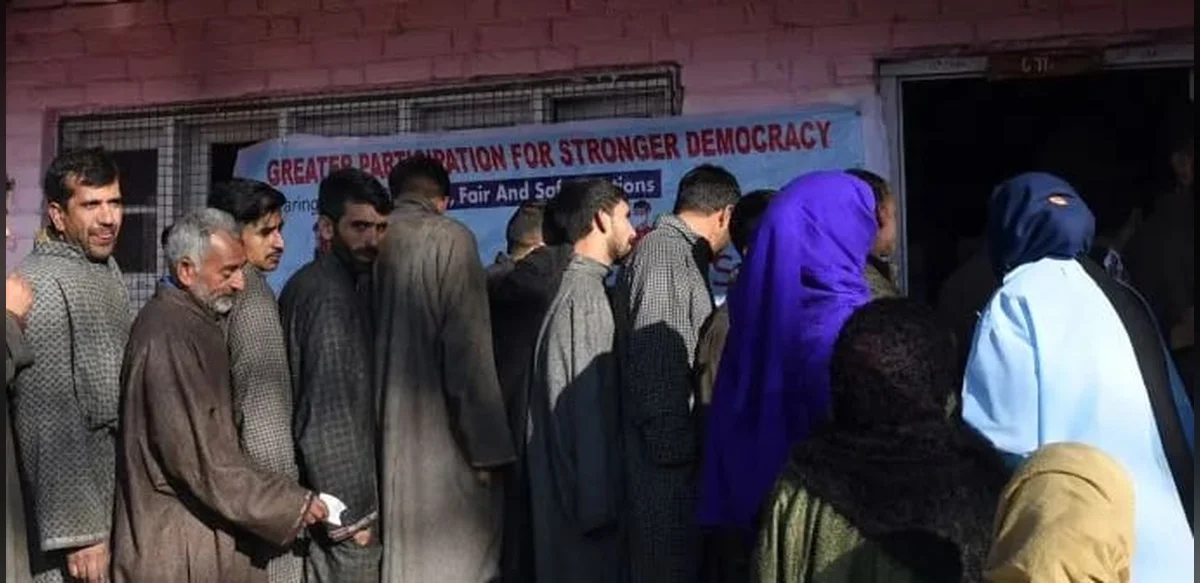
Voting started in the last stage of legislative assembly elections in Pakistan-administered Kashmir, limited to four constituencies after unrest led to the postponement of seven others. Over 460,000 registered voters can participate at more than 800 polling stations in Bagh and Haveli districts. Polls opened at 8 am local time and will close at 5 pm. The process occurs against a backdrop of prolonged political unrest and demonstrations in Azad Jammu and Kashmir. A local pressure group, the Jammu Kashmir Joint Awami Action Committee, has urged a boycott, opposing 12 reserved seats for displaced Kashmiris living in other parts of Pakistan. Authorities banned the group in June under anti-terrorism laws. Demonstrations connected to the committee have involved notable violence, with residents and rights organizations reporting over 50 deaths. Officials have not verified that number but confirmed at least seven police and paramilitary personnel fatalities. Seven constituencies were excluded from Monday’s vote due to security issues, five in Poonch and two in Sudhnoti district. New dates for those areas will be announced soon. The final stage features prominent races, including the seat of AJK Prime Minister Faisal Mumtaz Rathore of the Pakistan People’s Party in Haveli. In Bagh, two former prime ministers compete: Sardar Tanveer Ilyas of the Istehkam-e-Pakistan Party and Sardar Attique Ahmed Khan of the Muslim Conference. Monday’s vote ends a three-phase process for the 53-member assembly. The first phase occurred on July 27 in Mirpur division, where the Pakistan Muslim League-Nawaz secured nine of 13 seats and the Pakistan People’s Party took the rest. The second phase on August 2 covered Muzaffarabad division and refugee seats, with the Pakistan Muslim League-Nawaz winning 15 and the Pakistan People’s Party six. Turnout has been lower than in prior elections, at 46 percent in the first phase and 53 percent in the second, compared with over 60 percent in 2021 and 2016. The reduced final phase underscores ongoing political and security difficulties in the region. Poonch division remains a focal point of opposition to the government and electoral arrangements. An intermittent internet blackout has lasted more than 50 days, and international media access has been restricted, with reporters told to depart and seek clearance to return. These limits have prompted concerns over independent coverage during the sensitive vote. For voters, the poll offers a final chance to shape the assembly, though postponed seats mean full results await later contests. The outcome may influence the political path of Azad Jammu and Kashmir after extended protests and public discontent. Pakistan’s main parties, including the governing Pakistan Muslim League-Nawaz and opposition Pakistan People’s Party, are monitoring developments closely. Security stays a priority in the districts involved, and the delayed races will ultimately decide the balance of power.

