


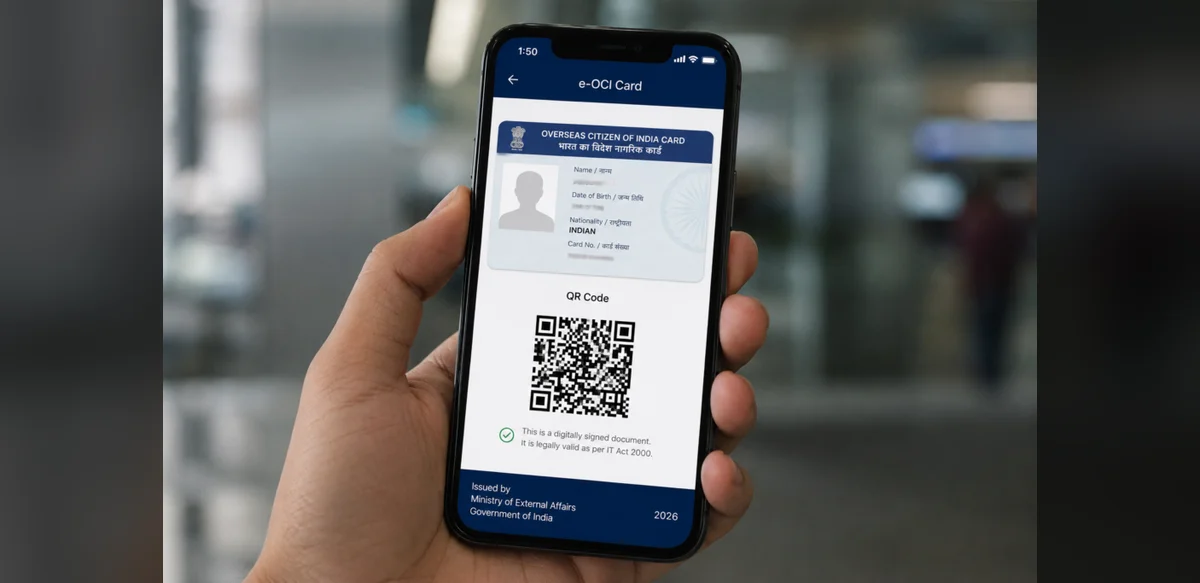
The blue-grey OCI booklet used by millions of Indians living overseas for two decades is being discontinued. Starting 30 June 2026, the Overseas Citizen of India card will operate entirely through a digital platform. Home Minister Amit Shah introduced the e-OCI system in New Delhi on Tuesday together with the FCRA 2.0 portal, calling it the largest update to OCI services since the programme began in 2005.
For overseas Indians the shift brings immediate effects. Applications, document submission, checks and card delivery now occur online. The physical booklet is no longer needed for travel or entry into India. A QR-coded digital record kept on a mobile phone takes its place.
More than five million OCI holders are impacted. Most current cardholders can move to the digital version without submitting a new application or undergoing in-person verification.
An OCI card grants foreign nationals of Indian origin a lifelong multi-entry visa. It is not citizenship. Holders may reside, work or study in India without additional visas, purchase property and use most economic and educational services available to NRIs. They may not vote or occupy government positions. The scheme started in 2005 and now registers over five million people globally.
The main change for existing holders removes the need to obtain a new physical booklet after receiving a fresh passport past age twenty. Previously this step, handled through VFS Global and Indian missions, cost more than £215 in Britain and USD 275 in the United States and required several weeks. The rule no longer applies. Holders will instead update passport information online via the OCI portal. No new booklet, appointment or fee is required.
Updates must be completed within three months of obtaining a new passport under the Citizenship Amendment Rules 2026 that took effect on 1 May 2026.
Enrolled e-OCI holders will also connect to India’s Fast-Track Immigration Programme, allowing automated facial-recognition entry at Delhi, Mumbai and Bengaluru airports without queuing at staffed counters.
New applicants, often those who have acquired citizenship in Australia, Britain, the United States, Canada, New Zealand or the UAE and surrendered their Indian passports, now complete the entire process online. The surrender certificate remains mandatory. Processing aims for fifteen days instead of previous delays lasting months.
The digital credential carries a QR code linked to official records that immigration officers can scan. Storage on a mobile device removes risks of loss or damage associated with physical booklets.
Application fees stay the same: USD 275 in the United States, roughly AED 1,010 in the UAE, CAD 376 in Canada and SGD 349 in Singapore. The British fee through VFS Global is about £215 plus service charges. Passport-detail updates carry no additional full fee.
The FCRA 2.0 portal, also launched on 30 June, manages foreign contributions to Indian organisations. It mainly concerns NRIs who donate to or collaborate with NGOs, religious bodies or non-profits. The Foreign Contribution Regulation Act controls receipt and use of overseas donations by Indian entities. Registration is required for any individual, association or company accepting foreign funds. The measure seeks to prevent use of such money against national interests. About 14,500 organisations hold active registration. The new portal digitises all related procedures.

