


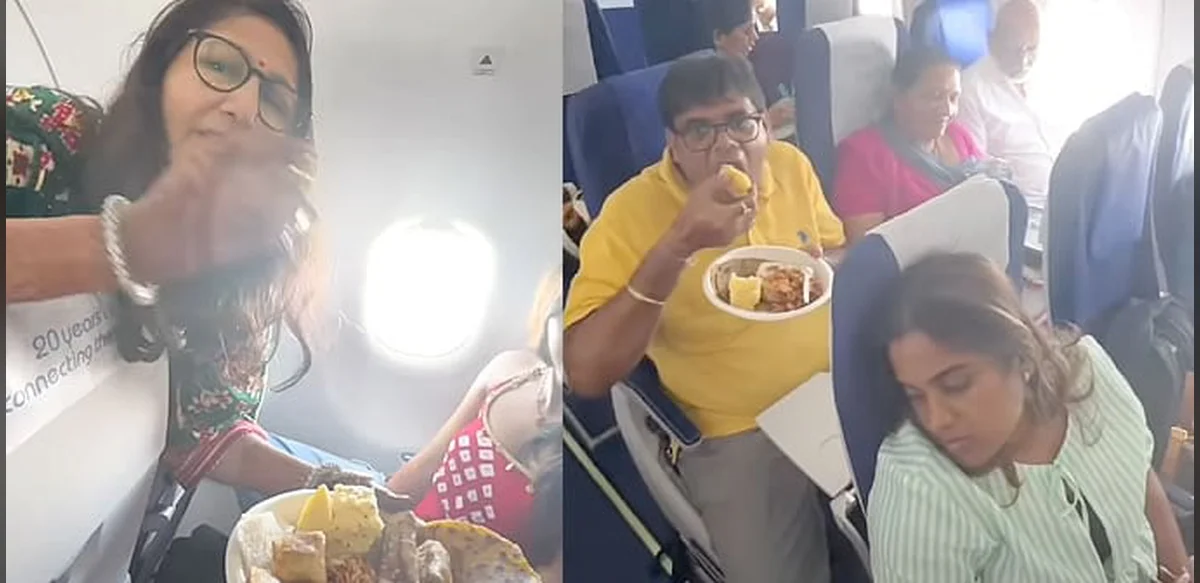
An incident involving an Indian family bringing and eating their own prepared food during a domestic flight has prompted widespread conversation across social media platforms regarding appropriate conduct in shared travel spaces. The event took place aboard an IndiGo aircraft, where the family reportedly enjoyed a homemade spread instead of relying on the airline’s standard offerings. Observers captured the moment and shared it online, leading to a range of reactions that highlight differing views on personal habits versus collective expectations in confined environments like airplane cabins.
The discussion centers on the concept of civic sense, a term frequently invoked in public forums to describe awareness of how individual actions affect those nearby. Critics of the family’s choice argued that strong aromas from home-cooked dishes could disturb fellow passengers, particularly in the enclosed space of an aircraft where ventilation is limited. Some comments suggested that such practices might conflict with airline guidelines or general norms observed during air travel, where many opt for provided meals or snacks to minimize disruption.
Supporters countered that passengers often carry personal food items for reasons including dietary restrictions, cost considerations, or cultural preferences. They noted that airlines typically permit sealed or non-perishable items through security checkpoints, and consuming them does not inherently violate rules unless it creates a clear nuisance. In this case, no reports indicated complaints from other travelers on the specific flight or any intervention by cabin crew.
This episode reflects broader patterns seen in online discourse about travel etiquette. Similar debates have arisen in the past concerning various passenger behaviors, from reclining seats to volume of conversations. The Indian context adds layers, as bringing home-prepared meals is a longstanding custom in many households, often tied to preferences for familiar tastes and ingredients during journeys.
Airline policies on food vary by carrier and route. IndiGo, as a low-cost operator, focuses on optional paid meals rather than complimentary full-service dining on shorter flights. Passengers are generally allowed to bring their own provisions, provided they comply with security regulations regarding liquids and prohibited items. The carrier has not issued a specific statement on this incident, consistent with its approach to individual passenger choices unless they affect safety or operations.
Public reactions have included calls for greater sensitivity to shared spaces, with some users advocating for the use of odor-neutral containers or timing meals to avoid peak service periods. Others emphasized personal freedom, pointing out that flights can last several hours and that families with children or specific needs may find comfort in familiar foods. The conversation has extended to comparisons with international practices, where diverse culinary traditions coexist in transit hubs and vehicles worldwide.
Experts in travel behavior suggest that such incidents underscore the need for clear communication from airlines about expectations. Educational campaigns on cabin courtesy could address common concerns without targeting specific cultural groups. Meanwhile, the viral nature of the post demonstrates how quickly everyday occurrences can escalate into national conversations when amplified by digital platforms.
The debate continues with participants from varied backgrounds sharing personal anecdotes about in-flight dining. Some recount positive experiences with home meals enhancing long journeys, while others describe instances where strong scents led to discomfort. This balance of perspectives illustrates the subjective nature of what constitutes considerate conduct in public settings.
Ultimately, the story serves as a reminder of evolving norms in modern travel. As air traffic increases and passenger demographics diversify, ongoing dialogue about mutual respect remains relevant. No formal complaints or regulatory actions have emerged from the event, leaving it as a topic for informal reflection rather than official inquiry. Observers anticipate similar discussions may surface with future shared experiences in transportation environments.

