


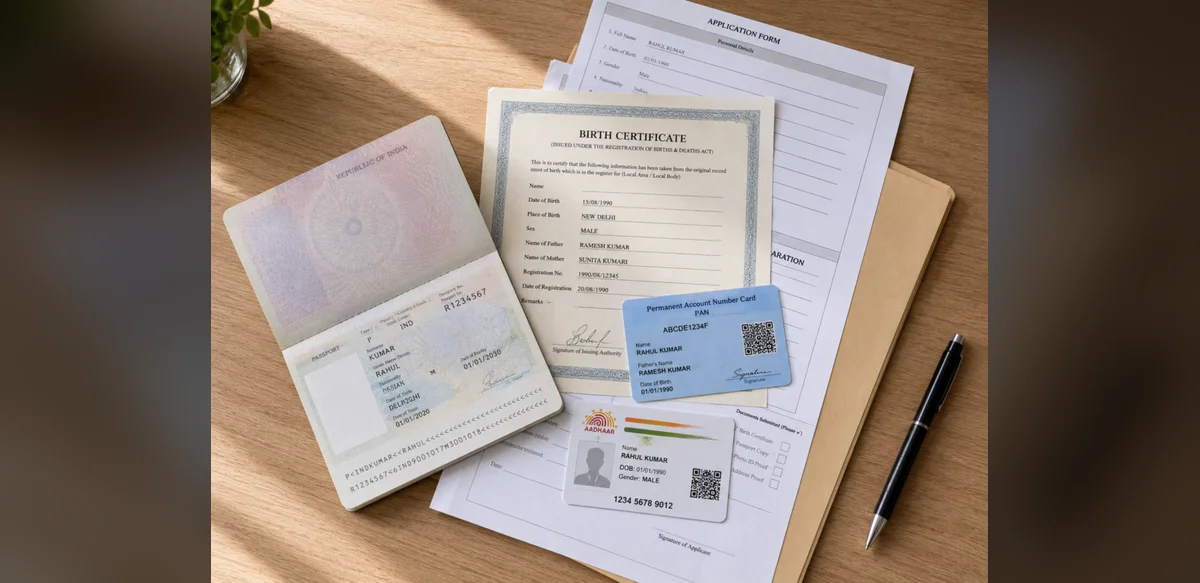
The Ministry of External Affairs reported issuing 1.39 crore Indian passports in the previous financial year. On Passport Seva Divas, 24 June 2026, an MEA official stated that none of these documents proves the holder is an Indian citizen.
The remark, delivered at the 14th Passport Seva Divas, was legally precise yet sparked widespread discussion. The official explained that a passport functions as a travel document confirming nationality abroad and cannot be treated as evidence of citizenship. The clarification quickly prompted debate on social media and among opposition parties regarding the documents that establish Indian citizenship.
For communities in Australia, the UK, the UAE, the US, Canada and New Zealand, the issue carries practical implications for OCI applications and consular procedures.
The clarification emerged amid ongoing discussions about citizenship records linked to the Election Commission’s Special Intensive Revision of electoral rolls, begun in Bihar and extended to Punjab with a deadline of 1 October 2026. The revision aims to ensure voter lists include only citizens.
The exercise revealed that most Indians lack a single document proving citizenship. Aadhaar establishes identity and residence, while voter ID confirms prior registration. The Supreme Court ruled last year that neither qualifies as proof of citizenship.
Although many viewed the passport differently, the MEA confirmed it records the result of prior verification rather than constituting legal status itself. The Supreme Court judgment of 27 May 2026 upheld the revision’s validity but limited the Election Commission to assessing electoral eligibility, leaving citizenship determinations to authorities under the Citizenship Act.
India’s Citizenship Act, 1955, outlines five pathways to citizenship: birth, descent, registration, naturalisation or territorial merger. No single universal document serves as conclusive proof for those born in India. Most citizens by birth have never received a formal certificate.
The most definitive records remain Certificates of Naturalisation or Registration issued by the Ministry of Home Affairs under Sections 5 and 6. For citizens by birth, a birth certificate provides the primary evidence, subject to conditions based on the date of birth.
Individuals born before 1 July 1987 qualify by birth. Those born between 1 July 1987 and 2 December 2004 must demonstrate at least one parent held Indian citizenship at the time. Those born on or after 3 December 2004 must show one parent is a citizen and the other is not an illegal migrant. Supporting parental documents are required in each case.
Political figures, including Aaditya Thackeray and Javed Akhtar, questioned the position on social media. The MEA noted that passports are issued only after verification involving multiple agencies, though the document itself records rather than replaces that process.
The clarification holds particular relevance for naturalised Indians abroad. Under Article 9 of the Constitution and Section 9 of the Citizenship Act, Indian citizenship ends automatically upon voluntary acquisition of foreign nationality.

