


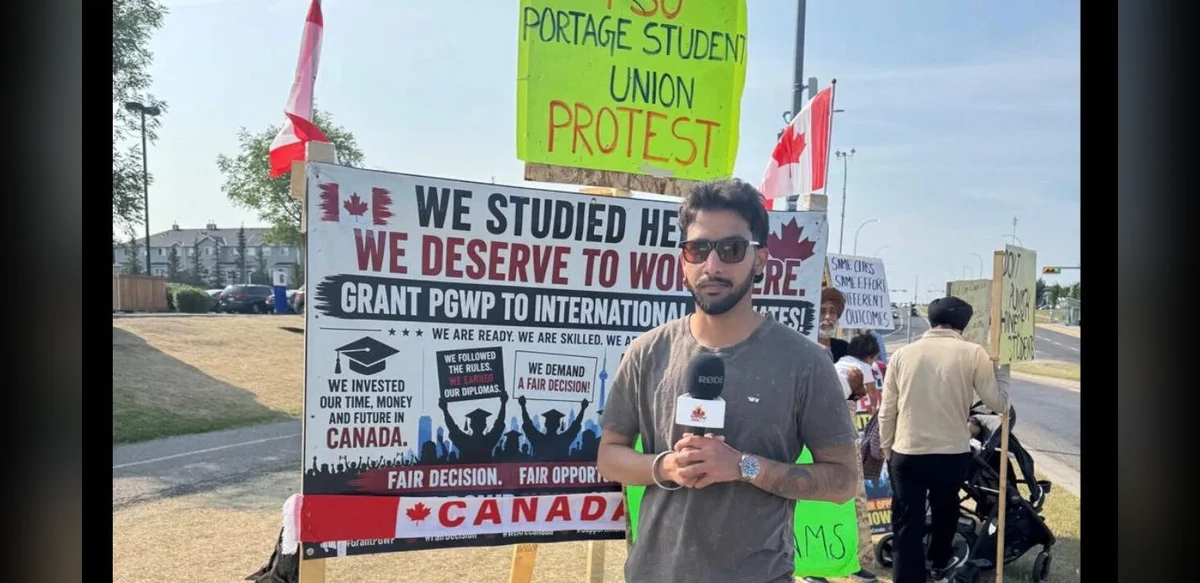
An international student who arrived in Canada with the goal of pursuing higher education became involved in public demonstrations. According to reports, this participation led to an order requiring him to depart the country. The individual, identified as Gurpreet Singh, has stated that the experience has created a climate of fear among fellow students from similar backgrounds.
Singh came to Canada on a study permit, a common pathway for many seeking academic opportunities abroad. During his time there, he took part in protests addressing issues of concern to segments of the diaspora community. Authorities later issued a removal order, which Singh links directly to his activism. He maintains that the sequence of events demonstrates how such actions can deter others from voicing opinions.
The case highlights tensions that can arise when international students engage in political or social activities while holding temporary visas. Canadian immigration rules require permit holders to comply with conditions tied to their status. Violations or perceived risks can result in enforcement measures, including departure orders. Singh’s account suggests that awareness of these possibilities has discouraged some peers from participating in similar events.
Community observers note that students on study permits often balance academic responsibilities with personal expressions of viewpoint. When protests touch on sensitive topics involving their country of origin, the stakes can increase. Singh described receiving communications that he interpreted as pressure to cease activities. He believes this approach has succeeded in reducing visible participation from the student group.
Officials have not publicly detailed the specific grounds for the removal order in this instance. Standard procedures allow for appeals or reviews through established channels. Singh has indicated plans to explore available options while emphasizing the broader impact on student sentiment.
This situation occurs amid ongoing discussions about the rights and limitations faced by temporary residents in Canada. Advocacy groups sometimes raise concerns about how enforcement intersects with freedom of expression. At the same time, government representatives stress the need to maintain the integrity of immigration programs.
Singh’s experience has prompted conversations within diaspora networks about the balance between activism and compliance with visa terms. Some students reportedly now avoid public events to protect their academic and immigration standing. Others continue to participate, viewing it as an essential aspect of civic engagement.
The story underscores challenges that can emerge when individuals from abroad navigate dual identities as students and community members. Educational institutions in Canada host large numbers of international learners, many of whom contribute to campus life and local economies. Policies aim to support their presence while upholding regulatory frameworks.
Singh has shared his perspective through media channels, hoping to draw attention to what he sees as a chilling effect. He argues that fear of repercussions may limit open discourse among those in similar situations. Whether this perception reflects widespread reality remains a matter of individual experience and interpretation.
Canadian authorities process thousands of study permit applications annually from various countries, including India. Successful applicants must meet criteria related to financial support, academic acceptance, and intent to return home after studies. Any additional activities are evaluated against these core requirements.
The incident has not led to formal policy changes but has fueled informal discussions among student associations. Some groups offer guidance on legal boundaries for expression while on temporary status. Legal experts advise consulting professionals before engaging in potentially contentious actions.
Overall, the case illustrates the complexities of international education in a global context. Students seek opportunities for growth, yet external events can intersect with personal circumstances in unexpected ways. Singh’s narrative serves as one example of how such intersections play out for those involved.
Further developments may depend on appeal outcomes or additional reporting from affected parties. In the meantime, the emphasis remains on understanding the rules that govern temporary residency in Canada. This awareness helps students make informed choices about their activities during their stay.


