


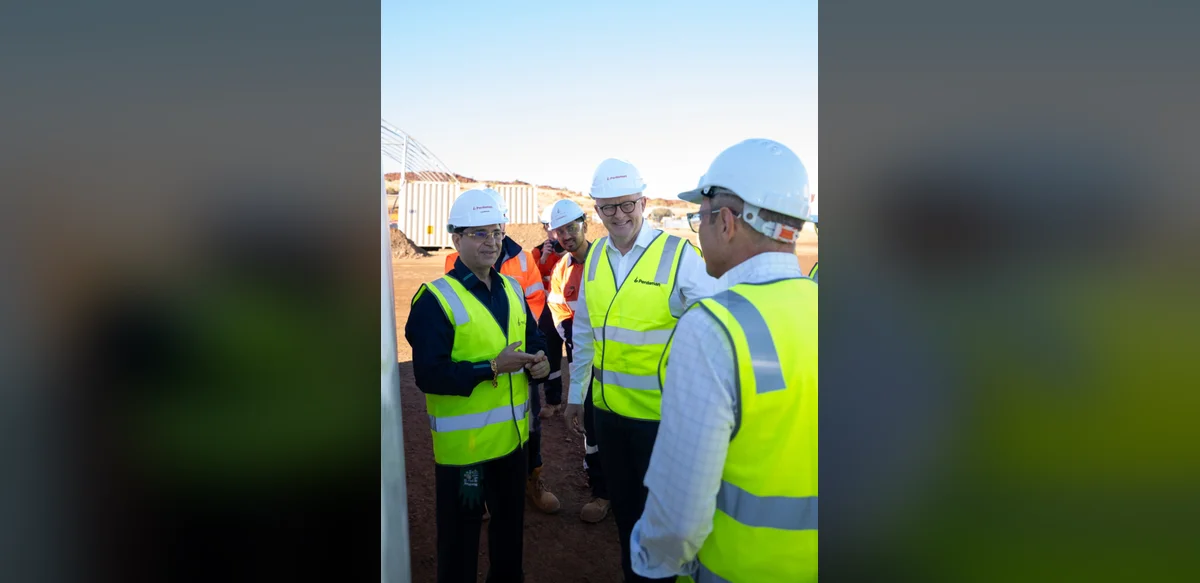
Australia has not constructed a new large-scale fuel refinery since the 1960s. Vikas Rambal, an Indian-born chemical engineer who arrived in Western Australia in 2000 with plans to build ammonia plants, now leads efforts to address this gap.
Perdaman, the company Rambal founded and chairs, announced on 28 July 2026 a combined Pre-Feasibility and Pre-FEED program to identify the best design for a new Made in WA Fuel Refinery, including port infrastructure and logistics. The project moves toward a final investment decision. Prime Minister Anthony Albanese and Western Australian Premier Roger Cook attended the announcement with other officials.
Rambal stated the project reflects a long-term vision to build critical industrial infrastructure with lasting benefits for Australia.
Australia currently has only two operating oil refineries, in Brisbane and Geelong, following closures under the previous government. If completed, the Perdaman facility would be the first new large-scale petroleum refinery in over sixty years, aligning with federal and state industrial strategies.
The country has grown more dependent on imported refined fuel, raising fuel security concerns across political lines. A new domestic refinery led by an Indian-origin entrepreneur who has completed major Western Australian industrial projects offers a direct response.
Rambal was born in Delhi and trained as a chemical engineer in petrochemicals, with early experience at Bharat Petroleum. He moved to Western Australia in 2000 to develop downstream uses for natural gas, including ammonia for fertilisers.
He drove the Burrup Fertiliser project, later Yara Fertiliser, as managing director. He later founded Perdaman Chemicals and Fertilisers to build a second world-scale plant. This led to Project Ceres, a urea and ammonia facility near Karratha that received major project status and began construction in 2023 as an AUD 6.45 billion investment.
Project Ceres will process gas from the Scarborough field into 2.3 million tonnes of urea yearly under long-term agreements. It aims to reduce reliance on imports of about 2.4 million tonnes annually and targets net carbon zero by 2050, with opening planned for mid-2027.

