


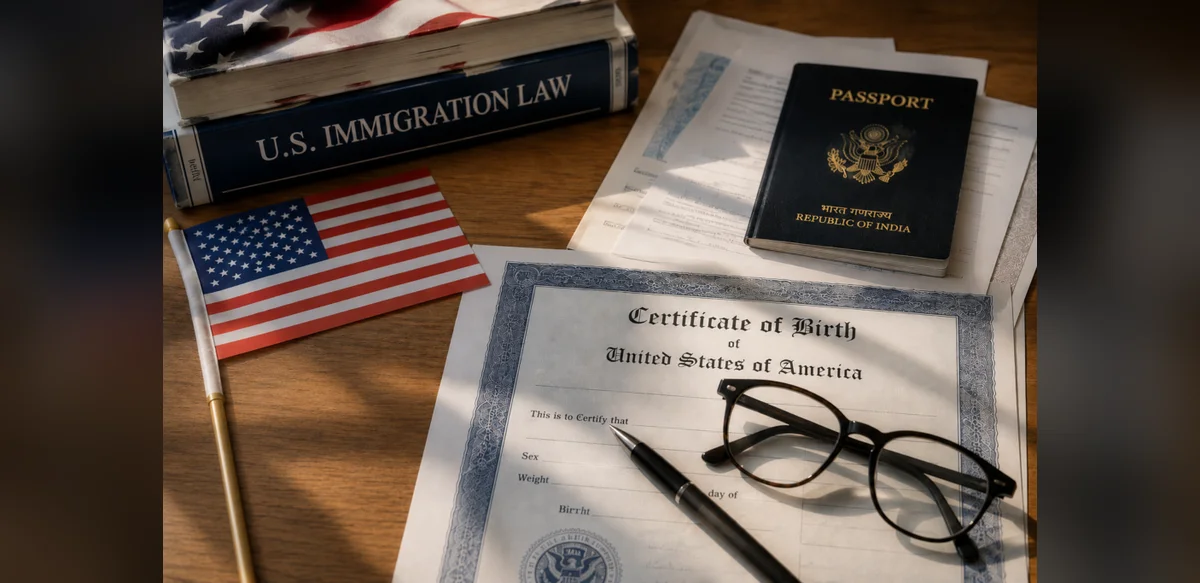
Over a million Indian professionals remain in the United States employment-based green card backlog. Many have waited a decade, while others face waits of several decades. Their children born in the US during this period now have citizenship confirmed by the nation’s highest court.
The US Supreme Court ruled 6-3 on 30 June 2026 that the Fourteenth Amendment guarantees automatic citizenship to nearly all children born on American soil, irrespective of their parents’ immigration status. The decision in Trump v. Barbara invalidated Executive Order 14160, issued by President Trump in January 2025, which aimed to end birthright citizenship for children of parents in the country unlawfully or on temporary visas such as H-1B, H-4 and F-1.
Chief Justice John Roberts wrote for the majority that citizenship represents the right to participate in the political community. The framers of the amendment extended this to every person born in the land, and the court upheld that commitment.
No group faced greater direct impact from the order than Indian nationals on H-1B visas and their families. Indians receive roughly 72 to 75 percent of H-1B visas in recent years. More than 300,000 Indian professionals are in the employment-based green card backlog, with some waits potentially lasting 50 years due to unchanged per-country limits.
For these families, children are often born in the United States long before permanent residency is possible. The ruling preserves their automatic citizenship.
Chintan Patel of Indian American Impact described the decision as a clear affirmation of belonging in America, noting that Indian and South Asian families were among those most affected. Khanderao Kand of the Foundation for India and Indian Diaspora Studies said it brought needed certainty and urged Congress to resolve the backlog. Indian-American Congresswoman Pramila Jayapal welcomed the outcome, emphasizing the value of kept promises.
The case centered on whether the phrase subject to the jurisdiction thereof in the Fourteenth Amendment excludes children of parents present unlawfully or temporarily. The administration argued it did and that the 1898 Wong Kim Ark precedent applied only to those with permanent domicile. The majority rejected this view, finding the amendment’s language and 1868 understanding focused on birth on US soil. The court also noted that the 1952 Immigration and Nationality Act codified this principle.
Justice Brett Kavanaugh concurred on narrower statutory grounds but suggested Congress could amend the law. Scholars and other justices indicated the constitutional holding prevents such changes without a formal amendment.
Justices Clarence Thomas, Neil Gorsuch and Samuel Alito dissented.

