

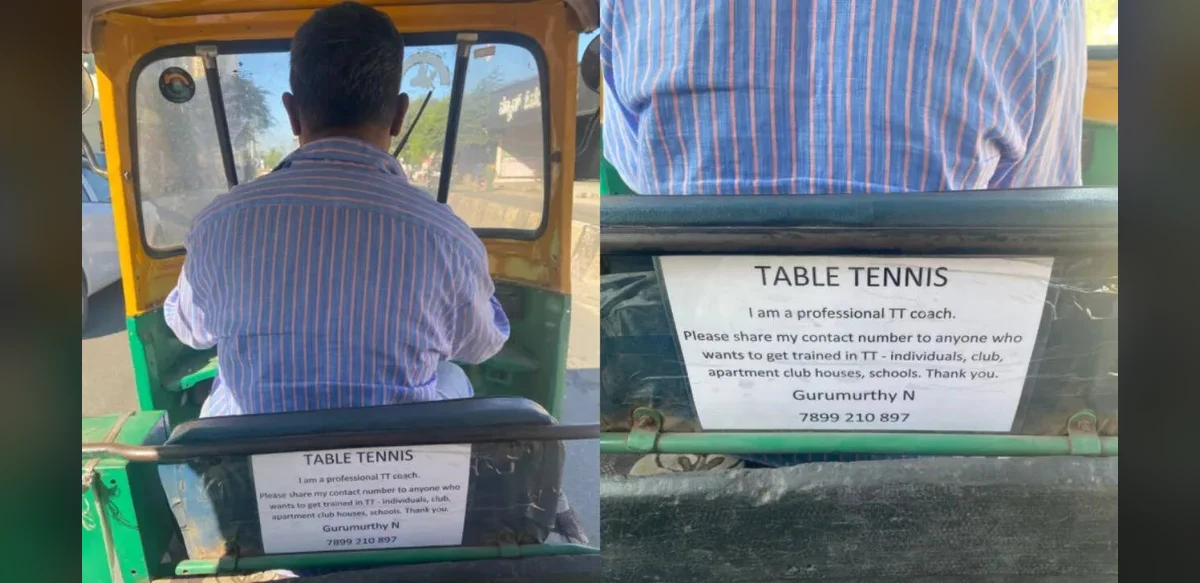
In the bustling streets of Bengaluru a local resident has found a way to merge his daily livelihood with his longstanding passion for table tennis. Once engaged in coaching activities at a dedicated academy he guided numerous players through structured training sessions. The global health crisis disrupted these efforts leading him to seek alternative income sources while preserving his core interest in the sport.
The individual now operates an auto rickshaw as his primary means of earning a living. This vehicle serves a dual purpose by carrying promotional messages about coaching opportunities. Passengers and onlookers on the road encounter these notices which highlight available training sessions. This approach allows continuity of his earlier professional focus despite changed circumstances.
Bengaluru known for its vibrant urban environment and diverse workforce provides the backdrop for this story. Many residents adapt to economic shifts by combining multiple roles. In this case the transition from academy based instruction to street level transport work illustrates resilience. The auto rickshaw becomes more than a mode of conveyance it acts as a moving platform for outreach.
Prior to recent challenges the coach had worked with advanced level participants refining techniques and strategies essential for competitive play. Academy operations involved regular schedules equipment management and player development programs. These elements formed the foundation of his professional identity before external factors intervened.
The pandemic period brought widespread interruptions to sports related activities across regions. Training facilities closed and gatherings were restricted prompting many in similar fields to explore new avenues. For this resident the shift to auto rickshaw operation ensured financial stability while the attached advertisements kept connections to table tennis alive.
Daily routes through city neighborhoods offer repeated visibility for the coaching promotions. Commuters notice the details on the vehicle sides which include contact information and service descriptions. This method integrates seamlessly with routine driving tasks without requiring additional resources.
Observers note that such adaptations reflect broader patterns in urban India where individuals maintain hobbies or skills alongside essential jobs. The combination of transport work and sports promotion creates a unique personal narrative centered on perseverance.
Local traffic conditions in Bengaluru demand constant attention yet the resident manages to sustain both responsibilities effectively. The auto rickshaw functions reliably in varied weather and peak hours allowing consistent operation. Meanwhile the coaching aspect remains accessible to interested parties who spot the mobile notices.
This arrangement underscores how personal ambitions can persist through practical innovations. Rather than abandoning prior expertise the resident incorporates it into present day activities. The result is a balanced routine that addresses immediate needs while nurturing long term goals.
Community members in the area may encounter the vehicle during commutes or errands. The visible advertisements serve as reminders of available table tennis instruction options. Such visibility can spark interest among younger residents or those seeking recreational activities.
Overall the story highlights adaptive strategies employed by city dwellers facing professional setbacks. By leveraging the auto rickshaw as both income generator and promotional tool the individual maintains engagement with table tennis. This approach exemplifies quiet determination in the face of evolving economic landscapes.
Further details reveal that the coaching background included focus on skill building and match preparation for participants. These experiences continue to inform the promotional content displayed on the vehicle. Potential trainees can reach out based on the information provided during regular drives.
The integration of past and present roles creates a cohesive personal journey. Bengaluru continues to witness similar instances of residents blending traditional occupations with specialized interests. In this instance the emphasis remains on sustaining table tennis involvement through everyday means.
Traffic patterns and passenger interactions form part of the daily experience. The resident navigates these while ensuring the coaching message reaches a wider audience. This dual functionality maximizes the utility of the auto rickshaw beyond mere transportation.
In summary the narrative centers on continuity and adaptation. The former academy coach now driving through city streets keeps his sporting aspirations visible and active. Through simple yet effective use of available resources he bridges earlier achievements with current realities.
Such accounts contribute to understanding individual responses to large scale disruptions. They illustrate how personal drive can lead to inventive solutions that honor both practical demands and cherished pursuits. The Bengaluru setting adds context to these urban adaptations without altering the core facts of the situation.


