


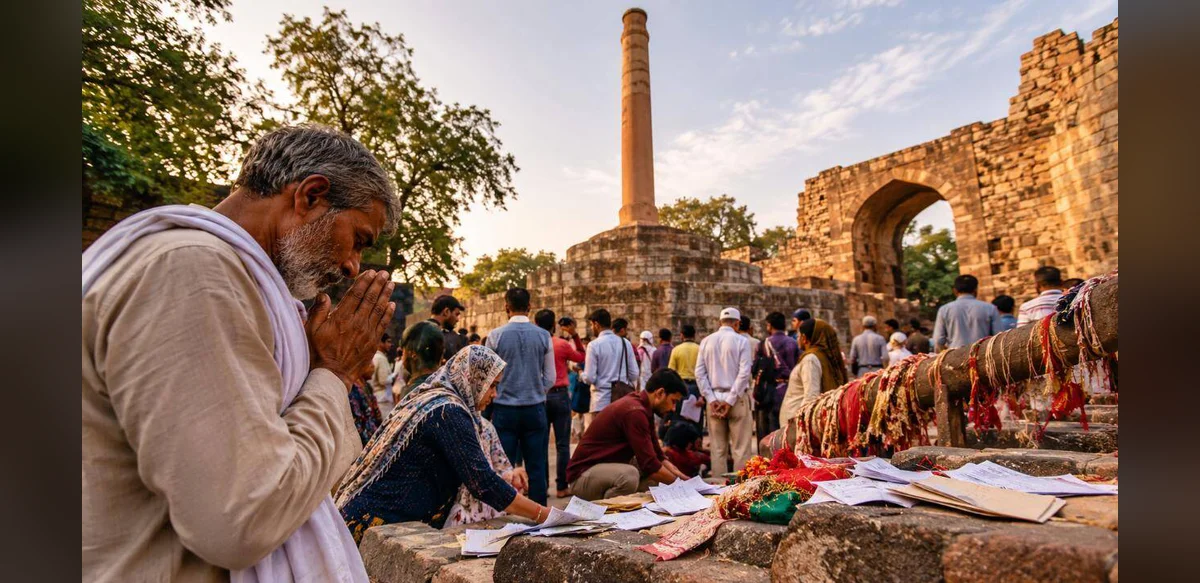
Feroz Shah Kotla stands as a historic monument in the heart of Delhi, drawing people each week who seek answers to personal difficulties through a longstanding tradition. Every Thursday, individuals arrive carrying handwritten notes addressed to djinns believed to reside at the site. These messages often address matters such as health concerns, financial pressures, and other everyday challenges.
The practice gained wider attention following the period of the Emergency in the 1970s. Since then, the fort has become a regular gathering point for those participating in this custom. The structure itself dates back to the fourteenth century and continues to serve as both a preserved landmark and a place of quiet reflection for many visitors.
On typical Thursdays, the atmosphere around the fort shifts as groups of people move through its grounds. Some spend time composing their letters on site while others bring prepared notes. The walls and designated areas show signs of repeated use, with inscriptions and papers left in various spots. This routine has turned the location into a notable cultural destination within the city.
Discussions about the balance between public access and the need for careful maintenance of the monument remain ongoing. Authorities and heritage groups continue to monitor the site to ensure its structural integrity while allowing the weekly activity to proceed. The combination of historical architecture and contemporary personal rituals creates a distinctive environment that attracts both regular participants and occasional observers.
The tradition reflects broader patterns of community engagement with historic spaces in urban India. People from different backgrounds participate, often returning week after week. The letters themselves vary in length and detail, yet they share a common purpose of seeking assistance or clarity on personal matters. Over time, the practice has become embedded in the local cultural landscape without formal organization or promotion.
Preservation efforts focus on protecting the original features of the fort while accommodating the volume of visitors. Signage and basic facilities help manage the flow of people on busy Thursdays. Despite these measures, the core activity remains informal and centered on individual expression rather than structured events.
The fort’s role as a site for this particular form of communication has persisted for decades. It offers a window into how historical locations can acquire additional layers of meaning through repeated public use. Observers note that the practice continues largely unchanged from its post-Emergency expansion, maintaining its character as a grassroots custom.
In summary, Feroz Shah Kotla functions simultaneously as an architectural relic and a living space for personal petitions. The Thursday gatherings underscore the enduring appeal of the site for those navigating life’s uncertainties. As the city evolves, the monument retains its place as a quiet hub for this distinctive weekly ritual.

