

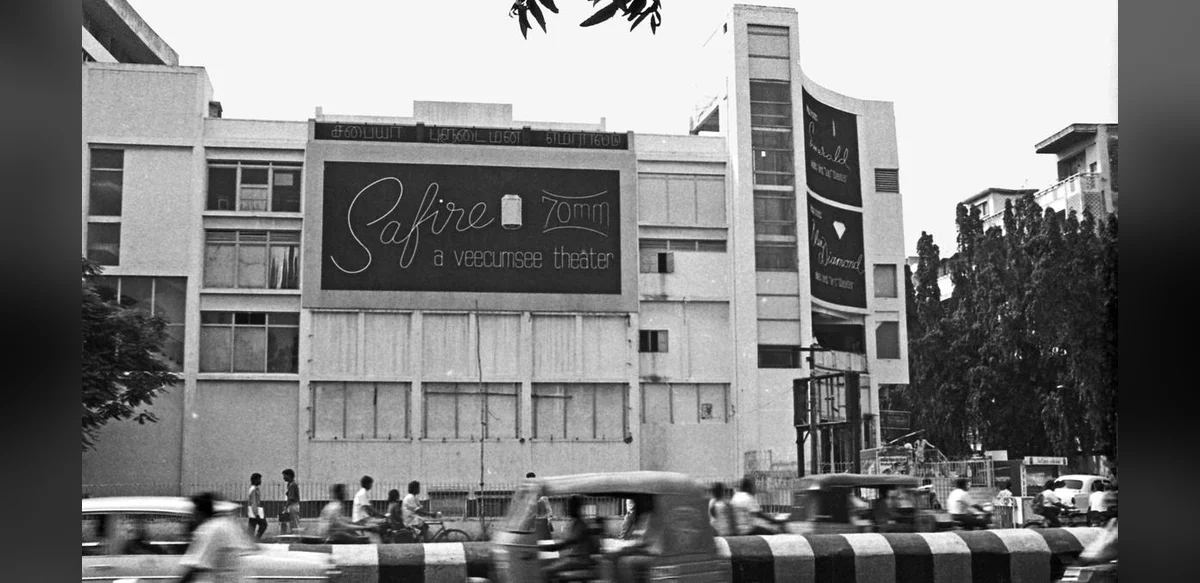
The Safire Theatre Complex stood as one of the earliest multiplex facilities in the country when it first opened its doors. Located in Chennai, the venue quickly became a notable destination for film screenings and public gatherings during its operational years. Over time, however, the structure has undergone significant deterioration, leaving little trace of its former prominence.
Reports indicate that the complex, once celebrated for its multiple screening halls and modern amenities at the time, has now been reduced to an empty site. Observers note that the building materials and architectural features have largely disappeared, resulting in a vacant lot where entertainment activities previously took place. Local accounts describe the gradual decline that followed changes in the broader cinema industry and urban development patterns.
Community members recall the theatre as a central point for social interaction and leisure in earlier decades. Its closure marked the end of an era for regular visitors who associated the location with specific films and events. Current conditions show no remaining operational elements, with the area appearing cleared of prior installations.
Urban planning discussions in the region have occasionally referenced the site in relation to evolving land use priorities. The transformation from a functional entertainment hub to its present state reflects broader shifts in how public spaces are maintained and repurposed. No specific timeline for future redevelopment has been confirmed in available records.
The history of the complex highlights the challenges faced by older cinema venues amid competition from newer formats and technologies. Its initial role in introducing multiplex concepts contributed to the evolution of film exhibition practices across the nation. Today, the absence of visible remnants underscores the impact of prolonged disuse and structural removal.
Photographic evidence from past years documents the building’s distinctive design elements, including spacious lobbies and projection facilities that were advanced for their period. These features have since been eliminated, leaving only foundational traces if any. The process appears to have occurred steadily without public announcements detailing each phase.
Residents in the vicinity have expressed varied sentiments regarding the loss of this landmark. Some view it as an inevitable outcome of modernization, while others lament the erasure of a recognizable cultural spot. Official statements on preservation efforts remain limited, focusing instead on general city infrastructure goals.
In summary, the Safire Theatre Complex exemplifies the lifecycle of early multiplex establishments in India. From its pioneering status to its current nonexistence, the site serves as a case study in urban change and the passage of entertainment venues. Further details on any remaining artifacts or archival materials are not widely documented at this stage.
Additional context from historical reviews positions the venue among the first to offer simultaneous screenings in separate auditoriums, a format that later became standard. Its location in Chennai facilitated access for diverse audiences during peak years. The reduction to nothing aligns with patterns observed in other aging structures facing similar pressures from economic and spatial demands.
The narrative surrounding the complex continues to circulate in local discussions about heritage and progress. Without active intervention, the space is expected to remain in its cleared condition. This outcome emphasizes the transient nature of physical entertainment landmarks in rapidly developing areas.


