

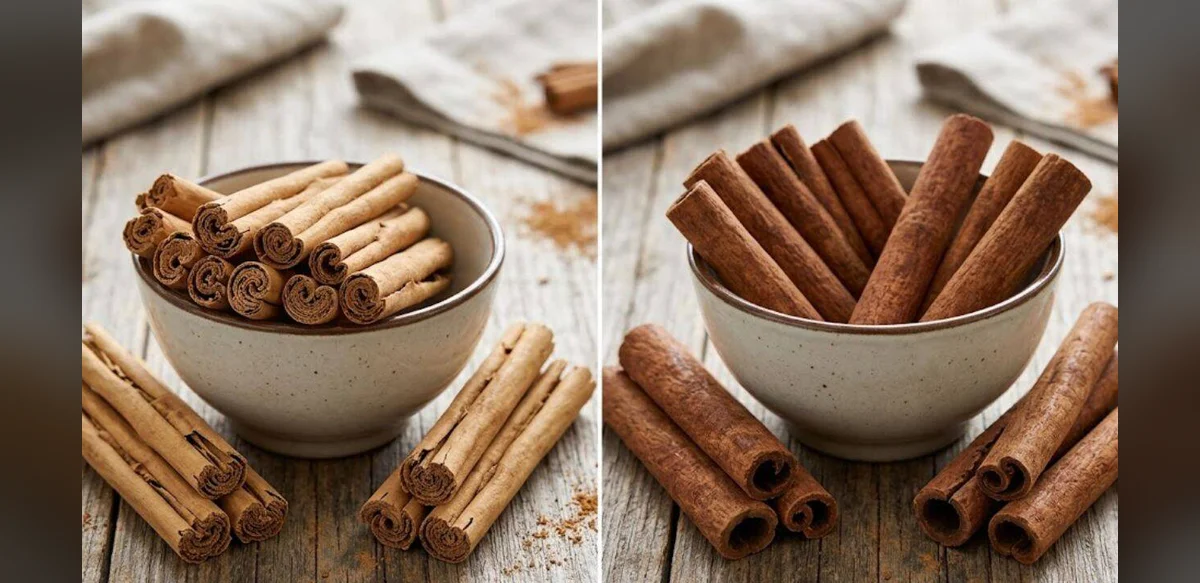
Cinnamon sold in stores may belong to different varieties with varying qualities. The two main types are Ceylon cinnamon, known as true cinnamon from Cinnamomum verum, and cassia cinnamon from related species. Both serve culinary purposes yet differ in appearance, taste, scent, and composition. Research from the National Library of Medicine explored methods to separate genuine Ceylon cinnamon from cassia and other forms. Physical traits, aroma, and flavor offer initial hints, while advanced techniques such as microscopy, chemistry, and DNA analysis provide greater accuracy. Ground cinnamon proves especially challenging to verify since processing eliminates many bark characteristics. Ceylon cinnamon typically shows a lighter reddish-brown hue, whereas cassia appears darker. Whole sticks of Ceylon feature multiple thin layers rolled tightly, creating a fragile look, while cassia bark is thicker and less layered. Ceylon sticks break more easily, but moisture levels can alter this. Aroma tests reveal Ceylon as milder and sweeter, with cassia stronger and sharper. Flavor follows a similar pattern, Ceylon being gentler and cassia more intense and astringent. Labels should specify the variety, as Ceylon often costs more and contains less coumarin. Powdered forms hide these distinctions, increasing risks of mislabeling. Cassia remains a valid cinnamon type but differs from the premium Ceylon variety sourced mainly from Sri Lanka, with cassia coming primarily from China and other regions.


