

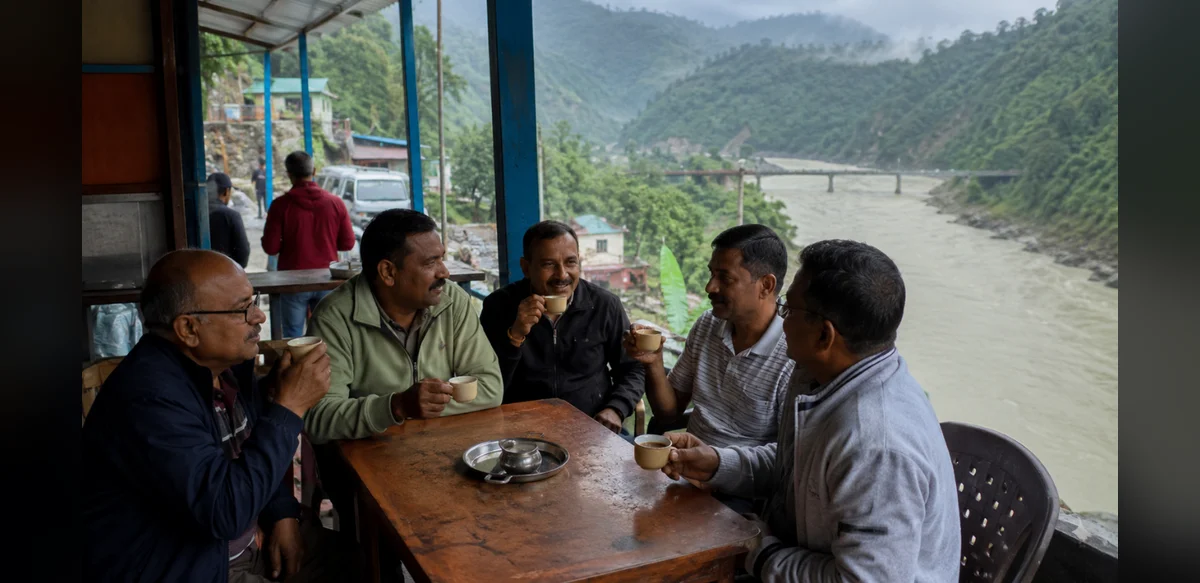
Five residents of Raipur in Chhattisgarh experienced a narrow escape while traveling through Nepal when sudden floods struck the region on August 26. Their decision to stop for tea in the town of Malekhu proved decisive in avoiding a collapsed bridge that had been destroyed by rising waters.
The group had been journeying through the hilly terrain when they chose to take a short rest at a local tea spot. Moments later, they learned that the bridge ahead had been swept away by the force of the Trishuli river. The timing of their break meant they remained safely on the near side of the crossing.
Witnesses among the friends described powerful currents carrying vehicles and large amounts of debris downstream. The river had swollen rapidly following heavy rainfall, turning a normally manageable route into a hazardous zone. The scene unfolded over several hours as the water level continued to rise and additional sections of infrastructure gave way.
Local officials in Nepal responded promptly to the developing situation. They coordinated with an Indian assistance helpline to support the stranded travelers. The five individuals remained in the area for two days while arrangements were made for their safe return. During this period, they received updates on road conditions and alternative routes that could be used once waters receded.
Communication with family members back in Raipur was maintained through the helpline. Relatives received regular information about the group’s status and the progress of rescue operations. The friends later recalled the tension of waiting while observing the ongoing destruction caused by the river.
On August 28 the group was able to complete their journey home. They arrived in Raipur with accounts of the unexpected events that had interrupted their travels. The experience highlighted the importance of brief pauses during long drives through regions prone to sudden weather changes.
The Trishuli river basin is known for its challenging topography and vulnerability to flash flooding during monsoon periods. Travelers in the area often rely on local advice and timely stops to assess conditions. In this instance, the unplanned tea break aligned with a critical window that allowed the friends to avoid the most dangerous stretch of road.
Authorities emphasized the value of heeding warnings and remaining in place when bridges or roads become impassable. The assistance provided by both Nepali emergency teams and the Indian helpline ensured that the five travelers had access to food, shelter, and information throughout their wait. Such coordination between neighboring countries has proven useful in past cross-border incidents.
Upon reaching Raipur the friends reflected on the sequence of events that had kept them out of harm’s way. They noted that the tea stop, initially taken for refreshment, had inadvertently positioned them away from the collapsing structure. Their story circulated among local communities as an example of how small decisions can influence outcomes during natural disruptions.
The incident occurred amid broader reports of heavy rainfall affecting parts of Nepal and neighboring regions. Roads and bridges in several districts faced similar threats, leading to temporary closures and detours. The five friends from Chhattisgarh were among those who benefited from prompt local intervention and cross-border support networks.
Their return journey involved careful route planning to bypass damaged sections. Officials monitored river levels continuously and cleared pathways only after confirming stability. The group expressed gratitude for the assistance received and the fortunate timing of their stop in Malekhu.
Stories like this underscore the unpredictable nature of travel in mountainous areas during the rainy season. Brief halts for rest or refreshments can sometimes coincide with moments when conditions change rapidly. The Chhattisgarh travelers have since resumed their routines while carrying memories of the two days spent near the Trishuli river.
The episode also drew attention to the role of community tea stalls and roadside stops as informal gathering points where travelers exchange information. In Malekhu, such locations provided the friends with early indications of trouble ahead. Local residents often serve as sources of real-time updates on weather and road status.
Overall, the experience of the five friends illustrates both the risks associated with monsoon travel and the effectiveness of coordinated response efforts. Their safe return on August 28 brought relief to families in Raipur and reinforced the value of patience when facing sudden obstacles on the road.


