

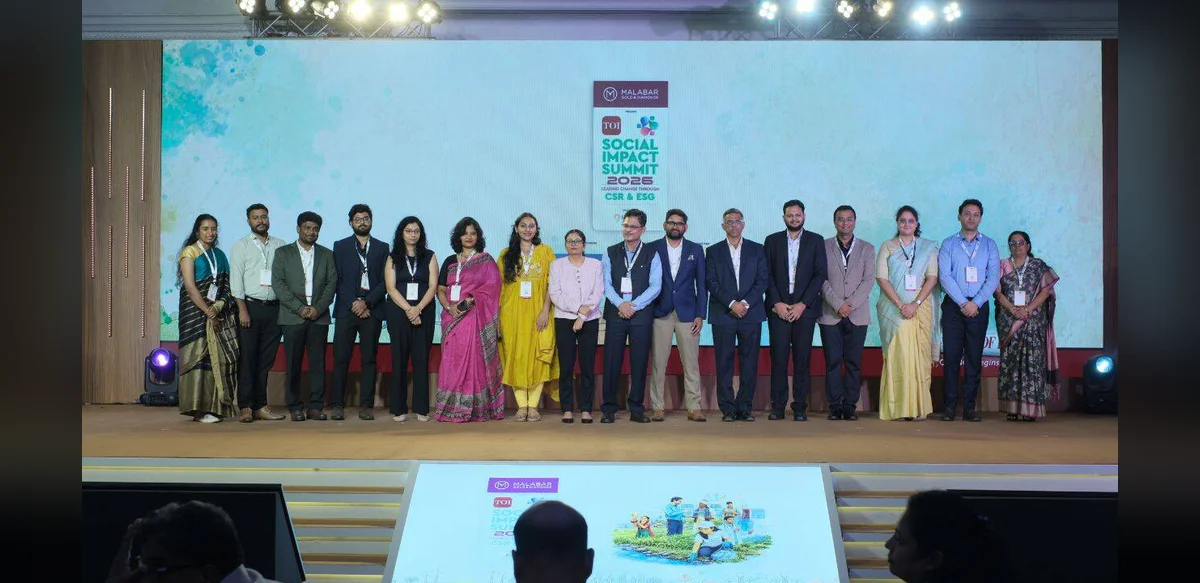
The Times of India Social Impact Summit 2026 took place at Taj Lands End in Mumbai at the beginning of the month. Sponsored by Malabar Gold and Diamonds and supported by the Reliance Foundation, the two-day gathering convened leaders from business, government, and nonprofit organizations. Participants examined key issues affecting social progress in the country, including access to healthcare, inclusive learning opportunities, involvement of young people, adaptation to climate shifts, environmental responsibility, corporate social responsibility efforts, and the application of technology along with artificial intelligence to expand positive outcomes.
Chief guest Piyush Goyal, who serves as Minister for Commerce and Industry, joined other prominent figures such as Sanjiv Puri, Chairman and Managing Director of ITC, and M. P. Ahammed, Chairman of the Malabar Group of Companies. More than fifty speakers contributed viewpoints on creating accountable business practices, reinforcing local community strength, and improving access to technological tools for wider populations.
Central to the program were the Social Impact Honours 2026, which highlighted eighteen projects and groups delivering practical solutions in six main domains. These domains cover health and wellbeing, education, gender equity, technology and artificial intelligence applied for societal benefit, climate sustainability, and vocational training. The selections reflect a growing emphasis on organized and measurable efforts that address gaps in public services, availability of resources, and basic infrastructure across various regions.
Discussions during the summit explored how structured interventions can support broader national development goals. Attendees considered ways to integrate emerging tools like artificial intelligence into existing frameworks without excluding underserved groups. Sessions also addressed the need for partnerships between different sectors to build resilience against environmental challenges and to promote sustainable practices in daily operations.
The event underscored the importance of recognizing organizations that translate plans into tangible results on the ground. By focusing on scalable models, the honours aim to encourage replication of successful approaches in other areas facing similar conditions. Leaders present noted that collaboration remains essential for overcoming persistent barriers in service delivery and for fostering inclusive growth that reaches all segments of society.
Overall, the summit provided a platform for exchanging ideas on current challenges and future possibilities in social development. It brought attention to initiatives that prioritize measurable impact while adapting to local contexts. The recognition of the eighteen selected efforts serves as an acknowledgment of ongoing work that contributes to improved outcomes in health, learning, equity, technological inclusion, environmental care, and skill development across India.


