


The Cockroach Janta Party’s campaign has underscored the political need to overhaul the economy for generating jobs for India’s young population. Changes to schooling by itself cannot resolve joblessness. The core framework of the economy requires adjustment.
China and India, the sole nations exceeding one billion residents, face the strongest demand for substantial work opportunities. Without full employment and rising earnings for the majority, their economies cannot expand. China has outperformed India here, with its citizens’ per capita income growing about eight times quicker than India’s over the past three decades.
Indian policymakers navigate opposing pressures. They advance measures for easier business operations, reduce worker organizing rights, and ease environmental rules. At the same time, they encourage broad use of artificial intelligence to boost output in farming, manufacturing, healthcare and learning, where productivity means higher results with fewer people. They also recognize the need to alter growth patterns and raise employment elasticity, or jobs generated per unit of GDP growth, an area where India has lagged since 1990s market changes.
With the world’s largest youth population, India’s growth should feature strong job creation. Yet greater AI use may worsen the situation.
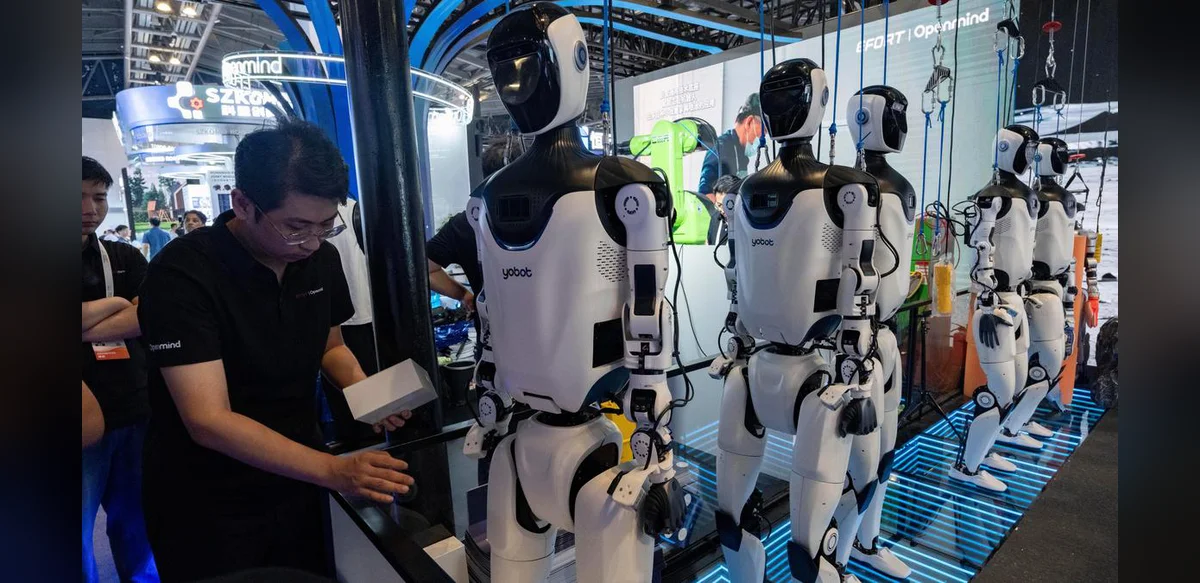
China has spent heavily to lead in AI and integrated it across sectors. By 2024 over two million robots operated in its factories. In major cities, delivery firms tested autonomous units for food service. These AI gains have sparked concerns about displaced workers.
Despite its system, China’s leaders monitor public views online closely. Past events show that discontented educated youth combined with unhappy workers and farmers could spark unrest, prompting responses.
Joblessness has risen in China. Migrant worker unemployment reached 5.7 percent in March, near a three-year high, while youth rates hit 16.3 percent in April. Seventy percent of unemployed young people hold university degrees, and older laid-off staff face long periods without work.
Courts have acted quickly. One ruled a firm illegally dismissed a worker replaced by AI. Others stated AI should free labor, boost jobs and improve living standards, and that firms gaining from technology must fulfill social duties and safeguard employee rights.
The human resources ministry announced policies in January to counter AI job effects, including aid for key sectors. In June the State Council outlined an employment-first plan for 2026-2030. Officials suggested interventions like mandatory employer training for AI-era roles.
China’s focus on citizens has aided its economy and people. Leaders have prioritized ordinary needs and social stability over full market deregulation, especially in labor, food, education, health and housing.
Indian earnings must grow fast across agriculture, industry and services. The government has paired ease of living with ease of doing business to reach developed status by 2047. Achieving this needs stronger steps to expand jobs and incomes while limiting AI’s employment harms. Rules should make employers responsible for worker training and limit layoffs.
New measures must prioritize employee rights over business interests, following China’s approach. India’s labor code changes aim at business ease.

