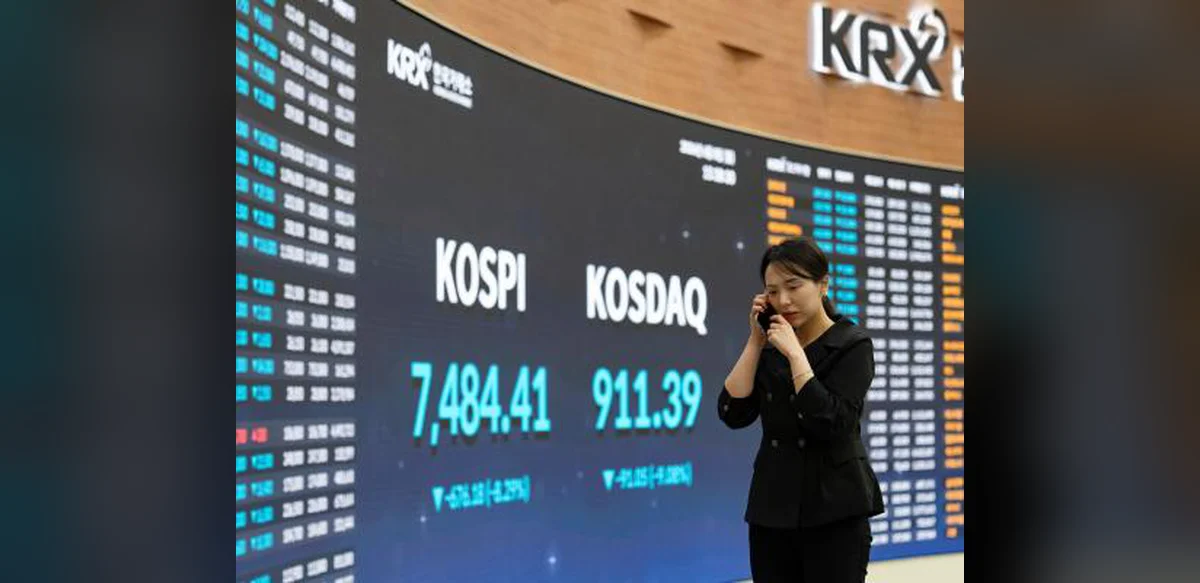
WH Smith announced plans to raise around £100 million as Middle East tensions begin impacting its earnings. The retailer will issue up to 26 million shares, representing roughly 20 percent of its current capital, plus a separate offer for UK retail investors. It lowered its pre-tax profit guidance for the year to £75-90 million from the prior £90-105 million range, citing reduced passenger numbers and softer demand in travel retail. This marks the second downgrade this year. The company also flagged a £150 million writedown tied to its InMotion review in North America, store closures, and global restructuring. Executive chair Leo Quinn stated the core business remains solid with growth potential, especially in North America, but requires stricter capital discipline and focus on returns after disappointing results from some acquisitions. Shares have fallen about 21 percent year to date. Analyst Susannah Streeter noted that fresh Middle East conflict has reduced market optimism, though upcoming US inflation data will likely drive trading. The consumer price index is forecast to reach 4.2 percent year-on-year with a 0.5 percent monthly increase, amid concerns over energy costs spreading through the economy. Asian equities dropped after the largest US-Iran exchanges since an April ceasefire. US strikes followed accusations that Tehran downed a US helicopter near the Strait of Hormuz, prompting Iranian retaliation targeting Kuwait, Bahrain, and Jordan. Japan’s Nikkei fell 2 percent and South Korea’s Kospi slid 6 percent, though still up over 70 percent this year. Brent crude eased 0.2 percent to $91.28 a barrel. Deutsche Bank’s Jim Reid observed markets oscillating between AI enthusiasm and tech crash concerns. European futures pointed to modest openings, with the FTSE 100 down 0.1 percent and EuroStoxx 50 also 0.1 percent lower. Separate data showed China’s producer prices rising 3.9 percent in May, the fastest pace in four years, driven by energy costs linked to the Iran conflict. Economists described the increase as cost-driven rather than demand-led, with reflation expected to persist in the near term.