


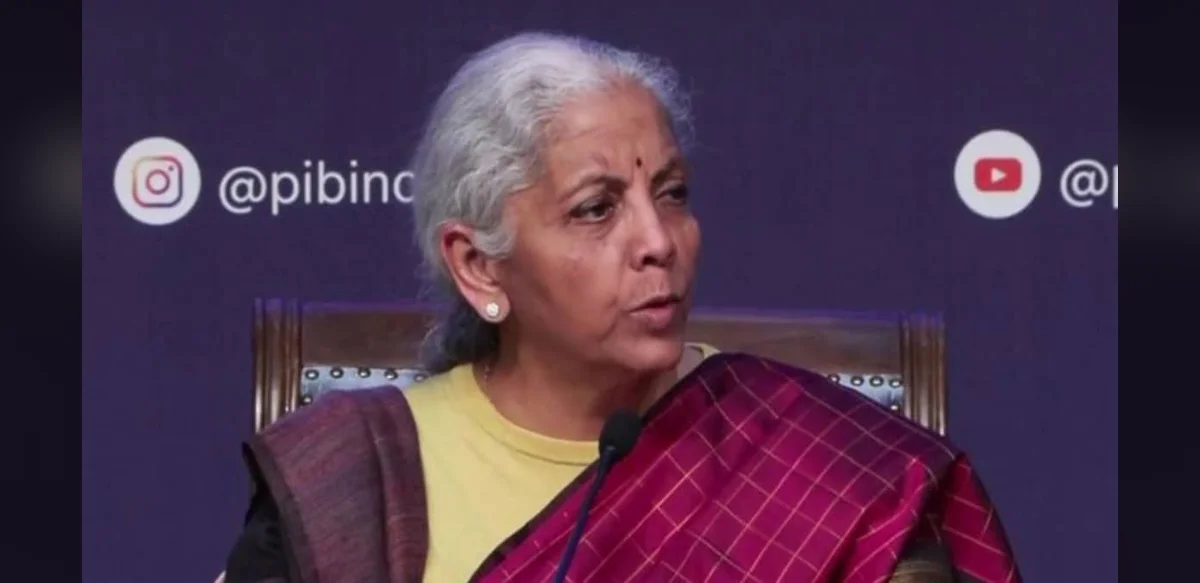
India’s Finance Minister Nirmala Sitharaman emphasized that banks in the country need to implement more adaptable and forward-thinking strategies to address cyber risks stemming from artificial intelligence.
Her comments came after a senior-level discussion on Thursday involving the Minister for Electronics and Information Technology Ashwini Vaishnaw, representatives from the Reserve Bank of India, the National Payments Corporation of India, the Indian Computer Emergency Response Team, and leaders of scheduled commercial banks. The meeting focused on evaluating dangers from sophisticated AI systems that might exploit software weaknesses.
Sitharaman pointed out that Indian banks have avoided significant cybersecurity breaches for many years due to continuous digital advancements, routine updates to systems, protective barriers, and measures to safeguard customers.
She noted that this consistent effort has proven effective, with no major incidents occurring over the years. However, she warned that threats from advanced AI represent a novel and poorly understood challenge. Existing precautions, while essential and in need of enhancement, may not suffice on their own. Additional, more flexible measures are required to tackle these emerging dangers.
The minister highlighted that the Ministry of Electronics and Information Technology is collaborating with international governments and tech firms to understand the changing risk environment and evaluate India’s readiness. After the meeting, which included Department of Financial Services Secretary M. Nagaraju and CERT-In Director General Dr. Sanjay Bahl, banks were instructed to collaborate through a unified framework overseen by the Indian Banks’ Association.
The chairman of the State Bank of India, who heads the association, will guide this initiative. Over the next few weeks, banks will evaluate areas requiring further funding, potential technologies to integrate, and ways to leverage AI for defense against similar threats. Sitharaman explained that this is not a fresh committee but an association-driven process to pinpoint weaknesses and examine reliance on suppliers.
She encouraged banks to engage top cybersecurity experts and specialized firms to bolster their protective and surveillance systems, and to promptly notify CERT-In and relevant bodies of any unusual activities. She also recommended establishing a strong system for sharing threat information in real time among banks, CERT-In, and other entities to enable prompt identification and communication of new risks.
Regarding international issues, Sitharaman addressed the effects of the crisis in West Asia, especially the disruption in the Strait of Hormuz, which has driven up crude oil costs.
She stated that responses to the Strait of Hormuz situation will be determined as it evolves, describing these as dynamic challenges that cannot be addressed uniformly. Each matter will be handled according to its specific circumstances.

