

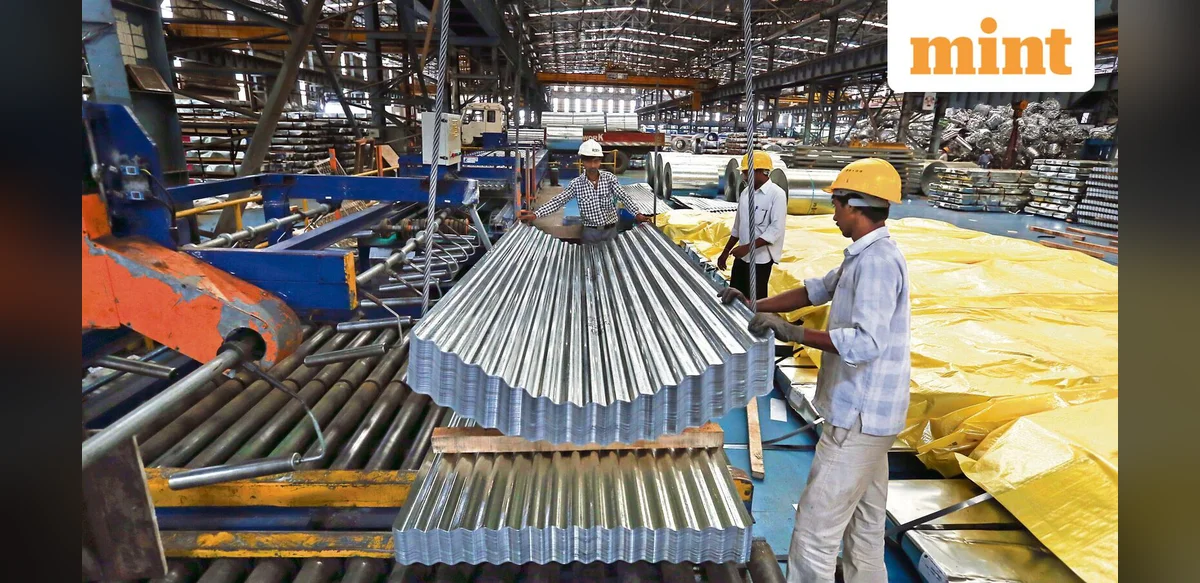
India’s manufacturing sector showed signs of slowing significantly during August, with the pace of expansion reaching its weakest level in almost five years. The decline came amid softer demand conditions and decisions by factories to reduce output levels. These factors also contributed to a slight reduction in employment within the sector, although the drop remained modest overall. At the same time, businesses experienced some relief from rising input costs, which eased compared to previous periods.
The latest data highlights challenges facing the industrial segment as external and domestic demand both moderated. Companies reported lower new orders, prompting them to scale back production schedules accordingly. This adjustment in activity levels directly influenced hiring decisions, leading to fewer positions being filled or maintained at factories. Despite these headwinds, the overall contraction in jobs stayed limited rather than widespread.
Observers note that the cooling in demand appears linked to broader economic uncertainties affecting buyer sentiment. Manufacturers responded by focusing on efficiency measures and inventory management to navigate the softer environment. The easing of cost pressures provided some buffer, allowing firms to avoid sharper price increases that might have further dampened sales.
This development marks a notable shift from stronger growth phases seen in earlier months. The near five-year low in the pace of expansion underscores the need for monitoring key indicators closely in coming periods. Policymakers and industry participants alike are likely to assess whether the slowdown proves temporary or signals a more sustained trend.
In terms of sector specifics, the manufacturing PMI reading reflected combined effects of reduced order books and cautious output planning. Employment trends followed suit with only marginal declines, suggesting resilience in workforce levels despite the slowdown. Cost relief came primarily from lower commodity prices and supply chain stabilizations that benefited producers.
Overall, the August figures present a mixed picture of expansion continuing but at a notably reduced rate. The combination of demand softness, output adjustments, and employment moderation points to a period of adjustment for Indian manufacturers. Continued easing in cost pressures may offer support, yet the primary focus remains on demand recovery to restore momentum.
Further analysis of sub-components within the PMI data reveals consistent patterns across new orders, production, and employment metrics. Each area showed moderation aligned with the headline slowdown. This coherence strengthens the view that the sector is experiencing a broad-based slowdown rather than isolated issues.
Businesses in the manufacturing space have indicated plans to maintain conservative approaches until clearer signs of demand improvement emerge. Such strategies include careful capacity utilization and selective investments. The current environment rewards prudence while awaiting external conditions to stabilize.
The report on August activity serves as an important benchmark for tracking economic health in the industrial domain. With expansion at its slowest in nearly five years, attention turns to upcoming releases for confirmation of trends. The mild job impact and cost relief provide partial offsets to the headline weakness.
In summary, India’s manufacturing performance in August illustrated the interplay between cooling demand, output restraint, and resulting employment effects, all set against a backdrop of moderating cost pressures. This balanced yet subdued outcome defines the current state of the sector.


