


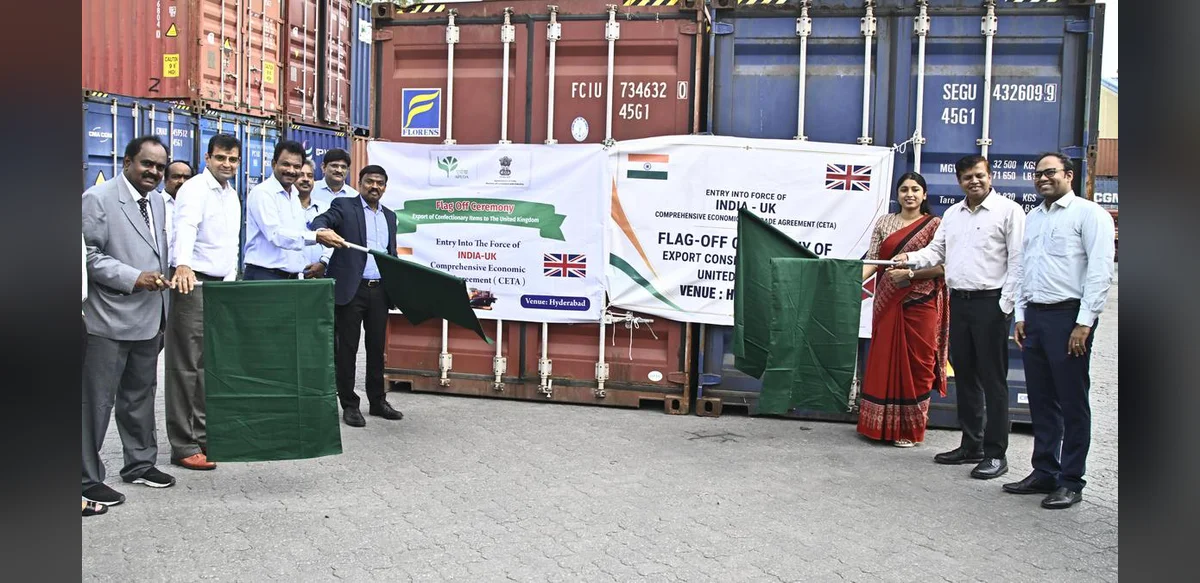
Trade pacts are often promoted for their export benefits, yet their real value frequently stems from required imports. The India-UK Comprehensive Economic and Trade Agreement, effective earlier this month, qualifies as solid on exports and potentially stronger on imports.
Exports offer the quickest advantages. From July 15, nearly all Indian shipments, representing 99 percent of value, enter Britain duty-free. Zero tariffs apply to key labour-intensive goods such as textiles, garments, leather products, footwear, marine items, processed foods, engineering goods and auto parts. These sectors employ workers India seeks to integrate into formal roles. A 12 or 16 percent duty previously decided many orders for clusters in Tiruppur and Agra.
India previously faced disadvantages against duty-free competitors from Bangladesh, Pakistan and Cambodia. The new terms close that gap and directly support jobs. Trade policy ultimately concerns employment.
A separate benefit involves pharmaceuticals. As the world’s top generic medicine supplier, India gains from duty removal on sales to Britain’s $30 billion market, allowing price competition on equal footing.
The pact also resolves a long-standing issue for professionals. The accompanying Double Contribution Convention exempts Indian workers and employers from dual social security payments for up to five years, saving roughly 75,000 individuals and 900 firms about $600 million annually.
On imports, India will reduce car duties from around 110 percent toward 10 percent and whisky tariffs from 150 percent toward 40 percent over ten years. Changes occur gradually with quotas to give local manufacturers time to adjust. Perpetual protection rarely strengthens industries; it sustains weaker ones. Indian vehicle makers have improved where exposed to competition but lagged where shielded. Limited inflows at reduced rates will encourage producers to focus on customer needs rather than tariffs.
Agreements require ongoing effort beyond signing. Exporters must prepare, procedures must streamline, and firms must learn available opportunities. Utilisation of such pacts remains low, requiring sustained outreach by government and industry groups to smaller enterprises.
Bilateral trade aims to double from $56 billion by decade’s end. Success hinges on India’s readiness to compete using the new framework.

