

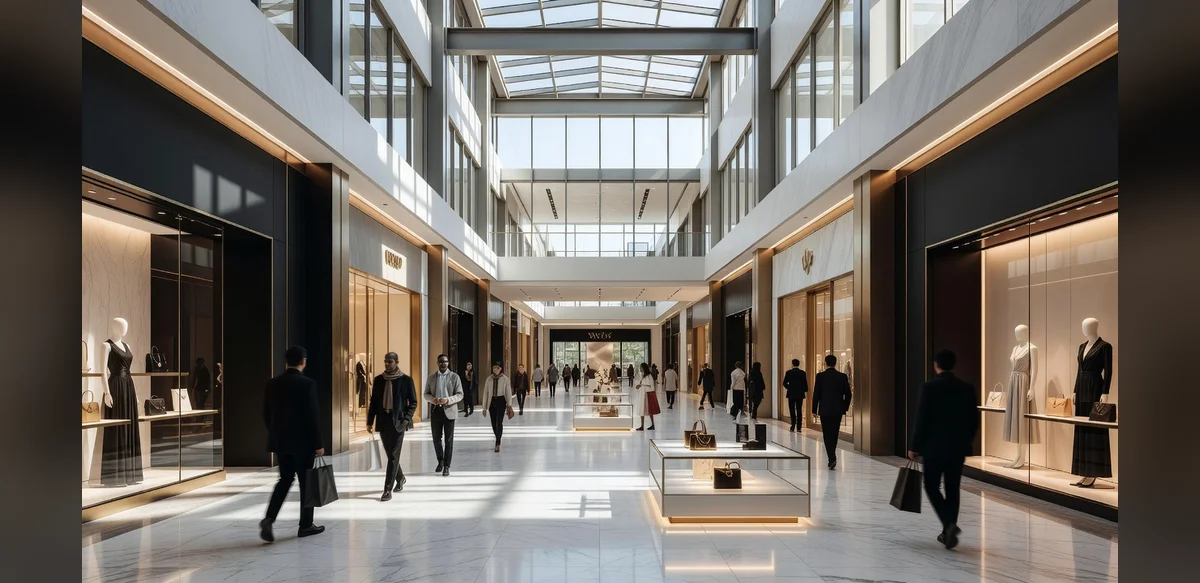
China’s high-end retail properties continue to expand even as broader consumer spending faces pressure from economic uncertainty. Developers are moving forward with new projects and renovations focused on premium brands, betting that affluent shoppers will sustain demand for luxury goods.
Recent data shows that while overall retail sales growth has slowed, segments tied to wealthier consumers remain resilient. This divergence has encouraged property firms to prioritize upscale malls in major cities such as Shanghai, Beijing, and Shenzhen. These locations often feature international labels, fine dining, and experiential amenities designed to attract steady foot traffic.
Industry analysts note that luxury retailers benefit from a concentrated customer base less affected by inflation or employment concerns. Many malls have reported stable or rising sales per square meter in their premium zones, prompting further investment in similar formats. Expansion plans include both new builds in second-tier cities and upgrades to existing centers to meet evolving tenant requirements.
Developers cite long-term demographic trends and rising household wealth as supporting factors. Younger professionals with higher disposable incomes are increasingly drawn to curated shopping environments that combine retail with leisure options. This strategy helps offset softer performance in mass-market segments where price sensitivity is higher.
Challenges persist, including competition from e-commerce platforms and shifting consumer preferences toward experiences over goods. Nevertheless, operators of luxury properties argue that physical locations provide unique value through personalized service and brand immersion that online channels cannot fully replicate.
Several large projects scheduled for completion in the coming years will add significant retail space targeted at high-end brands. These developments often incorporate sustainable design elements and technology to enhance visitor comfort and operational efficiency. Partnerships with global fashion houses remain central to leasing strategies.
Market observers emphasize that success depends on careful site selection and adaptation to local tastes. Malls that integrate cultural elements or host exclusive events tend to maintain stronger performance. This approach allows properties to differentiate themselves in a crowded landscape.
Overall, the luxury segment appears positioned to weather short-term headwinds through targeted expansion and focus on premium clientele. While the wider retail sector navigates slower growth, high-end malls continue to draw investment based on expectations of enduring demand from China’s upper-income households.


