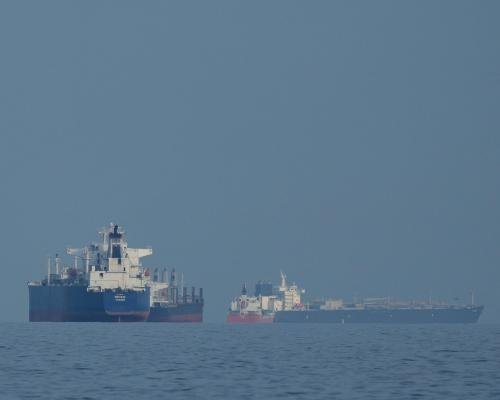
Overnight gains were seen in Asian equity markets, with Japan’s Nikkei and China’s CSI300 each climbing approximately 1.8%. South Korea’s Kospi advanced 1.5%, and Hong Kong’s Hang Seng rose 0.5%. Analyst Mohit Kumar from Jefferies observed that investors are eager for upward momentum. He noted the ceasefire’s vulnerability and the possibility of brief escalations during talks, but suggested that any declines could present buying chances. However, he recommended maintaining a cautious approach due to potential short-term fluctuations. Good morning, and thank you for joining our ongoing updates on business, financial markets, and the global economy. Oil prices experienced a modest uptick this morning as skepticism surrounds the US-Iran ceasefire agreement. Brent crude, the global oil standard, increased 0.6% to $96.45 per barrel, following a drop of over 10% earlier this week below $100 per barrel after the deal was announced. The agreement’s instability is unsettling traders. US President Donald Trump cautioned Iran against imposing fees on vessels navigating the Strait of Hormuz, a vital route for roughly one-fifth of global oil and gas shipments. On his Truth Social platform, he stated: There are reports that Iran is charging fees to tankers going through the Hormuz Strait — They better not be and, if they are, they better stop now! Shortly after, he added: Iran is doing a very poor job, dishonorable some would say, of allowing Oil to go through the Strait of Hormuz. That is not the agreement we have! Nevertheless, the president expressed optimism to reporters about achieving a peace accord and said he urged Israeli Prime Minister Benjamin Netanyahu to reduce military actions in Lebanon. In an NBC News interview, he remarked: I spoke with Bibi and he’s going to low-key it. I just think we have to be sort of a little more low-key. The effects of the conflict involving Iran are rippling through international supply chains. China posted its first annual increase in producer prices since 2022, with the index up 0.5% in March compared to a 0.9% decline in February. The previous positive reading was in September 2022. Kelvin Lam, senior economist at Pantheon Macroeconomics, commented: Sectors reliant on energy inputs or those with high energy components in materials are experiencing elevated producer prices, even amid weak local demand and a persistent property market downturn. Recent industrial earnings data align with this, showing slight margin gains in energy-heavy and metal sectors, indicating some cost transfer to consumers. Data from the National Bureau of Statistics showed oil and gas extraction prices surging 15.8% month-on-month in March, petroleum and coal processing up 5.8%, chemical products increasing 3.6%, and non-ferrous metal processing slowing to 1.0% from 3.6% in February. Consumer prices grew 1% annually in March, down from 1.3% in February. Today’s schedule includes: 1:30pm BST – US CPI inflation and real earnings figures for March; 3pm BST – US factory orders; 3pm BST – University of Michigan consumer sentiment index.