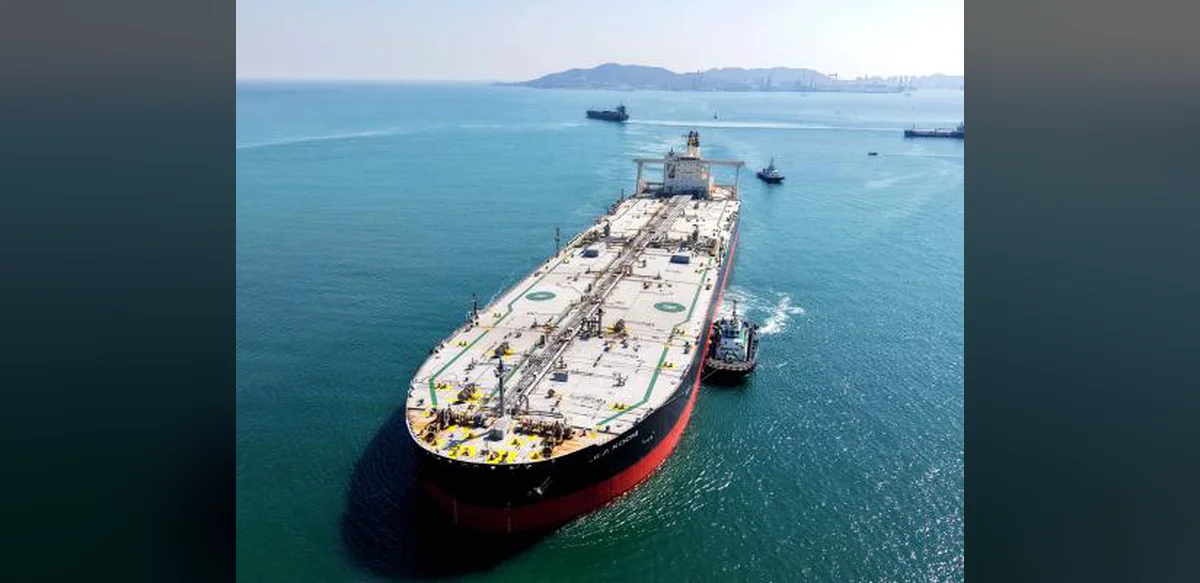
Global oil prices have fallen to a three-month low while stock markets advanced on renewed expectations that a US-Iran agreement could resolve a major energy supply disruption. Brent crude declined 5 percent to under $83 a barrel at the start of the week, reflecting optimism that the Strait of Hormuz may soon reopen and restore Gulf exports. European wholesale gas prices dropped 6 percent. The US president stated on Sunday that an accord was nearly finalized, even as recent Israeli strikes on Beirut raised concerns about the talks. He posted that he had authorized the opening of the strait and the lifting of the naval blockade, urging vessels worldwide to resume operations. He later clarified that the route would open after the formal signing on Friday. Iranian officials indicated a 60-day period for final negotiations on issues including Tehran’s nuclear program and sanctions relief. The international benchmark extended Friday’s decline to just over $82 a barrel, its lowest level since early March. Global equities rose on Monday. Britain’s FTSE 100 opened 0.8 percent higher before finishing nearly flat, while France’s CAC 40 and Germany’s DAX gained slightly more than 1 percent. Shares of BP and Shell declined sharply. In Asia, Japan’s Nikkei and South Korea’s Kospi surged 5 percent, and China’s CSI 300 advanced 1.9 percent. The president also said US forces had quietly facilitated the movement of millions of barrels daily through the strait in recent weeks. Oil prices stayed lower than anticipated during the conflict, which halted Gulf exports via the strait in early March and removed roughly 20 million barrels per day, or one-fifth of global supply. Gulf producers rerouted about 5 million barrels daily through pipelines, and another 2 million barrels may have reached markets via covert tankers assisted by US forces. Thirty-eight Japanese-linked vessels remain stranded in the strait, according to the Japanese Shipowners’ Association, which seeks clearer details before the expected signing on 19 June. The International Energy Agency released emergency stocks at a rate of 2.5 million barrels daily. Reduced Chinese imports, down about 4 million barrels per day, and lower Asian refinery demand have further eased the shortfall. Analyst Tony Sycamore noted that nations may use any reopening to rebuild reserves and that complex nuclear talks make further sharp price drops unlikely soon.