


Economists anticipate that the ongoing Middle East conflict will push the UK economy close to recession. The EY Item Club predicts no growth in the UK’s second and third quarters this year, accompanied by increasing unemployment. Gas prices climbed this morning, with the UK’s month-ahead rate rising more than 6% to 103 pence per therm. This level remains below last month’s peak of 180 pence but exceeds the 80 pence per therm seen prior to the Iran conflict.
UK-based advertising firm M&C Saatchi issued a warning that the Iran conflict could negatively affect its operations this year. The company informed investors that ongoing macroeconomic difficulties, combined with the Middle East situation, are expected to harm its sports, entertainment, and consumer sectors. M&C Saatchi also disclosed a 7.3% decline in like-for-like net revenues, attributed to the previous year’s US government shutdown in the fourth quarter, effects from tariffs imposed by former President Donald Trump, and a challenging economic climate. Like-for-like profits dropped 26%.
Mohit Kumar from Jefferies investment bank expresses optimism that the US and Iran are progressing toward a peace agreement, despite the renewed closure of the Strait of Hormuz. He notes that markets are adopting a cautious stance this morning due to heightened tensions, including Iran’s closure of the strait and the ongoing US blockade. The US captured an Iranian cargo vessel, and President Trump warned of potential strikes on Iranian power facilities and bridges. Tensions have also intensified between Israel and Hezbollah following the deaths of two Israeli soldiers and strikes in southern Lebanon.
This comes after positive discussions last week, during which the US and Iran appeared to advance toward an accord, with Iran agreeing to reopen the strait. Kumar believes a resolution is likely, not due to a complete agreement, but based on the principle of mutually assured destruction. He argues that prolonging the conflict benefits neither side: Trump’s supporters oppose continued warfare and he seeks a deal; Iran’s Revolutionary Guard Corps prioritizes survival, as infrastructure damage and economic strain could lead to internal unrest; and Israel aims to diminish Hezbollah’s strength without opposing a US-Iran pact.
Jim Reid from Deutsche Bank cautions that recent stock market gains may be overly optimistic. He views current events as either progress toward peace with some setbacks or evidence of deep divisions making a durable agreement unlikely. Reid favors the former interpretation but draws parallels to the early Ukraine war, where initial hopes for a quick settlement led to a sharp S&P 500 rally that later reversed, serving as a cautionary example.
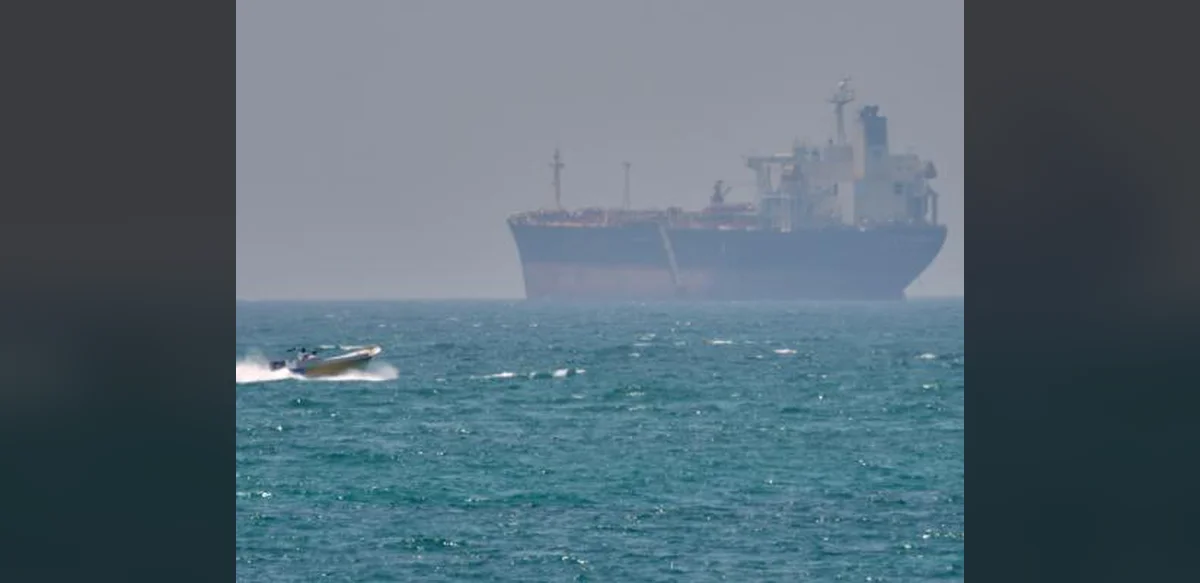
The weekend saw turmoil in the Strait of Hormuz, with shipping restrictions briefly eased then reinstated. Reuters reports that over a dozen tankers, including three under sanctions, navigated the strait after a 50-day blockade ended on Friday. They took advantage of the short opening before Iran reimposed limits on Saturday. A UK maritime authority stated that vessels from Iran’s Islamic Revolutionary Guard Corps fired at a tanker attempting passage that day. Bloomberg described the period as chaotic, with some ships successfully transiting while most retreated.
Greetings and welcome to our ongoing updates on business, financial markets, and the global economy. Market optimism about an impending resolution to the Middle East conflict has faded today amid fears that the US-Iran ceasefire may collapse. Following a drop on Friday when the Strait of Hormuz reopened, oil prices are now climbing after Iran declared it closed again. Tehran accused Washington of upholding its blockade on Iranian ports, prompting the US to seize an Iranian-flagged ship attempting passage. President Trump shared on social media: ‘We have full custody of their ship, and are seeing what’s on board!’
With Iranian state media indicating no immediate plans for further talks with the US, oil prices have spiked. Brent crude, down 9% on Friday, has increased 5% today to $95.60 per barrel. Kyle Rodda, senior analyst at capital.com, highlights prior market complacency regarding the ceasefire’s durability and the prospects for peace. He warns that these hopes are now in jeopardy.

