


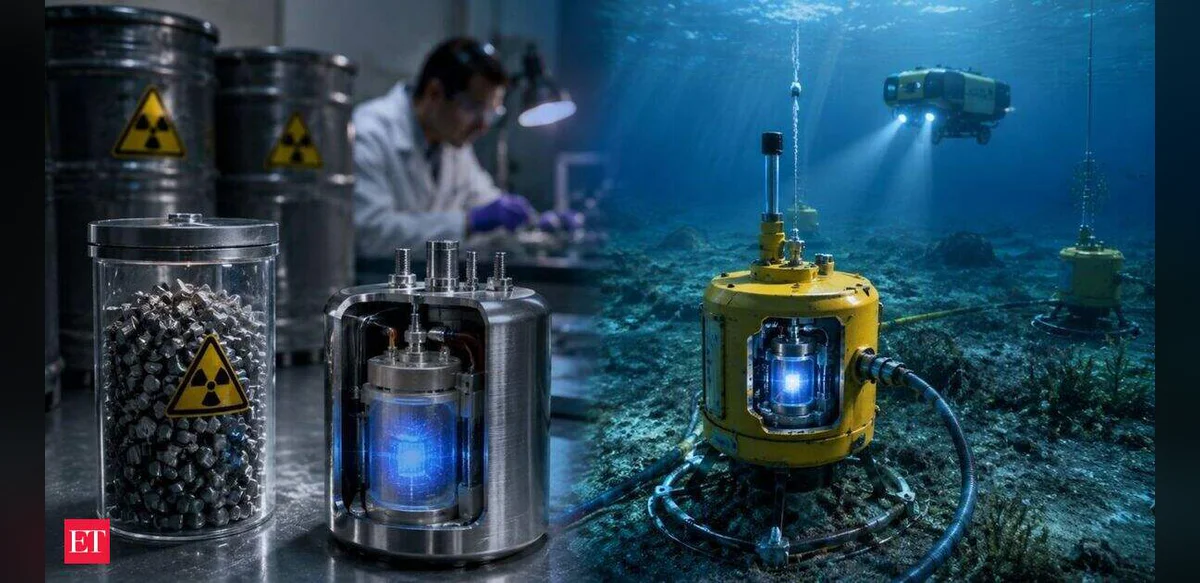
The United States is exploring ways to repurpose decades-old radioactive material from past nuclear activities into a reliable energy source. Specifically, strontium-90 waste stored at the Oak Ridge site is being considered for conversion into a form of nuclear power capable of supporting extended operations. This approach seeks to address both waste management and the need for sustained power in challenging environments.
A company named Zeno Power has partnered with the Department of Defense to advance this concept. The collaboration focuses on creating seabed power nodes designed to operate without external connections. These units could provide energy to underwater drones, monitoring sensors, and other autonomous systems for extended periods, potentially reaching nearly three decades of continuous function.
Strontium-90 is a byproduct of nuclear processes and has been stored securely for many years. Its radioactive properties allow it to generate heat over long durations, which can be transformed into electrical power through appropriate technology. By utilizing existing waste, the project aims to reduce storage burdens while creating practical applications.
The development targets maritime and subsea uses where traditional power sources like batteries or cables face limitations. Underwater vehicles often require reliable energy for missions involving surveillance, data collection, or exploration. A long-lasting power solution could enable longer deployments and reduce the frequency of maintenance or retrieval operations.
Officials involved in the initiative emphasize safety and regulatory compliance throughout the process. The material would be encapsulated and engineered to prevent environmental release. Testing and evaluation phases are expected to verify performance under real-world conditions before any broader deployment.
This effort reflects broader interest in innovative energy solutions derived from nuclear materials. While the primary focus remains on defense-related uses, the underlying technology could inform future civilian applications in remote or harsh settings. Researchers continue to study the efficiency and durability of such systems.
Oak Ridge has a long history in nuclear research and material management. The site holds various legacy materials from earlier programs, and repurposing select items represents one strategy for handling historical waste inventories. Partnerships between government agencies and private firms facilitate the technical work required.
The proposed power nodes would sit on the seabed and distribute energy locally to connected devices. This setup avoids the need for surface vessels or frequent interventions. Engineers are addressing challenges such as corrosion, pressure, and biofouling to ensure reliable operation over many years.
Public details about the project remain limited as development proceeds. Further announcements may provide updates on prototypes, performance data, or timelines. The initiative aligns with ongoing efforts to advance autonomous systems for national security purposes.
Overall, the conversion of stored radioactive waste into functional power technology illustrates one approach to combining resource recovery with operational needs. Continued work will determine the feasibility and scope of future uses.

